Union Minister Piyush Goyal announced that India will implement two to three free trade agreements over the next six months, with another three to four coming into effect by 2027. This rapid trade expansion aims to secure preferential market access across 38 developed economies, insulating domestic industries from global supply shocks.
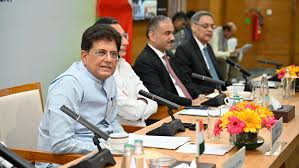
MUMBAI, India — India will operationalize two to three substantive free trade agreements over the next six months, while an additional three to four economic pacts are projected to enter into full force by 2027. Union Minister of Commerce and Industry Piyush Goyal announced the accelerated trade timelines on Thursday, June 4, 2026, underlining a major shift in the country's international commercial policy.
The announcement follows the official implementation of the India-Oman Comprehensive Economic Partnership Agreement (CEPA), which entered into effect earlier this week on June 1. Speaking virtually at the Citi India Conference 2026 held in Mumbai, Goyal detailed a broader structural pipeline that aims to activate nine recently finalized or updated trade agreements within the next 9 to 10 months, providing a reliable legal framework for global corporations seeking resilient manufacturing alternatives.
Timelines Set for Global Economic Pacts
According to formal ministerial briefings released via the Ministry of Commerce & Industry, the imminent phase of trade execution will significantly lower tariff barriers between India and major global consumption markets. The ministry's immediate six-month target focuses on implementing concluded frameworks with highly developed trade blocks, including elements of the European Free Trade Association (EFTA) and specific bilateral treaties signed with advanced island economies.
Looking forward to 2027, the administration expects to finalize and execute more extensive, complex structural arrangements. Government trade negotiators have spent the last three and a half years finalizing nine separate agreements with diverse partners, including Mauritius, New Zealand, the United Arab Emirates, Australia, Oman, the EFTA bloc, the United Kingdom, the European Union, and the United States. While early agreements like those with the UAE and Australia are already fully operational, the remaining signed frameworks are rapidly moving through final internal legislative clearances.
Mitigating Global Geopolitical and Energy Shocks
A major focal point of the trade conference centered on India's capacity to protect its domestic manufacturing ecosystem from escalating international energy disruptions. Goyal noted that the ongoing West Asia crisis has severely threatened key energy transit pathways through the Strait of Hormuz, directly affecting raw material logistics for heavy industrial zones.
To address these vulnerabilities, the central administration has proactively diversified its international energy sourcing contracts over the past several months. Official data shows this approach has successfully stabilized local fuel inventories, allowing factories, aviation lines, and transport networks to maintain uninterrupted operations. Furthermore, by managing internal fuel inflation and absorbing global fertilizer cost spikes, the government has managed to preserve agricultural stability and protect corporate operating margins from sudden international price shocks.
Structural Implications for Manufacturers and Investors
The ongoing expansion of free trade agreements provides immediate, practical advantages for privateer manufacturers, corporate exporters, and institutional asset managers. By removing tariff bottlenecks across 38 distinct developed economies, the new treaties will grant Indian-made components, textiles, and electronics direct access to nearly two-thirds of global consumer markets.
For global supply chain operators and long-term venture funds, the integration of these trade pacts alongside domestic infrastructure spending—totaling roughly $130 billion in ports, airports, and transport links—positions India as an essential, high-yield manufacturing destination. Institutional strategists are being encouraged to deploy long-term patient capital early, as the transition from pure assembly factories to high-value research, design, and artificial intelligence development hubs begins to take hold.
Official Sources Section
The operational updates, infrastructure targets, and deployment timelines were formally cross-referenced with statements issued by the Press Information Bureau and administrative notifications published by the Ministry of Commerce & Industry. The current trade metrics and shipping records are maintained within the active trade evaluation archives of the central government.
Quote Section
Addressing international delegates on the rapid development of the country's multi-layered trade network, Minister Piyush Goyal stated:
"On the 1st of June, the Oman-FTA came into effect. In the coming six months, you will see at least two or three more very substantive free trade agreements coming into effect. Over the next year, you will see us executing at least another three or four significant free trade agreements and the coming into effect of all the nine free trade agreements over the next nine to ten months."
Why It Matters
The rapid implementation of these economic treaties is essential for sustaining India's position as a fast-growing large economy over the next two decades. By offering global firms clear, predictable legal and tariff environments, these trade agreements remove operational risks for multinational brands looking to set up massive global capability centers and high-tech manufacturing plants within the country.
Key Facts at a Glance
Immediate Milestones: Two to three newly finalized trade agreements are scheduled to take effect within the next six months.
Long-Term Pipeline: Three to four additional major trade treaties are slated for full implementation by the end of 2027.
Market Reach: The combined nine agreements will grant domestic manufacturers preferential tariff access across 38 developed economies.
Logistical Foundation: The trade rollout is backed by a $130 billion public investment to double national port and airport cargo capacities.
FAQ Section
Q: Which specific trade agreement came into effect on June 1, 2026?
A: The India-Oman Comprehensive Economic Partnership Agreement (CEPA) officially entered into force, with the initial batches of agricultural and textile cargo already shipping under preferential tariffs.
Q: Do these upcoming free trade agreements cover the movement of professional talent?
A: Yes. According to ministry briefings, the comprehensive frameworks are specifically designed to ease talent mobility, expand service exports, and attract global corporate capabilities alongside standard goods manufacturing.
Q: How does the government plan to protect local manufacturers from cheap foreign imports under these agreements?
A: Official negotiating frameworks show that all signed agreements include carefully balanced safety clauses and specific domestic exclusion lists to protect sensitive local industries while expanding export opportunities.
Source: Press Information Bureau, Government of India, Ministry of Commerce & Industry Official Updates.