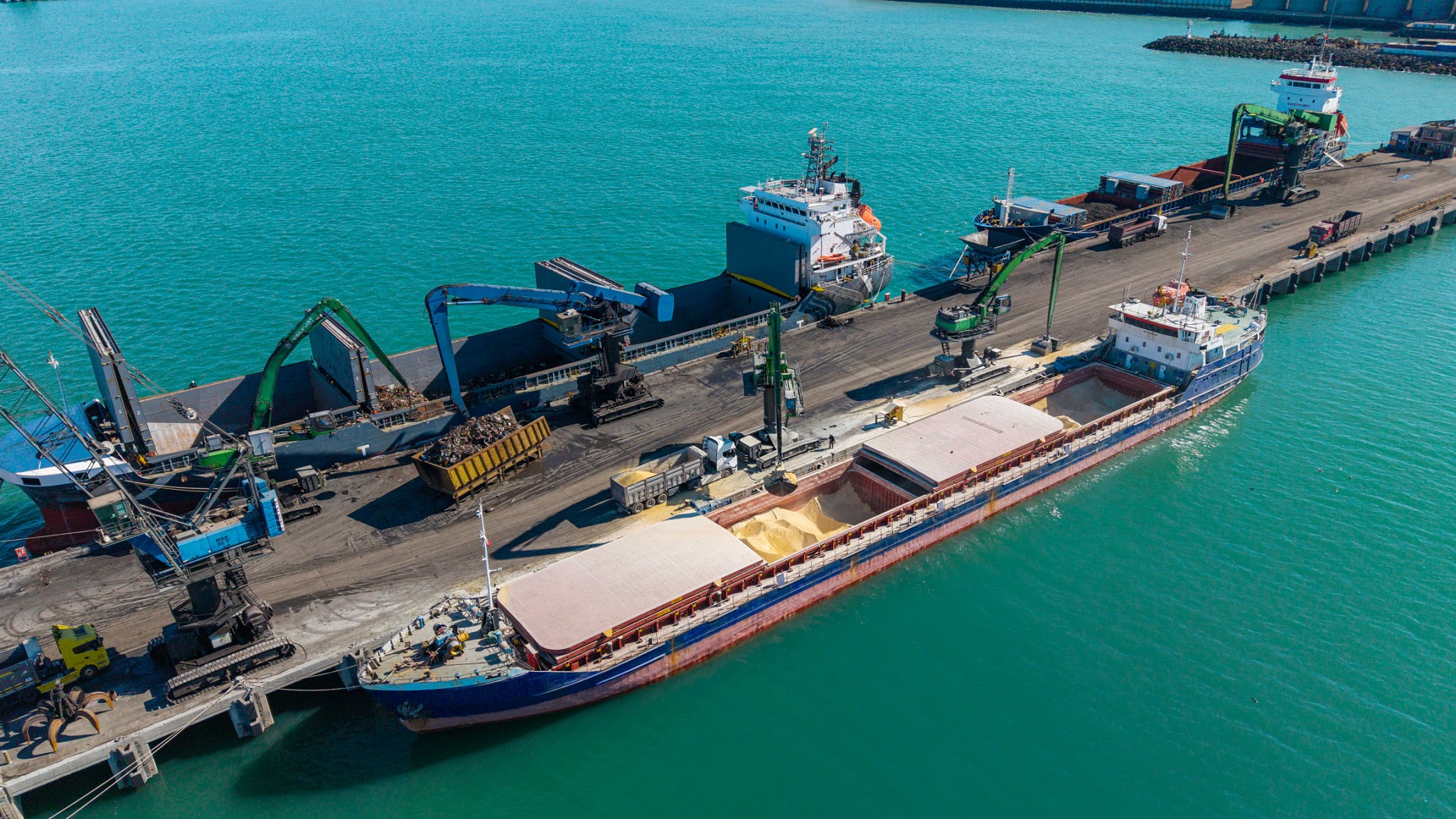
India has increased urea imports from Egypt, Algeria, Nigeria, and Georgia to secure its domestic agricultural supply chain ahead of peak crop sowing seasons. Governed by the Department of Fertilizers, this strategic diversification aims to mitigate global geopolitical supply risks and maintain stable retail fertilizer prices for millions of Indian farmers.
NEW DELHI — India has significantly expanded its nitrogenous fertilizer procurement, as India increases urea imports from non-traditional suppliers including Egypt, Algeria, Nigeria, and Georgia. According to trade flow data and procurement schedules overseen by the Department of Fertilizers, the government-backed canalizing agencies have recalibrated import tenders to secure steady physical shipments ahead of the upcoming agricultural crop sowing cycles.
The strategic shift reflects New Delhi’s policy of geographically diversifying its critical crop-nutrient supply chains away from concentrated supply hubs. By tapping competitive production capacity across North Africa, West Africa, and the Black Sea region, the Ministry of Chemicals and Fertilizers aims to insulate domestic farmers from sudden geopolitical supply disruptions, ocean freight volatility, and localized production halts in traditional exporting nations.
Strategic Realignment of Global Fertilizer Procurement
Urea remains India’s most heavily consumed crop nutrient, plays a pivotal role in supporting staple food production across major agricultural states. While domestic urea manufacturing capacity has expanded in recent years through the revival of closed fertilizer plants, India continues to import several million metric tons annually to bridge the demand-supply gap during peak agricultural seasons.
Trade records released for 2026 show that state-designated canalizing entities—such as IPL (Indian Potash Limited), RCF (Rashtriya Chemicals and Fertilizers), and NFL (National Fertilizers Limited)—have awarded significant import contracts to suppliers operating out of North and West Africa. Facilities in Egypt, Algeria, and Nigeria offer proximity to key shipping lanes and competitive natural-gas-based production costs, allowing Indian buyers to secure cost-effective freight rates through western maritime corridors.
Supply Chain Security and Geopolitical Risk Mitigation
The decision to scale up shipments from African and Caucasian producers comes in response to evolving international trade dynamics. Over recent years, international supply chain friction, regional conflicts, and export restrictions imposed by major global fertilizer producers have created price unpredictability in world spot markets.
By establishing long-term commercial trade channels with North African and West African energy-rich exporters, India reduces its reliance on any single geographical corridor. Industry experts note that Nigerian producers, equipped with massive modern urea complexes, have emerged as key suppliers to South Asian markets. Concurrently, sourcing from Georgia provides alternative access to Black Sea nitrogenous output, strengthening India's overall strategic buffer.
| Importing Partner | Primary Production Basis | Freight & Supply Role |
| Egypt | Abundant natural gas feedstock | Direct Mediterranean and Red Sea maritime access |
| Algeria | High-capacity industrial gas reserves | Mediterranean shipping corridor supplier |
| Nigeria | Modernized large-scale urea complexes | Major West African source for Atlantic-to-Indian routes |
| Georgia | Caucasus regional chemical hubs | Diversified Black Sea nitrogenous supply node |
Economic Impact on Agriculture, Subsidies, and Retail Prices
For domestic agricultural producers, the expansion of import channels ensures that soil nutrients remain available without localized distribution bottlenecks. Under India’s Nutrient Based Subsidy (NBS) and statutory price control framework, urea is supplied to farmers at a fixed, government-mandated maximum retail price (MRP), with the central government absorbing international price fluctuations through direct subsidy payouts.
Consequently, as India increases urea imports from competitively priced markets like Egypt, Algeria, Nigeria, and Georgia, the fiscal burden on the central government’s annual fertilizer subsidy allocation is stabilized. Lower landed freight costs and diverse tender bidding allow canalizing agencies to negotiate favorable cost-and-freight (CFR) contract pricing, protecting both the national exchequer and agrarian livelihoods.
Official Sources Section
Procurement schedules, canalized tender outcomes, and statutory guidelines governing urea imports are documented by official government bodies:
Department Releases: Official updates and statistical publications from the Department of Fertilizers under the Union Ministry of Chemicals and Fertilizers.
Trade Disclosures: Import and export shipping manifests maintained by the Ministry of Commerce and Industry.
Canalizing Agencies: Official procurement bulletins from National Fertilizers Limited (NFL) and Indian Potash Limited.
Quote Section
"According to officials from the Ministry of Chemicals and Fertilizers, diversifying supplier geographies ensures that domestic agricultural regions receive uninterrupted shipments of essential crop nutrients, insulating the agricultural market from global freight distortions and regional trade bottlenecks."
Why It Matters
Securing a stable, multi-region supply of urea is critical to India’s national food security. By expanding procurement contracts with suppliers in Egypt, Algeria, Nigeria, and Georgia, India guarantees that farmers receive necessary inputs for high-crop-yield seasons without experiencing supply shortages or cost inflation. This proactive supply chain management helps maintain domestic food grain production targets and protects rural economies.
Key Facts at a Glance
Geographic Expansion: India scales up nitrogenous fertilizer imports from Egypt, Algeria, Nigeria, and Georgia.
Primary Objective: Diversifying supply channels to prevent shortages and mitigate international trade risks.
Procurement Framework: Tenders executed via government canalizing agencies including NFL, RCF, and IPL.
Fiscal Protection: Helps control the central government's total fertilizer subsidy burden through competitive CFR pricing.
FAQ Section
Why is India expanding urea imports from North and West African nations?
Countries like Egypt, Algeria, and Nigeria possess abundant natural gas reserves and modern production plants, providing competitively priced urea with direct access to strategic maritime shipping lanes.
Does the increase in urea imports affect retail prices for Indian farmers?
No. Urea is sold to Indian farmers at a statutory, government-fixed Maximum Retail Price (MRP). The central government absorbs international price differences through the national fertilizer subsidy.
Is India working to reduce its long-term reliance on imported urea?
Yes. India continues to revive closed domestic fertilizer plants and expand coal gasification technology to boost local production, using imports as a balancing mechanism to meet peak seasonal agricultural demand.
Source: Official bulletins from the Department of Fertilizers, trade data from the Ministry of Commerce and Industry, and procurement disclosures from National Fertilizers Limited.