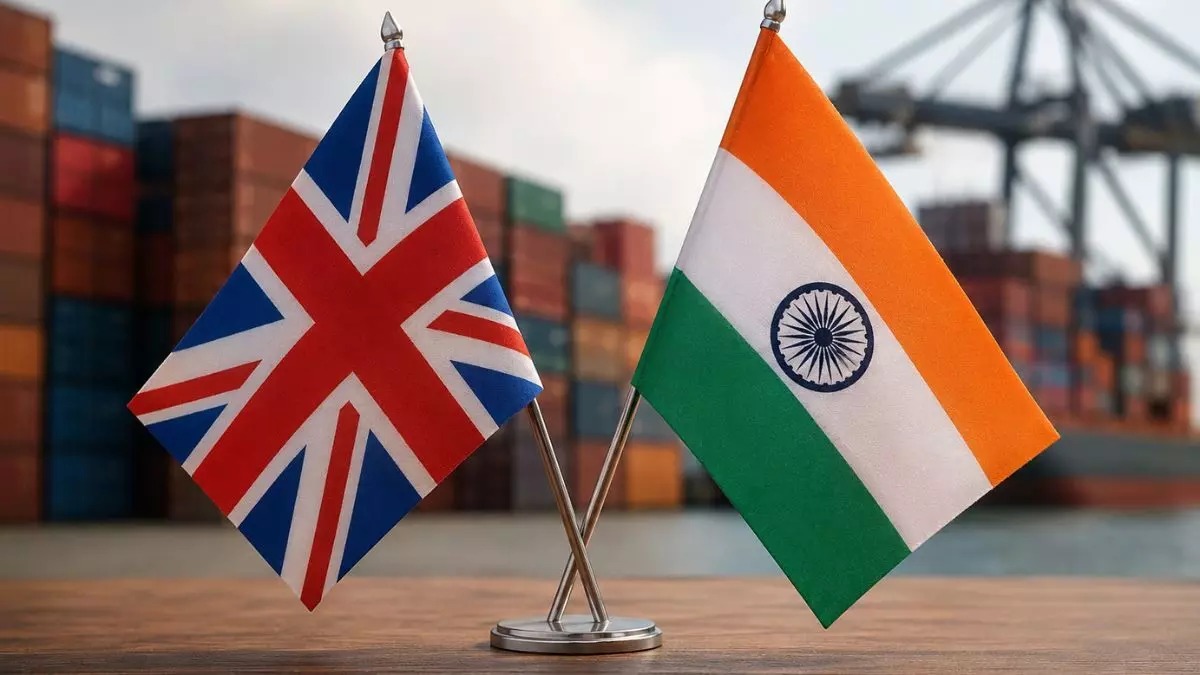
The India-UK Comprehensive Economic and Trade Agreement (CETA) officially took effect on July 15, 2026. This landmark deal provides duty-free access for 99% of Indian exports, significantly benefiting labour-intensive sectors. Additionally, it introduces a Double Contribution Convention, simplifying social security for professionals and aiming to boost bilateral trade to $100 billion.
The landmark India-UK Comprehensive Economic and Trade Agreement (CETA) officially enters into force on July 15, 2026, marking a new era for bilateral trade and investment.
NEW DELHI — In a move set to reshape the economic partnership between the two nations, the India-UK Comprehensive Economic and Trade Agreement (CETA) officially comes into force today, July 15, 2026. This landmark agreement is expected to significantly boost bilateral trade, with projections aiming to increase volume from $60 billion to $100 billion by 2030.
The agreement is being hailed as a "gold standard" trade deal, providing duty-free access for nearly 99% of Indian exports to the United Kingdom. By streamlining customs procedures and reducing non-tariff barriers, the pact creates a more predictable environment for businesses, particularly benefitting small and medium-sized enterprises (SMEs).
Boosting Labour-Intensive Industries
Industry leaders and government officials emphasize that the CETA will be a primary driver for India’s labour-intensive sectors. Exporters in industries such as textiles, garments, leather, footwear, gems and jewellery, and processed foods stand to gain immediate advantages from the elimination of tariffs, which previously ranged between 4% and 16%.
Beyond traditional goods, the agreement introduces comprehensive chapters on digital trade, government procurement, and innovation. For the first time, UK suppliers will be able to bid for high-value central government procurement contracts in India, a market estimated at £38 billion annually, while India secures reciprocal access to the UK's procurement system.
Professional Mobility and Social Security
A key highlight for the services sector is the Double Contribution Convention (DCC), which is expected to benefit over 75,000 Indian professionals and 900 employers. This provision exempts eligible workers from paying social security contributions in both countries simultaneously for up to five years, provided they continue their contributions in their home country.
"This is one of the most ambitious and aspirational FTAs of India," said Union Commerce Secretary Rajesh Agrawal, noting that the agreement addresses not only tariff liberalisation but also facilitates deeper cooperation in Artificial Intelligence (AI), clean energy, and telecommunications.
Official Sources
The implementation of the agreement follows extensive negotiations and parliamentary scrutiny in both nations. According to official government statements:
India’s Ministry of Commerce: Confirmed that the CETA protects sensitive sectors such as dairy, cereals, and smartphones through calibrated market access.
UK Department for Business and Trade (DBT): Encouraged businesses to register with HMRC to benefit immediately from tariff reductions.
Why It Matters
The CETA is expected to serve as a vital economic engine, fostering innovation and creating new job opportunities across both economies. By aligning regulatory standards and reducing red tape, the agreement aims to protect supply chains from global shocks and ensure that innovators are fairly rewarded for their intellectual property. For consumers, this translates to a wider choice of goods, including iconic British products like Scotch whisky and luxury cosmetics, and greater access to high-quality Indian textiles and food products.
Key Facts at a Glance
Agreement Name: India-UK Comprehensive Economic and Trade Agreement (CETA).
Effective Date: July 15, 2026.
Tariff Relief: Zero-duty access for 99% of Indian exports to the UK.
Key Benefits: Includes a Double Contribution Convention (DCC) to prevent double social security payments for professionals.
Scope: Covers 30 chapters, including digital trade, SMEs, sustainability, and gender-inclusive policies.
Frequently Asked Questions (FAQ)
What sectors will benefit most from the India-UK FTA?
Labour-intensive sectors such as textiles, garments, footwear, leather, and gems and jewellery are expected to see significant gains due to the removal of tariffs.
How does the Double Contribution Convention (DCC) work?
The DCC allows eligible professionals to pay social security contributions in only one country for up to five years, avoiding the burden of double payments.
Will the agreement affect government procurement?
Yes, the agreement opens India’s central government procurement market to UK suppliers for the first time, and vice versa, covering goods and services.
Are any sectors protected under this agreement?
Yes, India has excluded sensitive products—such as dairy, pulses, certain cereals, and gold—from tariff concessions to protect domestic interests.
Source: Press Information Bureau (PIB), Business.gov.uk, Menzies LLP