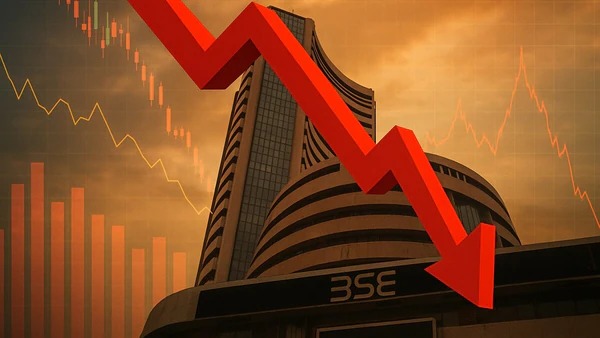
Indian benchmark indices Sensex and Nifty 50 closed 0.4% and 0.39% lower, respectively, on August 31, 2026. Both indices managed to pare steeper intraday losses as selective institutional buying emerged during the afternoon session, countering broader international market pressures.
Indian stock market benchmarks Sensex and Nifty 50 settled lower on Monday, successfully paring steeper intraday losses amid cautious global sentiment.
MUMBAI — India’s major stock market benchmarks closed in negative territory on Monday, August 31, 2026, though both indices managed to recover more than half of their sharper morning drop. The Nifty 50 index .NSEI settled 0.39% lower, trimming an earlier intraday decline of 0.52%, while the BSE Sensex .BSESN ended down 0.4% after sliding further during early trading hours. Rebounding from initial weakness driven by weak international cues and regional geopolitical jitters, domestic equities found localized support near key psychological thresholds as institutional buyers stepped in during the afternoon session.
Sectoral Performance and Institutional Buying Patterns
The trading session reflected broad-based caution across key sectoral gauges, with heavyweights in the banking, information technology, and metal segments experiencing mixed movements. According to provisional exchange data, early selling pressure pushed the Nifty 50 below the crucial 24,100 support level before bargain-hunting in select large-cap financials facilitated a late recovery.
Market analysts noted that while domestic liquidity conditions remain stable, investor participation has turned increasingly selective. Traders are closely monitoring foreign institutional investor (FII) capital flows and shifting global monetary policy indicators ahead of upcoming U.S. macroeconomic data releases.
Macroeconomic Headwinds and Market Outlook
The equities downturn coincided with fluctuating global crude oil prices and ongoing volatility in foreign exchange markets, where the Indian rupee hovered near recent ranges against the U.S. dollar. Experts emphasize that domestic indices continue to trade within a broader consolidation phase.
For retail investors and institutional portfolios, maintaining positions above key technical support levels remains vital to preserving the medium-term recovery structure. Market participants are expected to remain watchful of external triggers, including commodity price movements and global central bank commentary.
Official Sources Section
Market closing figures, intraday metrics, and provisional settlement data were sourced from official reports published by the National Stock Exchange of India (NSE), the Bombay Stock Exchange (BSE), and institutional updates compiled via Reuters.
Quote Section
"According to officials, domestic market resilience is being tested by external macroeconomic pressures, though consistent institutional participation continues to cushion major downside risks."
Why It Matters
Benchmark fluctuations directly impact mutual fund valuations, retail investor portfolios, and corporate equity-raising plans. For businesses and market participants, the ability of indices to pare intraday losses demonstrates underlying market depth and structural resilience against external global shocks.
Key Facts at a Glance
The Nifty 50 index .NSEI ended 0.39% lower, successfully paring intraday losses that had reached 0.52%.
The BSE Sensex .BSESN settled 0.4% lower after recovering from steeper morning declines.
Trading sessions on August 31, 2026, were characterized by selective institutional bargain-hunting and cautious sentiment.
Key technical support levels near psychological thresholds managed to absorb early selling pressure.
Frequently Asked Questions
How did the Nifty 50 perform at the close of August 31, 2026?
The Nifty 50 index .NSEI closed 0.39% lower, recovering from an earlier intraday drop of 0.52%.
What was the closing trajectory for the BSE Sensex?
The BSE Sensex .BSESN settled 0.4% lower after paring deeper losses sustained during early trading.
What drove the market recovery during the session?
Selective bargain-hunting in large-cap equities and localized support near key technical levels helped indices pare morning losses.
Where were the official closing statistics published?
Closing statistics and market data were reported via exchange platforms including the National Stock Exchange of India (NSE) and financial news wires.
Source: National Stock Exchange of India (NSE), Bombay Stock Exchange (BSE), Reuters