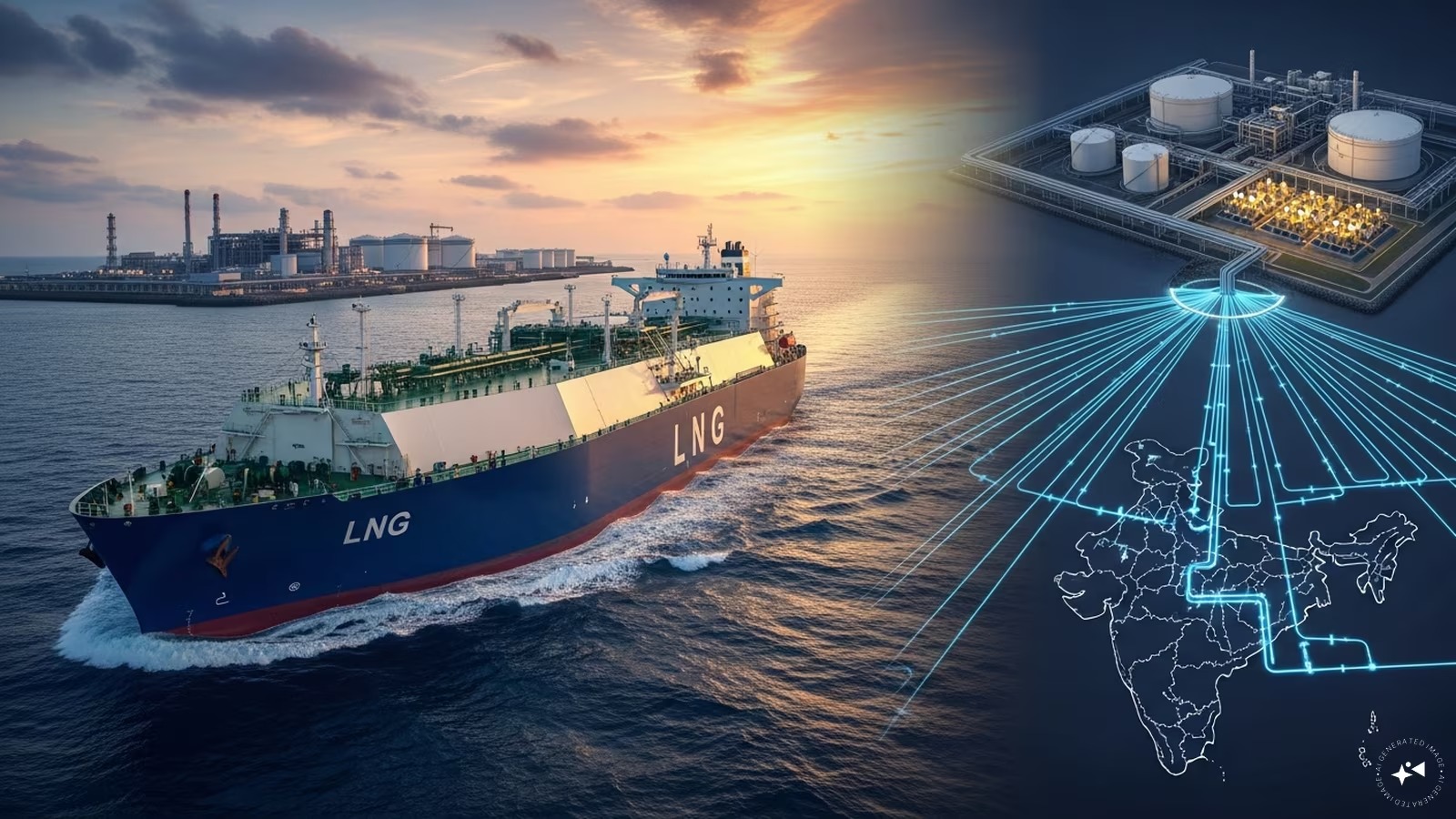
The Petronet-chartered LNG tanker Disha has commenced its passage through the Strait of Hormuz, becoming one of the first energy carriers to transit the corridor following a historic US-Iran peace deal. The breakthrough has sent global gas prices down 5.8%, signaling major relief for energy supply chains.
MUMBAI — Marking a critical turning point in the global energy crisis, the liquefied natural gas (LNG) tanker Disha has officially commenced its eastward passage through the Strait of Hormuz. The vessel, under a long-term charter by India's state-owned importer Petronet LNG Limited, successfully entered the strategic maritime corridor on Monday, June 15, 2026, after being effectively stranded in the Persian Gulf for more than three months due to severe regional hostilities.
The high-stakes maritime transit comes less than 24 hours after the United States and Iran announced a comprehensive preliminary peace deal brokeraged by Pakistan and Qatar. The landmark accord mandates an immediate and permanent termination of military operations on all fronts, prompting commercial operators to test the viability of a shipping lane that handles approximately 20% of the world's liquefied natural gas trade.
Testing the Waters After a Three-Month Maritime Blockade
The Disha loaded its commercial cargo at Qatar’s prominent Ras Laffan industrial export terminal around March 1, 2026. However, the outbreak of an intense air war and competing naval blockades on February 28, 2026, virtually halted civilian shipping traffic through the 21-mile-wide choke point.
According to dynamic ship-tracking data compiled by Bloomberg and maritime intelligence firm Kpler, the vessel modified its positioning north of the United Arab Emirates early Monday morning, moving past Larak Island toward the Gulf of Oman. While many shipowners remain cautious, awaiting full operational clarity from United States Central Command (CENTCOM), Disha's eastward movement signals a major shift toward normalizing the primary energy lifeline linking Middle Eastern exporters to key Asian consumer markets.
Global Market Relief and the Structural Terms of the Reopening
The geopolitical breakthrough triggered an immediate reaction across global commodities bourses. In early Asian trading sessions on Monday, European natural gas benchmarks plunged by as much as 5.8%. On the domestic front, the news fueled a major 335-point rally on the National Stock Exchange (NSE) Nifty 50 index, as investors priced in relief from prolonged imported inflation and energy supply deficits.
Under the transitional terms of the memorandum of understanding finalized by international mediators, the Strait of Hormuz will undergo a phased, toll-free reopening:
| Phase / Timeline | Core Operational Mandate | Technical Parameter |
| Immediate Effect | Cessation of hostilities and removal of the active US naval blockade. | Apparent end to 107 days of regional war. |
| First 30 Days | Systematic mine-sweeping and route clearance. | Managed completely under Iranian arrangements. |
| Next 60 Days | Broad sanctions-waiver implementation for regional energy exports. | Tied directly to verified progress on nuclear compliance talks. |
Operational Impact on Indian Utilities and Consumers
The successful crossing of the Disha is expected to significantly ease input cost pressures for Indian gas distributors, chemical manufacturers, and power corporations. During the height of the 107-day conflict, spot LNG procurement prices climbed to unprecedented premiums, forcing localized rationing across fertilizer production facilities and compressed natural gas (CNG) distribution hubs.
The resumption of reliable long-term Qatari supply via Petronet LNG enables domestic utilities to rebuild depleted inventory cushions ahead of seasonal industrial demand spikes. Furthermore, economic analysts at major domestic think tanks project that a permanently unblocked strait will directly stabilize the Indian Rupee against the US Dollar by curbing volatile spikes in the nation’s overall trade import bill.
Official Sources Section
The maritime tracking records, vessel positions, and corporate charter data featured in this industrial report are sourced from live data feeds maintained by Kpler and maritime logistics registers. The geopolitical and legislative benchmarks are cited in accordance with official statements issued by the [suspicious link removed], diplomatic transcripts distributed by the Ministry of Foreign Affairs in Islamabad, and corporate regulatory filings submitted by Petronet LNG Limited to the stock bourses.
Quote Section
"According to officials and ship-tracking analysts monitoring the passage, the movement of the Indian-chartered carrier serves as a critical real-world test case for the maritime industry, paving the way for dozens of anchored tankers to restart their engines across the region."
Why It Matters
The reopening of the Strait of Hormuz has deep practical implications that extend far beyond corporate shipping boardrooms. For regular citizens and consumers, the stabilization of natural gas flows plays an essential role in keeping electricity tariffs and home cooking gas costs predictable. For international businesses, it removes a massive inflationary risk factor, ensuring that essential manufacturing feedstocks can move securely without the burden of war-risk insurance surcharges that had threatened global economic growth since late February.
Key Facts at a Glance
The Breakthrough: The LNG carrier Disha has successfully entered the Strait of Hormuz, breaking a month-long shipping freeze.
The Charter: The vessel holds an active long-term cargo contract with India’s state-owned Petronet LNG Limited.
The Catalyst: Follows a comprehensive US-Iran peace deal finalized on Sunday to permanently halt military blockades.
Market Impact: Global gas prices fell up to 5.8% in early trading, while domestic equity benchmarks surged over 1.5%.
FAQ Section
1. Why was the LNG tanker Disha stranded for over three months?
The Disha became trapped inside the Persian Gulf after loading cargo at Ras Laffan around March 1. Operational safety risks and a tight naval blockade linked to the outbreak of the US-Iran conflict on February 28 made traversing the narrow Strait of Hormuz too dangerous for civilian crews.
2. When will the official US-Iran peace agreement be formally signed?
According to public social media dispatches from Washington and Tehran, an official signing ceremony has been formally scheduled for Friday, June 19, 2026, in Switzerland.
3. What percentage of global LNG trade passes through this waterway?
The Strait of Hormuz is considered the world's most critical energy corridor, historically handling approximately 20% of global liquefied natural gas (LNG) trade alongside a fifth of the world's total crude petroleum output.
Source: National Stock Exchange of India (NSE), Bloomberg Shipping Intelligence, Kpler Global Maritime Analytics