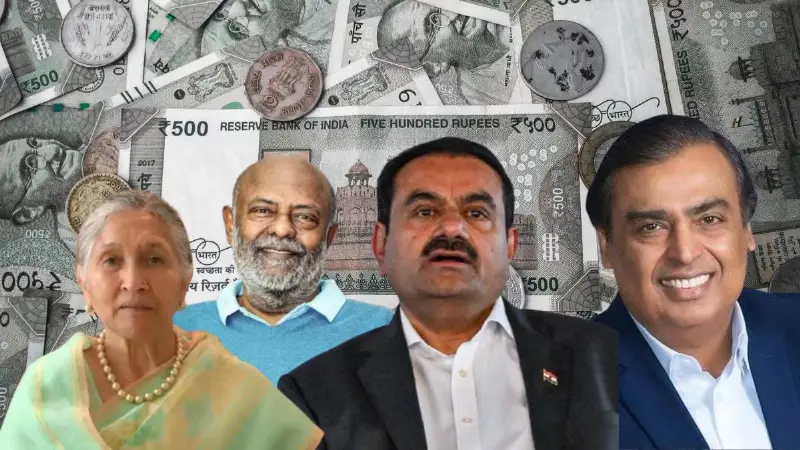
India’s billionaire list has quietly turned into a trillion‑dollar club: just 229 ultra-rich individuals now control wealth worth over $1 trillion. That’s more than the GDP of many countries, packed into a few dozen zip codes and a handful of sectors. The story here isn’t just how fast fortunes are being made, but how sharply India’s wealth pyramid is tilting at the very top.
Fuelled by record stock market highs, blockbuster IPOs and the relentless rise of infrastructure, financial services and tech, India is minting new billionaires at a pace that would have seemed unreal a decade ago. Yet the boom also poses an uncomfortable question: in the race to create unicorns and mega-conglomerates, who is being left behind?
Where The New Money Is Being Minted
Today’s Indian billionaire is as likely to own ports, power plants and banks as to run platforms, apps and data-driven businesses. Old-money family conglomerates still dominate the rich list, but a new breed of startup founders, PE-backed promoters and tech czars is rapidly catching up. Their wealth often moves in tandem with the indices-one great bull run can catapult an entrepreneur from obscurity to the ultra-rich club almost overnight.
Why The $1 Trillion Tag Matters
Crossing the $1 trillion mark in billionaire wealth is not just a headline-friendly milestone; it’s a mirror held up to the structure of India’s economy. A few hundred people now sit on assets worth a stunning slice of national output, concentrating both capital and clout. That concentration raises tough debates: how should capital gains be taxed, what role should big philanthropy play, and is it time to revisit ideas like inheritance or wealth taxes in some form?
The Inequality Plot Twist
Behind the glitter of super-yachts, private jets and marquee art auctions lies a parallel India grappling with uneven jobs, stressed rural incomes and patchy access to quality healthcare and education. For policymakers, the challenge is increasingly cinematic: keep the billionaire boom rolling to fund investment and innovation, without letting the rest of the script social mobility, opportunity, basic security fall apart. How India chooses to channel this trillion-dollar fortune over the next decade may decide whether the country becomes a truly broad-based economic powerhouse or just the world’s latest postcode of extreme wealth.
India’s Billionaire Boom Highlights
- 229 Indian billionaires now collectively control over $1 trillion in wealth
- Wealth is heavily tied to stock markets, infrastructure, finance, manufacturing and tech
- Old family conglomerates share space with a fast-rising class of startup and tech founders
- The numbers intensify debates on inequality, taxation, philanthropy and economic power
- Policy choices now hinge on turning concentrated billionaire wealth into wider opportunity
Sources: Recent wealth and billionaire rankings, Indian market wealth reports, and economic analyses of ultra-high-net-worth individuals and their sector-wise distribution