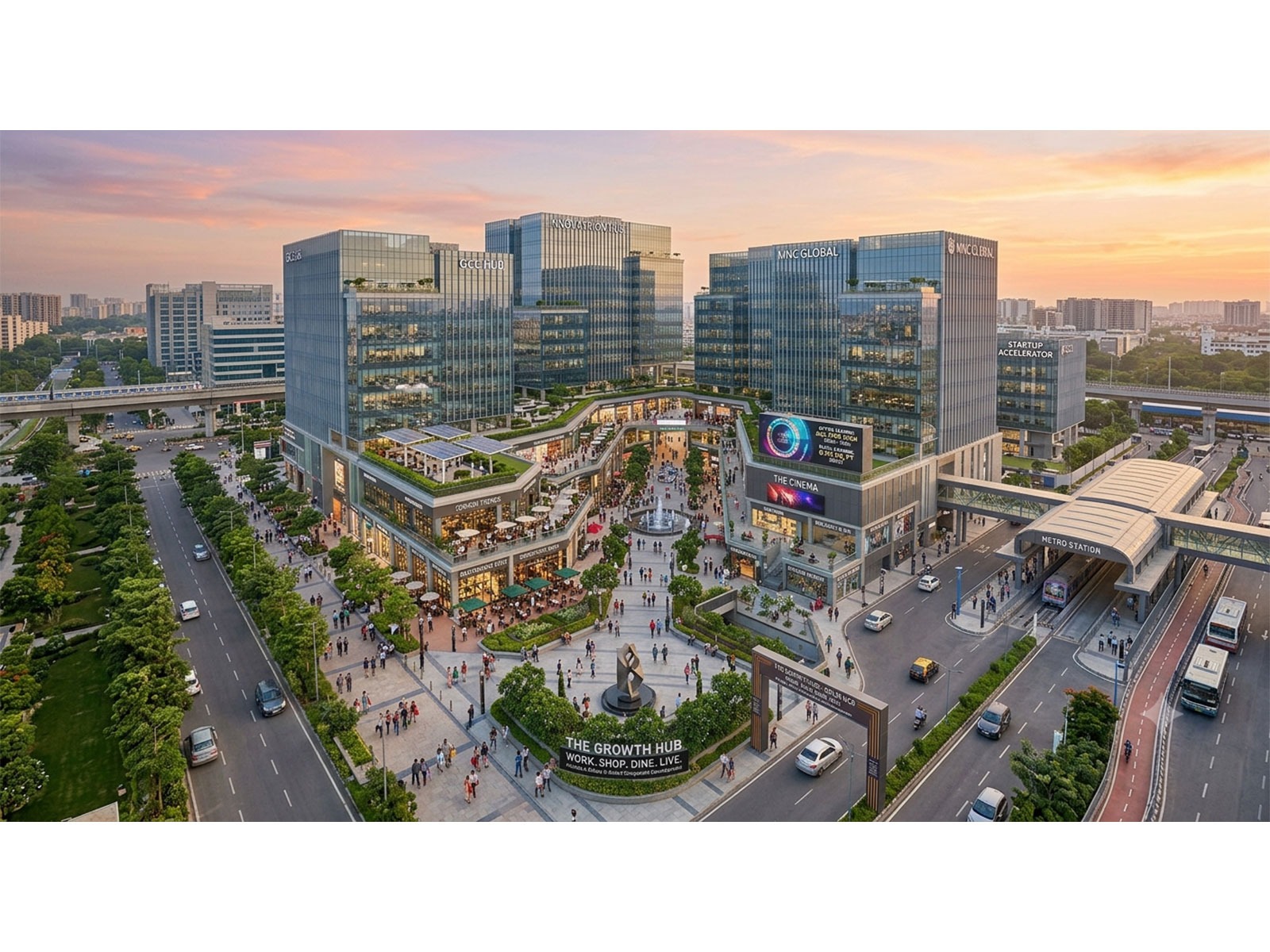
India’s real estate sector is thriving in 2026, led by robust commercial office demand from GCCs and a retail premiumization trend. With USD 1.9 billion in Q2 institutional investments and significant infrastructure-led growth, the market is projected to reach USD 116.26 billion by 2031, supported by domestic capital and policy reforms.
NEW DELHI — India’s real estate landscape is undergoing a structural transformation in 2026, with the commercial and retail segments emerging as the cornerstones of the nation's growth. Driven by a confluence of rising domestic capital, the expansion of Global Capability Centres (GCCs), and an intensifying demand for premium retail experiences, the sector is experiencing a period of significant value creation.
According to data from Cushman & Wakefield, institutional investments in Indian real estate hit USD 1.9 billion in the second quarter of 2026, a 16% increase compared to the previous quarter. This growth reflects a sustained confidence in long-term market fundamentals, even as global macroeconomic conditions fluctuate.
Commercial Office Resilience and GCC Demand
The office segment continues to dominate the investment landscape, accounting for 51% of total institutional investments in Q2 2026. This trend is primarily underpinned by strong demand from multinational corporations and GCCs, which are expanding their footprint to leverage India’s skilled talent pool and favorable operational costs.
"The continued dominance of office assets in institutional investment reaffirms the sector's resilience, driven by strong occupier demand and the availability of quality assets," stated industry analysts monitoring the market. Tightening vacancy levels in prime micro-markets have further pushed rental growth, making high-grade office spaces a preferred asset class for investors seeking stable, long-term income.
The Retail Revolution: Premiumization and Mall Growth
Parallel to the commercial office surge, the retail real estate sector is witnessing a "premiumization" wave. Retail leasing activity reached 2.4 million square feet (MSF) in Q2 2026, representing a 17.6% year-on-year increase.
Developers are increasingly shifting toward experience-led mall designs that integrate leisure, entertainment, and flexible spaces to attract modern consumers. With approximately 5.88 MSF of new retail supply expected to enter the market throughout 2026, the sector is poised to meet the growing appetite of domestic and international brands seeking high-visibility locations.
Key Drivers of Market Expansion
Several factors are converging to accelerate growth across these asset classes:
Infrastructure Connectivity: Large-scale projects, including metro rail expansions, new highways, and airport developments, are enhancing the viability of emerging business corridors.
REITs and Regulatory Support: Relaxed regulations regarding Real Estate Investment Trusts (REITs) and Foreign Direct Investment (FDI) caps are unlocking institutional capital, allowing for more liquid and transparent investment vehicles.
Digital Infrastructure: As the second-largest data center market in the APAC region, India is seeing significant capital deployment into data centers to support AI adoption and cloud expansion.
Tier 2 City Growth: Increased investment is flowing into Tier 2 cities, supported by industrial corridors and better digital connectivity, diversifying the geographic footprint of commercial growth.
Impact on Stakeholders
For businesses, the current market environment offers opportunities to secure high-quality office space in thriving business hubs like Bengaluru, Hyderabad, and the National Capital Region (NCR). For investors, the shift toward income-generating commercial and retail assets—facilitated by the expansion of REIT pipelines—provides a stable alternative to more volatile sectors.
However, market participants should remain mindful of challenges, including elevated policy rates that may affect refinancing costs and the complexities of land acquisition in certain regions.
Key Facts at a Glance
Institutional Investment: Real estate investments reached USD 1.9 billion in Q2 2026, with domestic institutions contributing 54% of the total.
Retail Momentum: Retail leasing grew by 17.6% YoY in Q2 2026, driven by tight supply and high demand for Grade A spaces.
Market Forecast: The commercial real estate market size is projected to grow from USD 53.53 billion in 2026 to USD 116.26 billion by 2031.
Leading Regions: Bengaluru, Chennai, and the Delhi NCR continue to account for the majority of leasing and investment activity.
FAQ
Why is commercial real estate becoming a preferred investment?
Commercial properties, particularly those held through REITs, offer more stable rental yields and long-term lease opportunities compared to traditional residential assets.
How are Tier 2 cities impacting the market?
The government's focus on regional infrastructure and digital connectivity is opening new commercial real estate frontiers outside of traditional metros, attracting industrial and business park developments.
What role do GCCs play in the current market?
Global Capability Centres are a major driver of office absorption, as multinational firms continue to expand their technology and operations hubs in India to leverage competitive talent costs.
Source: Cushman & Wakefield, Mordor Intelligence, Knight Frank, Ministry of Finance