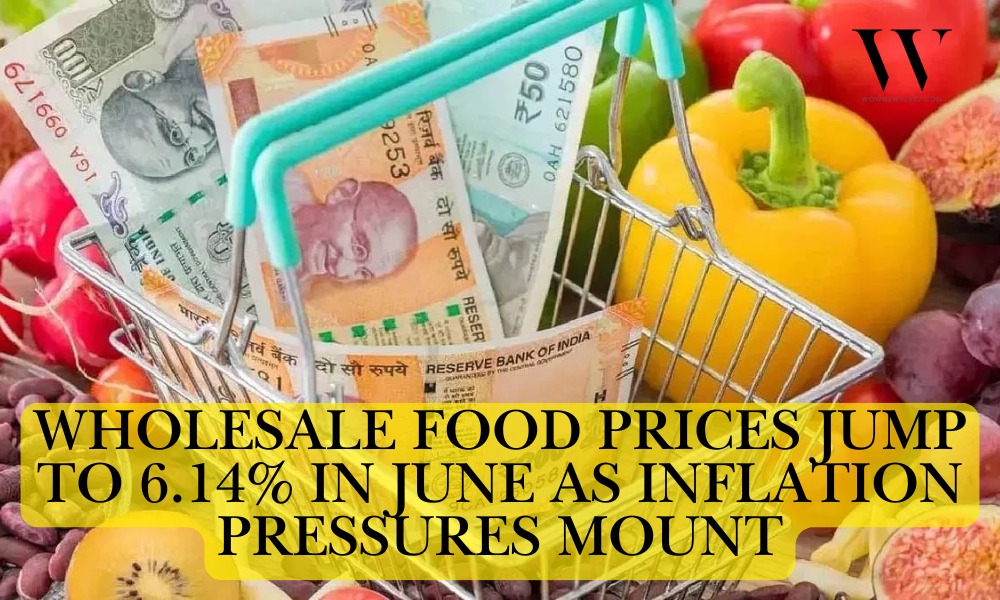
India's wholesale food inflation climbed to 6.14% year-on-year in June 2026, up from 4.49% in May, according to government data. The increase, driven by rising prices of food articles and processed items under the new 2022-23 base year series, added upward pressure on the overall headline WPI.
The sharp rise in wholesale food prices signals growing pressure on consumer wallets and domestic supply chains as monsoon patterns shift.
NEW DELHI — Wholesale food prices in India recorded a significant jump in June 2026, with the country’s Wholesale Price Food Index accelerating to 6.14% on a year-on-year basis. The latest data, released on Tuesday, July 14, 2026, by the Ministry of Commerce and Industry, highlights growing price pressures across both raw agricultural commodities and manufactured food items. This rapid rise from the 4.49% rate recorded in May 2026 comes at a critical time when uneven monsoon rainfall patterns are beginning to test agricultural supply chains, directly impacting business operational costs and raising household expenses across the nation.
Accelerated Wholesale Food Inflation Driven by Agricultural Volatility
The marked increase in the Wholesale Price Food Index reflects rising costs for essential kitchen staples. According to provisional statistics from the Office of the Economic Adviser, the surge was driven primarily by an escalation in "Food Articles" under the primary articles umbrella, alongside selective manufactured food products. Monsoon variability across major farming states has disrupted the sowing and transport of perishables, pushing wholesale food inflation upward.
The Wholesale Price Food Index, which represents a combined basket of 'Food Articles' from the Primary Articles major group and 'Manufacture of Food Products' from the Manufactured Products group, has emerged as a key focal point for macroeconomists. In comparison to previous months, the June 2026 reading of 6.14% represents a sharp trend reversal from earlier in the year, when post-harvest supply gluts temporarily stabilized prices. Commercial food processors and bulk buyers are already adjusting their procurement budgets as procurement costs for basic agricultural ingredients continue to climb.
Transition to New Base Year Highlights Broad-Based WPI Pressures
The latest figures are compiled under the government’s newly transitioned 2022-23 base year series, which was introduced earlier this year to provide a more accurate representation of India’s modern industrial and agricultural output. Under this revised framework, the Wholesale Price Food Index holds a combined weight of 24.99% across the wholesale basket.
The food price surge contributed significantly to the upward movement of the overall headline Wholesale Price Index (WPI). India's annual headline WPI inflation rose to 9.87% in June 2026, up from 9.68% in May. While the "Fuel and Power" segment showed a minor deceleration to 27.41% from 30.33% in May, the pressure from food articles acted as a major counterweight, keeping overall wholesale price indices highly elevated. This broad-based price pressure underscores the complex macroeconomic environment that Indian manufacturers face as both fuel and raw food materials remain key drivers of overall input costs.
Downstream Economic Consequences for Businesses and Consumers
The implications of the rising Wholesale Price Food Index extend beyond statistical reports to the everyday operations of logistics firms, food processing units, and retail consumers. For corporate entities in the Fast-Moving Consumer Goods (FMCG) sector, the escalating cost of wholesale inputs presents a challenging trade-off: absorb the narrowing profit margins or pass the costs onto consumers through higher retail pricing.
Historically, changes in wholesale prices precede shifts in retail inflation. Because the Wholesale Price Food Index reflects bulk transaction rates, any sustained rise here typically acts as a leading indicator for the retail-level Consumer Food Price Index (CFPI). For household shoppers, this wholesale spike suggests that the cost of daily groceries—ranging from edible oils to basic food grains—is unlikely to see rapid relief in the near term, keeping retail inflation concerns at the forefront of domestic economic policy.
Official Sources Section
All figures and trends presented in this report are based on official provisional data released by the Ministry of Commerce and Industry on July 14, 2026. This includes monthly index breakdowns from the Office of the Economic Adviser under the Department for Promotion of Industry and Internal Trade (DPIIT).
Quote Section
"According to officials from the Ministry of Commerce and Industry, the monthly adjustments in wholesale price indexes are subject to provisional revision over the next two months as secondary data from regional trade hubs is finalized."
Why It Matters
The surge in wholesale food costs limits the scope of monetary policy easing. With wholesale food inflation reaching a prominent level of 6.14%, the Reserve Bank of India (RBI) is likely to maintain a cautious stance regarding interest rates, keeping borrowing costs high for businesses and consumers alike to prevent wholesale price pressures from permanently embedding into retail consumer prices.
Key Facts at a Glance
WPI Food Inflation Rate: Climbed to 6.14% year-on-year in June 2026, up from 4.49% in May.
Headline WPI Acceleration: The overall wholesale inflation rate accelerated to 9.87% YoY.
New Index Mechanics: The data is calculated using the updated 2022-23 base year series, where the food index carries a 24.99% weight.
Key Inflators: Escalating costs in food articles and manufactured food products acted as major drivers for the index's upward trajectory.
Frequently Asked Questions (FAQ)
What is the Wholesale Price Food Index?
The Wholesale Price Food Index is a specific measure compiled by the Indian government that tracks wholesale price changes of food articles from the agricultural sector (Primary Articles) and processed edible commodities from the manufacturing sector.
How does this index differ from retail food inflation?
While the Consumer Price Index (CPI) tracks the prices paid by end-consumers at retail outlets, the WPI measures prices at the first point of bulk sale, such as mandis, wholesale trade centers, and factory gates. High wholesale prices often serve as a leading indicator of upcoming retail price hikes.
Why is food inflation rising in India right now?
The June 2026 rise is primarily attributed to seasonal domestic weather disruptions, localized monsoon delays, and rising transportation and fuel costs, which have collectively raised the cost of harvesting and moving essential agricultural commodities.
What is the significance of the 2022-23 base year?
The government transitioned the WPI base year to 2022-23 to modernize the index's basket of goods, ensuring the weights assigned to commodities like food, fuel, and manufacturing align accurately with contemporary consumption and industrial production patterns.
Source: Ministry of Commerce and Industry - Office of the Economic Adviser