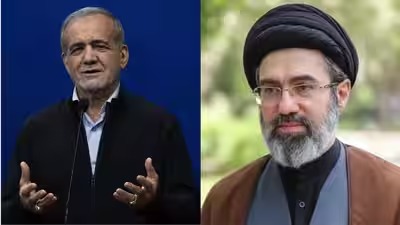
Iran’s Supreme Leader Mojtaba Khamenei has reportedly issued an ultimatum to President Masoud Pezeshkian, stating any future resignation will be accepted. The move, alongside backing IRGC Commander Ahmad Vahidi on major policy decisions, signals a firm consolidation of influence within Iran's military and clerical establishment.
TEHRAN, Iran — Iranian Supreme Leader Mojtaba Khamenei has issued a direct ultimatum to President Masoud Pezeshkian, warning that any future offer of resignation from the president will be accepted immediately. The communication, reported by international media outlets on August 4, 2026, effectively removes President Pezeshkian's principal political leverage over domestic policy and foreign negotiations.
The ultimatum comes alongside reports that Supreme Leader Khamenei has granted Islamic Revolutionary Guard Corps (IRGC) Commander Ahmad Vahidi primary authority over critical national security decisions, including indirect diplomatic engagements with the United States. The move highlights a consolidation of influence within Iran's military establishment amid heightened Middle Eastern security dynamics and ongoing international economic sanctions.
Escalating Tensions Between Civilian Leadership and IRGC
Tensions between President Pezeshkian’s reform-oriented administration and Iran’s hardline military leadership have escalated steadily since early 2026. Reports indicate that Pezeshkian previously offered to step down in May 2026, citing frustration that his cabinet had been sidelined from key national security decisions.
The Supreme Leader’s latest directive signals a firm rejection of executive pushback. By stating that any subsequent resignation submission will be endorsed without reservation, the clerical leadership has effectively curtailed the civilian government’s ability to countermand IRGC directives on major state policy.
Key Strategic Realignments in Tehran
Policy Delegation: Strategic decisions regarding foreign relations and defense positioning are increasingly centered under IRGC command structures.
Resignation Leverage Neutralized: President Pezeshkian's repeated warnings of executive resignation no longer function as a tool for political compromise.
Hardline Alignment: The state apparatus has consolidated around a unified military-clerical doctrine concerning regional security and nuclear diplomacy.
Implications for US-Iran Indirect Negotiations
The shifting power balance in Tehran directly impacts indirect diplomatic dialogues involving Washington. Channel 14 and international news outlets report that indirect communications are continuing through Iranian Foreign Minister Abbas Araghchi and U.S. special envoys, with regional mediation provided by Qatar and Pakistan.
However, with IRGC Commander Ahmad Vahidi shaping Tehran’s official diplomatic parameters, expectations for immediate policy concessions remain low. Analysts note that Iranian leadership anticipates limited changes in U.S. West Asia policy ahead of upcoming domestic political cycles, prompting Tehran to prioritize maximum strategic leverage.
Official Sources Section
Information regarding internal political developments and regional diplomatic communications has been gathered from regional broadcasts and international reporting channels:
Foreign policy monitoring updates compiled by the Ministry of Foreign Affairs of the Islamic Republic of Iran.
Defense and security briefings monitored via Press TV.
Executive communications archived by the President of the Islamic Republic of Iran Office.
Official Statement
According to officials familiar with internal government communications, the Supreme Leader’s office emphasized that national security policies require absolute institutional unity during period of regional instability.
"According to officials, state affairs and strategic defense protocols will continue without interruption under designated constitutional authorities, with full coordination across military and administrative departments."
Why It Matters
The shift toward IRGC-led strategic decision-making diminishes the influence of moderate political figures within Iran's central government. For international energy markets, maritime shipping routes in the Strait of Hormuz, and global diplomatic channels, a consolidated hardline stance from Tehran alters the baseline assumptions for regional stability, sanctions negotiations, and security protocols.
Key Facts at a Glance
Supreme Leader Ultimatum: Mojtaba Khamenei warned President Pezeshkian that future resignation offers will be accepted immediately.
IRGC Prominence: IRGC Commander Ahmad Vahidi granted primary authority on strategic negotiations and conflict policy.
Executive Backstory: Pezeshkian formally offered to resign in May 2026 after claiming his cabinet was sidelined.
Diplomatic Channels: Indirect US-Iran talks continue through Qatari and Pakistani mediation channels.
Hardline Policy: Strategic consensus in Tehran aligns firmly with military and security leadership.
Frequently Asked Questions (FAQ)
What was the ultimatum issued to President Pezeshkian?
Supreme Leader Mojtaba Khamenei reportedly informed President Masoud Pezeshkian that if he offers his resignation again, it will be formally accepted without hesitation.
Who is holding primary decision-making authority over security policy in Iran?
IRGC Commander Ahmad Vahidi has been empowered with final authority over key decisions involving US negotiations and regional conflict strategy.
Why did President Pezeshkian previously offer to resign?
Pezeshkian reportedly offered to resign in May 2026, stating that his civilian administration was being sidelined from major national security and foreign policy decisions.
Are the US and Iran engaging in direct talks?
No formal direct negotiations are taking place. However, indirect communications continue through intermediaries, including Qatar and Pakistan.
Source: Reporting derived from regional media updates monitored by Press TV, diplomatic disclosures via the Ministry of Foreign Affairs of the Islamic Republic of Iran, and official statements from the President of the Islamic Republic of Iran Office.