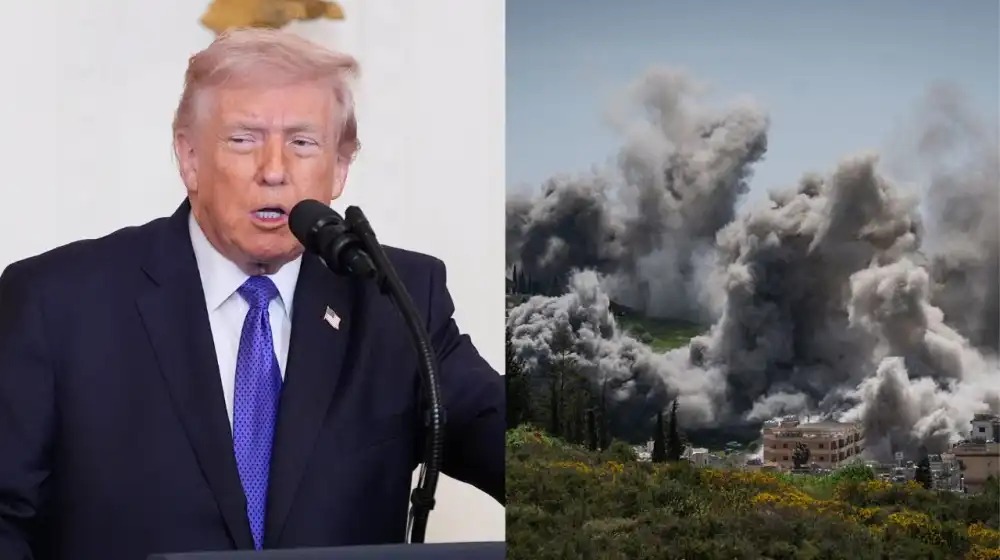
Israel and Lebanon have agreed to a U.S.-mediated ceasefire renewal establishing specialized, Hezbollah-free security zones enforced by the Lebanese army. Concurrently, the U.S. House passed a bipartisan war powers resolution to restrict unauthorized executive military actions against Iran.
WASHINGTON — In a major dual development for the Middle East crisis, Israel and Lebanon have formally agreed to renew their fragile ceasefire and establish specialized security zones, while the United States House of Representatives delivered a direct legislative rebuke to President Donald Trump over the unauthorized war on Iran.
The breakthrough diplomatic agreement, mediated by the United States Department of State on June 3, 2026, aims to stabilize a volatile region after months of escalating cross-border violence. Concurrently, lawmakers in Washington voted to enforce constitutional oversight on the executive branch, demanding that the administration seek explicit congressional approval to sustain active military hostilities. These developments mark a critical shift for global oil markets, regional civilian populations, and international defense strategies.
Israel and Lebanon Establish New Security Zones Free of Hezbollah
According to a joint statement released by the [suspicious link removed], Israel and Lebanon agreed to renew their temporary cessation of hostilities following a pivotal fourth round of ambassadorial-level talks in Washington. The newly amended framework introduces a series of "pilot" security zones inside southern Lebanon where Hezbollah militants are strictly banned.
The official communique noted that the ongoing truce is "contingent on a complete cessation of Hezbollah fire and the evacuation of all Hezbollah operatives" from geographic territories south of the Litani River, situated roughly 30 kilometers (20 miles) north of the Israeli border. Under the agreed terms, the Lebanese Armed Forces are designated to take full sovereign control of these pilot zones to maintain security and prevent regional non-state actors from holding the bilateral relationship hostage.
While Hezbollah is not an official signatory to the Washington talks, the framework places the onus of enforcement on the sovereign government in Beirut. Diplomatic officials confirmed that subsequent negotiation rounds will resume next week to transition the temporary truce into a comprehensive permanent peace treaty.
US House Passes War Powers Resolution in Landmark Vote
As diplomats solidified the border truce, political friction peaked on Capitol Hill. The Republican-led U.S. House of Representatives voted 215 to 208 to pass a war powers resolution designed to restrict President Trump’s authority to wage war against Iran without explicit congressional authorization.
The legislative measure crossed party lines, with four Republicans Representatives Thomas Massie of Kentucky, Brian Fitzpatrick of Pennsylvania, Warren Davidson of Ohio, and Tom Barrett of Michigan joining a unanimous Democratic caucus. The vote took place as the unilateral conflict approached its 100th day on Saturday, crossing the critical 90-day statutory threshold mandated by the historical War Powers Resolution of 1973.
The Pentagon estimated in May 2026 that military operations against Iran have already cost American taxpayers upwards of $29 billion. Congressional leaders emphasized that the U.S. Constitution solely invests the power to declare war within the legislative branch, rejecting executive attempts to frame the ongoing military campaign as a minor "skirmish."
Economic and Public Impact: Energy and Inflation Strain
The intersection of the ongoing regional war and diplomatic efforts continues to heavily burden global consumers and commercial enterprise. Since the outbreak of hostilities, domestic energy costs inside the United States have soared, leaving everyday consumers paying up to 50% more at the gas pump due to shipping anxieties surrounding the critical Strait of Hormuz.
Independent polling data compiled by the Marist Institute for Public Opinion indicates growing public disapproval of the current military strategy, with 60% of surveyed U.S. citizens opposing the approach to the war. For international shipping corporations and commercial airlines, the renewal of the Israel-Lebanon ceasefire offers a narrow window of reduced risk, though full normalization remains dependent on whether Iran complies with maritime safety standards in the Persian Gulf.
Official Sources Section
U.S. Department of State: Joint bilateral diplomatic statement on the Fourth Round of Israel-Lebanon Peace Negotiations.
U.S. House Foreign Affairs Committee: Official statement from Ranking Member Gregory W. Meeks regarding the passage of the War Powers Resolution.
The Pentagon / U.S. Department of Defense: May 2026 budgetary and expenditure estimates on regional Middle East military deployments.
Official Quotes
"These steps will enable progress towards a comprehensive peace and security agreement. All countries reaffirmed that the future of the relationship between Israel and Lebanon must be decided by the two sovereign governments."
— Joint State Department Statement from U.S., Israeli, and Lebanese Diplomats
"The passage of my War Powers Resolution is a significant bipartisan rebuke of President Trump's costly war in Iran, and the first step toward ending it once and for all. If he won't clean up his own mess, Congress will."
— Representative Gregory W. Meeks, Ranking Member of the House Foreign Affairs Committee
Why It Matters
The renewal of the ceasefire directly impacts international security by establishing institutional buffers between the Israeli military and Hezbollah forces. If the pilot security zones prove successful, it provides a blueprint for regional de-escalation. Financially, re-establishing stability along the Mediterranean and Persian Gulf supply routes is vital to reversing the global energy inflation spike that has penalized consumer markets since early 2026.
Key Facts at a Glance
Ceasefire Terms: Israel and Lebanon renew their truce, mandating the total withdrawal of Hezbollah forces south of the Litani River.
Security Zones: The Lebanese Armed Forces are tasked with occupying and securing designated "pilot" zones to ensure sovereignty.
Congressional Rebuke: The U.S. House passed a war powers resolution (215–208) to force the termination of unauthorized actions against Iran.
Bipartisan Defection: Four Republican lawmakers split from the party establishment to vote alongside Democrats against the executive branch.
Economic Toll: The ongoing conflict has cost the U.S. at least $29 billion and driven consumer gas prices up by roughly 50%.
Frequently Asked Questions (FAQ)
1. Is Hezbollah directly involved in the Israel-Lebanon peace talks?
No. The negotiations are conducted strictly at the ambassadorial level between the sovereign governments of Israel and Lebanon, mediated by the United States. Hezbollah is not a party to the talks, though the Lebanese government is held responsible for enforcing the terms within its borders.
2. What happens if the war powers resolution passes the Senate?
If the Senate passes a matching resolution, it will head to President Trump’s desk. While the president is expected to issue a veto, the successful passage in both chambers signals a historic legislative pushback that challenges the legal funding and continuation of the military campaign.
3. How do these developments affect global fuel prices?
While the Israel-Lebanon ceasefire reduces immediate tension on the Mediterranean front, a sustained drop in retail gas prices will require a broader diplomatic resolution with Iran to permanently secure commercial passage through the Strait of Hormuz.
Source: House Foreign Affairs Committee Press Office