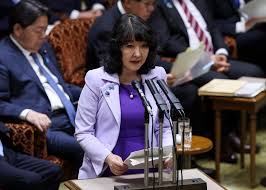
Japanese Finance Minister Satsuki Katayama announced the largest fiscal budget overhaul since World War II, aiming to phase out the government's reliance on mid-year supplementary budgets. The reform intends to improve fiscal predictability and stabilize sovereign bond markets by consolidating all projected annual spending into initial budget plans by August.
TOKYO, Japan — Finance Minister Satsuki Katayama announced that Japan is currently advancing the most significant overhaul of its fiscal budget system since the conclusion of World War II. Speaking at a formal news conference in Tokyo on June 9, 2026, Katayama emphasized that the government is fully committed to phasing out its decade-long reliance on multi-trillion-yen supplementary budgets, aiming to fundamentally restructure how the world's fourth-largest economy manages public spending.
"As for budget system reform, this is clearly the biggest overhaul since the end of the war," Katayama stated to reporters. "That's the level of commitment we're bringing to it." The strategic shift represents an aggressive policy push by the administration of Prime Minister Sanae Takaichi to restore fiscal predictability and protect Japanese government bonds (JGBs) from destabilizing market sell-offs amid high inflation and rising global interest rates.
Dismantling the Legacy of Ad Hoc Spending Packages
For decades, Japanese administrations have routinely used mid-year supplementary budgets to pass massive, ad hoc stimulus packages. While originally intended as emergency mechanisms for natural disasters or unexpected economic shocks, these extra appropriations have increasingly been utilized to fund routine political initiatives and ongoing subsidies.
According to data compiled by Japan's Ministry of Finance, this reliance has created a systemic assumption among ministries that a large-scale secondary budget will always be introduced later in the fiscal year. Financial analysts note that this practice reduces initial fiscal discipline, obscures the true scope of annual public spending, and makes it difficult to establish clear economic predictability at the start of the fiscal year in April.
The announcement comes just days after the Japanese parliament passed a ¥3.1 trillion (approx. USD 19.4 billion) supplementary budget. This package includes a newly created ¥2.5 trillion reserve fund designed to buffer consumers from domestic inflation driven by ongoing conflicts in West Asia. Finance Minister Katayama acknowledged that compiling an extra budget just two months into the current fiscal cycle highlights the exact policy habit the administration is now determined to break.
Shifting Focus to Initial Budgets and Market Stability
Under the new operational guidelines proposed by Prime Minister Takaichi's cabinet, government ministries will be required to incorporate all projected spending plans for the year into their initial budget drafts. While this consolidation will likely inflate the headline figure of the initial annual budget—which currently stands at roughly ¥122 trillion (USD 761 billion)—it will give international investors and rating agencies a transparent view of Japan's fiscal trajectory from day one.
The move is designed to reassure global bond markets. Japan currently carries the highest public debt-to-GDP ratio among advanced industrial economies, exceeding 250%. With the Bank of Japan gradually raising interest rates to combat inflation, long-term 10-year JGB yields have faced upward pressure, climbing toward 2.5%, while 30-year yields have reached 3.8%.
By removing the uncertainty of unexpected mid-year debt issues, the Ministry of Finance hopes to stabilize funding costs and prevent disorderly movements in global sovereign debt markets. "If market participants understand the government's objectives, we're less likely to see disorderly moves in the bond market or elsewhere," Katayama emphasized during her address.
Addressing Local Government and Corporate Concerns
While foreign institutional investors have welcomed the push for transparency, the proposal has raised concerns among local municipal governments across Japan. Regional prefectures heavily depend on central government subsidies traditionally funneled through autumn supplementary budgets to finance local infrastructure projects and regional welfare programs.
Local administrators worry that moving these programs entirely into the initial budget could change subsidy ratios, alter financing conditions, or reduce funding for smaller municipalities. Finance Minister Katayama stated that the ministry is carefully evaluating these structural concerns and will adjust allocation methods appropriately before the official August deadline, when ministries must submit their initial funding requests for the upcoming fiscal cycle.
Official Sources Section
The fiscal targets, budget parameters, bond yields, and policy statements detailed in this report are based on official transcripts from the Ministry of Finance Japan, legislative records from the National Diet, and regulatory disclosures published via the Bank of Japan Official Portal and the Prime Minister of Japan and His Cabinet Newsroom.
Quote Section
"According to officials at the Ministry of Finance, the government will not rule out supplementary budgets entirely, as additional spending packages will still be compiled when strictly necessary to respond to unforeseen international crises or major natural disasters."
Why It Matters
For international investors and financial institutions, Japan's move to end its reliance on extra budgets reduces the risk of sudden debt expansions that could weaken the yen and push global bond yields higher. For Japanese citizens and domestic businesses, a more transparent initial budget means public funds can be allocated with greater predictability, reducing sudden policy shifts and ensuring stable support for long-term economic development.
Key Facts at a Glance
Reform Scale: Finance Minister Katayama characterized the ongoing budget overhaul as the most significant adjustment since 1945.
Core Target: The administration plans to largely phase out mid-year supplementary budgets to improve national fiscal predictability.
Market Context: The policy shift aims to support market confidence as 10-year Japanese Government Bond yields face upward pressure toward 2.5%.
Recent Spending: The overhaul follows the passage of a ¥3.1 trillion extra budget, which includes a ¥2.5 trillion inflation reserve fund.
Next Milestone: Government ministries are scheduled to submit their initial consolidated funding requests by the end of August.
FAQ Section
1. Why has Japan traditionally relied so heavily on supplementary budgets?
Supplementary budgets allowed past administrations to pass quick spending packages during the fiscal year to respond to shifting political demands or economic changes without inflating the size of the initial budget presented to parliament in January.
2. Will this new policy cause Japan's initial annual budget to increase?
Yes. Shifting programs and emergency reserves that were previously funded through mid-year extra packages directly into the initial annual plan will likely increase the headline total of the initial budget beyond its current ¥122 trillion level.
3. How do rising interest rates impact Japan's massive national debt?
As the Bank of Japan raises interest rates to manage inflation, the yield on government bonds increases. This raises the government's borrowing costs, meaning a larger portion of the annual initial budget must be directed toward servicing existing debt rather than funding public services.
Source: Ministry of Finance Japan Regulatory Feed, Bank of Japan Economic Research Division.