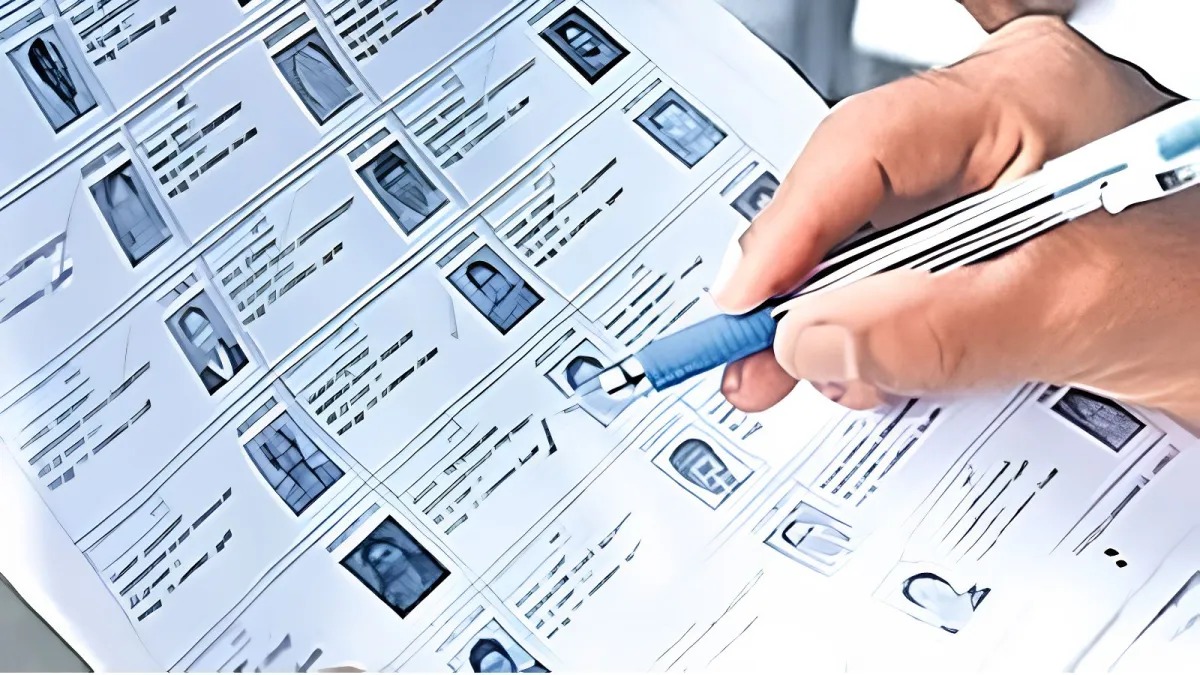
The Election Commission has launched the Special Intensive Revision of electoral rolls in Karnataka, deploying 59,050 Booth Level Officers for a month-long door-to-door verification drive targeting 5.54 crore electors. Incorporating digital "progeny mapping" to eliminate duplicate entries, the comprehensive data-cleansing exercise concludes with final roll publication on October 7.
BENGALURU — The Office of the Chief Electoral Officer (CEO), Karnataka, officially commenced its door-to-door data collection under the Election Commission of India’s (ECI) strict Special Intensive Revision (SIR) framework on Tuesday, June 30, 2026. The month-long house-to-house enumeration phase targets the verification of 5,54,32,314 registered electors across the state as of the June 16 freeze date. Designed to eliminate structural data errors, ghost voters, and processing anomalies, the massive three-month state-wide demographic exercise will culminate in the formal publication of the finalized electoral rolls on October 7, 2026.
Phased Rollout Plan and Key Institutional Timelines
The execution of the Special Intensive Revision in Karnataka is structurally divided into distinct logistical phases over the next quarter. Following extensive backend preparatory work, training, and the printing of over 11 crore customized voter forms between June 20 and June 29, the public verification engine will move along a strict statutory timeline:
June 30 – July 29: Intensive door-to-door verification and form distribution by Booth Level Officers (BLOs).
August 5: Publication of the preliminary Draft Electoral Roll.
August 5 – September 4: Institutional window for citizens to file official claims and objections.
August 5 – October 3: Dedicated legal disposal of filed claims by designated Electoral Registration Officers (EROs).
October 7: Comprehensive national publication of the final corrected Electoral Roll.
Rigorous House Visits, Sticker Protocols, and Digitization
To manage the massive scale of the Phase III nationwide revision program, Karnataka has deployed a specialized field workforce comprising 59,050 Booth Level Officers, 7,556 booth level supervisors, and 224 electoral registration officers. Every listed elector will receive two sets of partially pre-filled, customized enumeration forms. Voters must review their details, attach fresh photographs, complete any missing relational indicators, sign the paper, and return one copy to the visiting BLO for digital system ingestion.
Chief Electoral Officer V. Anbukkumar clarified that if a residence is found locked, the BLO will paste a specialized red sticker containing their name and official mobile number on the door, along with the tentative dates for their next two scheduled visits. BLOs are mandated to make at least three distinct physical attempts to visit households and will directly call registered residents if they remain unavailable.
Furthermore, election officials are explicitly barred from collecting supporting physical documents during this initial enumeration phase. Standardized documentation, such as birth certificates, permanent residence certificates, or Aadhaar, will only be requested at a later stage if a formal discrepancy notice is generated after the publication of the draft roll on August 5.
Progeny Mapping, Data Integrity, and Political Friction
The technical anchor of the 2026 revision centers around the backend implementation of automated "Progeny Mapping". This digital mapping logic systematically links individual voter profiles with parents or spouses to establish an airtight digital family tree. The process aims to flag logical discrepancies and eliminate massive blocks of duplicate, inactive, or unverified registrations in high-migration, high-density urban corridors like Bengaluru, Whitefield, and Electronic City. Historical data from Phase II of the SIR program saw an average electorate reduction of 10.2% across states like Uttar Pradesh and West Bengal due to similar cleanup drives.
The launch of the exercise has also triggered considerable domestic political debate. Senior leadership from the opposition Indian National Congress, including Mallikarjun Kharge, has demanded that the ECI temporarily pause the rollout until the commission formally clarifies the exact metrics used to define a "logical discrepancy". Opposition coalitions have voiced concerns over potential data errors on the CEO website and raised fears that the rigorous mapping process could lead to the unintended deletion of legitimate voters, particularly among migrant workers, tenants, and minority demographics.
Official Sources Section
The execution matrices, timeline mandates, and state statistics are governed under the joint statutory authority of the Election Commission of India and the Office of the Chief Electoral Officer, Karnataka. Additional data guidelines and legal backings are tracked via announcements hosted on the Press Information Bureau (PIB).
Quote Section
"The Special Intensive Revision is a highly participative, transparent, and citizen-centric exercise designed to ensure that the state's electoral rolls remain completely accurate, complete, and up to date," Chief Electoral Officer V. Anbukkumar stated during a state press conference in Bengaluru. "Forms will never be handed over to unauthorized neighbors in the elector's absence. We appeal to all citizens and political entities to extend wholehearted support to our field officers during these door-to-door visits."
Why It Matters
For everyday citizens and political organizations across Karnataka, the SIR initiative carries direct constitutional and legal consequences. Holding a physical Voter ID card no longer serves as an absolute guarantee of inclusion in the final electoral rolls if the underlying account fails the digital progeny or address mapping verification. Ensuring data consistency across records prevents accidental deletions during the draft phase. For the broader democratic system, a highly audited, mathematically consistent voter registry prevents electoral fraud, stabilizes constituency sizing, and reinforces institutional faith in future state and national legislative polls.
Key Facts at a Glance
Elector Base: Covers a frozen baseline of 5,54,32,314 registered voters across Karnataka.
Field Deployment: 59,050 trained Booth Level Officers assigned to conduct personal household visits.
Core Technological Pivot: Uses digital family-tree linking or "Progeny Mapping" to scrub duplicate profiles.
Digital Gateway: Citizens can alternatively track and fill out electronic enumeration forms via the official ECI Voters Service Portal
Final Horizon: The authoritative, fully revised final electoral roll will be published on October 7, 2026.
FAQ Section
What is the primary purpose of the Special Intensive Revision (SIR)?
Unlike routine annual updates, the SIR is a deep-tier, house-to-house data verification campaign ordered by the ECI. It leverages advanced backend digital mapping to link family relationships, verify current residential addresses, and purge duplicate, deceased, or fraudulent entries from the national registry.
What should a voter do if their house is locked when the BLO arrives?
The officer will affix a round red sticker to the door displaying their official contact details and the scheduled dates for their next two repeat visits. Residents can call their assigned BLO directly or access the electronic ECI Voters Service Portal to submit their details digitally.
Will my name be automatically deleted if there is a typo in my form?
No. Booth Level Officers are instructed not to delete records or collect physical proof during the house-to-house collection phase. If a data mismatch persists after the draft roll is published on August 5, the transport or electoral office will issue an official notice detailing the exact discrepancy and providing a fair window to submit corrections.
Source: Office of the Chief Electoral Officer, Karnataka, Election Commission of India Press Desk, The Hindu Bengaluru Bureau, The Times of India City Division.