The Government of Kerala will launch its free bus travel scheme for women and transgender persons on June 15, 2026. Part of the UDF's "Indira Guarantees," the program will run on a 100-day trial restricted to KSRTC "Ordinary" services, costing an estimated ₹712 crore annually covered by state treasury subsidies.
THIRUVANANTHAPURAM, India — The newly installed United Democratic Front (UDF) government in Kerala has officially finalized the structural parameters of its highly anticipated free bus travel scheme. Making the policy announcement on June 9, 2026, State Transport Minister C.P. John confirmed that the state-wide social mobility initiative will commence operations on June 15, 2026, providing zero-cost transit across the state network for all women and members of the transgender community.
The rollout marks the fulfillment of a primary electoral benchmark from the ruling Congress-led coalition’s campaign manifesto, which categorized the transport subsidy under its five foundational "Indira Guarantees." Designed to enhance female workforce participation and improve public sector accessibility, the project establishes a historic precedent as the first time a Kerala administration has introduced blanket free public transport infrastructure for targeted demographic groups.
Phased Trial Parameters and Operational Limitations
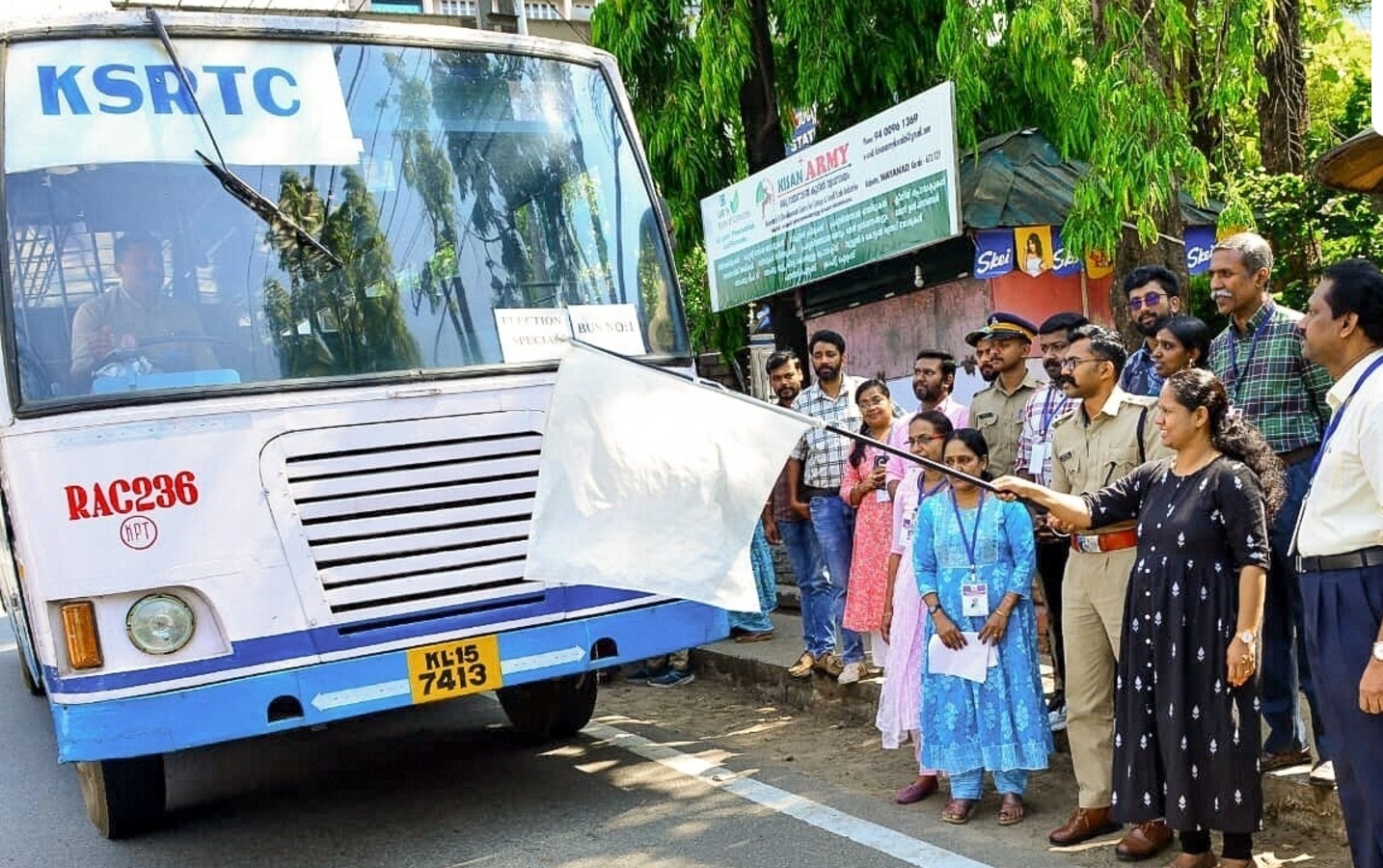
To maintain operational control and monitor early rider load spikes, Chief Minister V.D. Satheesan and Transport Minister C.P. John have established a structured 100-day trial period baseline. During this initial testing phase, the free bus travel scheme will be strictly limited to the "Ordinary" class of transit units operated by the Kerala State Road Transport Corporation (KSRTC).
The localized "Ordinary" fleet operates primarily on short regional routes connecting rural villages with urban market hubs. By intentionally excluding long-distance fast, super-fast, and premium air-conditioned express cruisers during the first 100 days, transport planners intend to measure shifting demand curves and map congestion metrics before evaluating an expansion into higher-tier vehicle categories.
Financial Restructuring and Treasury Impact Projections
The implementation of the free bus travel scheme introduces substantial financial implications for the state exchequer. Actuarial modeling shared by the Ministry of Transportation reveals that keeping the program restricted to short-distance ordinary buses will incur an annual net cost of approximately ₹712 crore.
Should the state cabinet opt to expand universal access across all service tiers—including executive inter-district fleets—the annual budget allocation requirement climbs to ₹1,300 crore.
To shield the state-run KSRTC from direct operational losses, the central administration has confirmed that the financial burden will not be extracted from existing ticket revenue channels. The corporation has struggled with long-term systemic debt for years, currently relying on a standing monthly government subsidy of ₹125 crore simply to meet its basic employee payroll and pension obligations.
To bridge the new funding gap, Chief Minister Satheesan has directed the State Finance Secretary to compile an independent fiscal model. This strategy aims to create alternative corporate revenue channels by commercially developing underutilized real estate plots owned by the transport utility.
Commercial Conflict and Private Sector Pushback
While social equity organizations have praised the inclusion of transgender individuals under the welfare umbrella, the upcoming launch has raised significant concern among private transit companies. Private bus owners operate a vast percentage of the regional short-distance routes throughout Kerala and argue that a free state-run alternative will drastically reduce their daily passenger volume and threaten their commercial survival.
In response to the June 15 launch timeline, private transport associations have submitted formal petitions to the Secretariat. The operators are demanding that the government immediately withdraw all long-standing statutory transport concessions—including subsidized fares historically granted to the student community—if private platforms are forced to compete directly against a completely free, state-backed KSRTC ordinary bus network.
Official Sources Section
The operational directives, financial framework assessments, and fleet parameters detailed within this reporting are based directly on ministerial briefings issued by Kerala State Road Transport Corporation (KSRTC), executive project reviews from the Government of Kerala Secretariat, and regulatory announcements from the Transport Minister’s media desk in Thiruvananthapuram.
Quote Section
"According to officials from the Ministry of Transportation, the finer administrative details of the transit rollout will be presented directly by the Chief Minister following the formal conclusion of the upcoming state cabinet assembly scheduled for Wednesday."
Why It Matters
For daily commuters, students, and low-wage workers across Kerala, the availability of free public transit helps lower monthly household expenses and increases financial independence. By removing transportation costs for women and transgender individuals, the program aims to drive economic development, improve access to education, and create safer public mobility channels. For regional financial markets, the success of the program will depend on the government's ability to balance extensive social welfare goals with responsible budget management.
Key Facts at a Glance
Launch Date: The free bus travel scheme is scheduled to begin across the state on June 15, 2026.
Trial Period: The program will run on an initial 100-day trial basis to assess passenger volume changes.
Fleet Limitations: Free access is initially restricted to KSRTC "Ordinary" short-route local buses.
Welfare Inclusivity: The policy applies universally to all women and includes members of the transgender community.
Fiscal Commitment: The initiative is projected to cost the state between ₹712 crore and ₹1,300 crore annually.
FAQ Section
1. Do women need to show income certificates to get free bus travel?
No. The UDF government has confirmed that the free travel benefit will operate on a universal access model, meaning all women and transgender persons qualify regardless of their economic background or income status.
2. Can beneficiaries utilize free travel on private buses in Kerala?
No. This specific state subsidy applies strictly to government-operated buses running under the Kerala State Road Transport Corporation (KSRTC) network. Private bus operators are currently excluded from the program.
3. Will this new welfare program cause delays in KSRTC employee salaries?
Transport Minister C.P. John has assured employees that the project will not impact payroll schedules. The state government plans to provide a direct treasury subsidy to cover the program's costs, keeping it completely separate from KSRTC's operational revenue.
Source: Government of Kerala Official Web Portal, Kerala State Road Transport Corporation Information Desk.