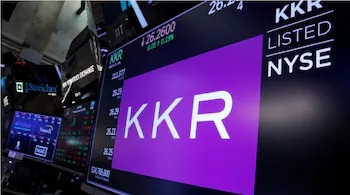
Global private equity firm KKR is in advanced discussions to acquire a majority stake in Medicover India for at least $1 billion. Sweden's Medicover AB confirmed the talks but is continuing with a dual-track strategy that includes a planned domestic IPO for its 11-hospital network.
MUMBAI — American private equity major KKR & Co. Inc. is in advanced negotiations to acquire a controlling majority stake in the Indian operations of Sweden's Medicover AB (publ), according to official corporate statements and market sources. The transaction, being structured through institutional buyouts, is expected to value the healthcare platform at a minimum of $1 billion (approximately ₹83.5 billion).
The formal disclosure, submitted via compliance registries under European market abuse regulations, points to an intensifying battle for high-tier medical infrastructure. If finalized, the transaction will mark one of the largest single healthcare acquisitions in the region this fiscal year, as global asset managers look to capitalize on a massive post-pandemic demand boom for specialized tertiary care and diagnostic facilities across emerging Asian corridors.
Strategic Approvals and Dual-Track Listing Negotiations
The institutional alignment was officially confirmed following an automated regulatory notice issued by the Stockholm-headquartered parent entity. In its institutional bulletin, Medicover's executive board verified that it has been approached by and entered into structural discussions with KKR regarding the potential sale of its Indian subsidiary.
However, the Swedish multinational noted that a firm transaction is not yet guaranteed, maintaining a dual-track strategic model for its South Asian business. Even as negotiations with KKR advance, the company is concurrently proceeding with its planned domestic initial public offering (IPO) process for Medicover Hospitals India. This setup gives the firm structural optionality between securing a high-value private private-equity exit or completing a public listing on national exchanges.
Institutional Footprint and Underlying Asset Multiples
Medicover initially entered the Indian healthcare infrastructure space in 2017 by partnering with MaxCure Hospitals, subsequently scaling its operational ownership block to a consolidating 53.1% majority stake in December 2019. The regional network has since grown into a dominant healthcare provider across Telangana, Andhra Pradesh, and Maharashtra, operating 11 specialized multispecialty hospitals and two advanced oncology centers.
Financially, the Indian division represents one of the fastest-growing regions inside the parent firm's international diagnostics portfolio. Market analysts estimate that the Indian branch is tracking an operational EBITDA run rate of approximately ₹6.5 billion for the current fiscal cycle, making a $1 billion buyout multiple highly competitive compared to listed healthcare groups trading on the BSE Limited registry.
KKR's Rapid Indian Healthcare Consolidation Strategy
For KKR, the advanced discussions with Medicover align with a broader, multi-layered acquisition campaign inside India’s clinical ecosystem. Operating via its multi-billion dollar Asia Fund IV, the private equity firm has established itself as an aggressive consolidator of healthcare assets.
The investment firm's recent healthcare activities highlight its regional focus:
Baby Memorial Hospital (April 2026): Used its controlled platform, Baby Memorial, to acquire a 60% stake in Hyderabad-based Star Hospitals for ₹1,800 crore.
Healthcare Global Enterprises (HCG): Concluded a $400 million transaction to acquire a 54% controlling stake in India's leading oncology hospital chain from CVC Capital Partners.
Healthium Medtech: Finalized a ₹7,000 crore primary buyout from Apax Partners to assume absolute control of the specialized medical devices manufacturer.
This aggressive investment pace follows KKR’s highly successful exit from Max Healthcare, where it generated record-breaking investment returns, proving its capability to systematically scale up regional medical networks.
Official Sources Section
The transactional tracking, asset valuations, branch footprints, and corporate confirmations cited in this comprehensive report originate directly from official market disclosures published by Medicover AB Investor Relations, regulatory filings submitted to the European Securities and Markets Authority (ESMA), and statutory corporate notification logs archived by BSE Limited.
Quote Section
"According to officials familiar with the documentation, the ongoing evaluation of Medicover's assets highlights private equity's deep appetite for high-yielding medical portfolios in tier-2 cities. Organizers of the transaction stated that the dual-track strategy ensures the Swedish parent company will maximize value, whether through a clean $1 billion institutional block trade or an independent domestic stock listing."
Why It Matters
For everyday citizens, consumers, and medical travelers across southern and western India, this multi-billion dollar capital influx will likely translate into rapid upgrades to local hospital equipment, better digital tracking software, and the expansion of advanced clinical specialties into smaller towns. For capital market participants and institutional investors, the transaction sets a fresh valuation benchmark for mid-sized medical networks, demonstrating that international private equity funds are highly willing to deploy top-dollar capital to secure proven, profitable clinical footprints.
Key Facts at a Glance
Transaction Scale: KKR is in advanced negotiations to purchase a majority stake in Medicover India for at least $1 billion.
Corporate Confirmation: Sweden's Medicover AB formally confirmed ongoing corporate sale discussions with KKR.
Dual-Track Approach: The parent company is keeping its options open by continuing its independent Indian IPO process.
Regional Asset Base: The transaction includes 11 major multi-specialty hospitals and two specialized oncology units.
Consolidation Push: The deal follows KKR's recent major buyouts of Star Hospitals, HCG, and Healthium Medtech.
FAQ Section
Why is Medicover exploring a stake sale to KKR while also preparing for an IPO?
This is a standard corporate dual-track strategy. It allows the Swedish parent firm to evaluate firm private equity buyout offers against the potential long-term valuation gains of a public listing on local stock exchanges, ensuring it secures optimal value for its shareholders.
Which regions in India are primary hubs for Medicover's hospital network?
Medicover's Indian operations are primarily concentrated across southern and western tech corridors, running 11 advanced hospitals and multiple clinical centers across Telangana, Andhra Pradesh, and Maharashtra.
Will this potential corporate takeover affect daily hospital patient operations?
No. Standard private equity control transactions are designed as capital structural modifications. Daily patient care, clinical staff management, and doctor schedules will continue to run normally under established regional administrative heads.
Source: Medicover AB Global Financial Disclosures, Securities and Exchange Board of India (SEBI) Draft Filings Index, and BSE Limited Corporate Governance Archives.