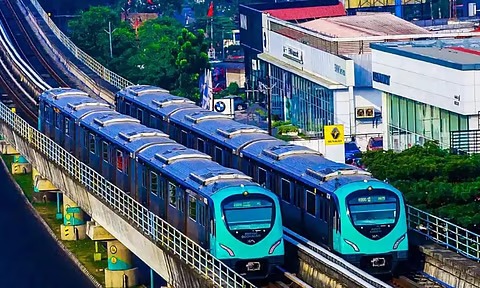
Kochi Metro Rail Ltd (KMRL) has raised parking fees at four overcrowded stations—Aluva, MG Road, Vadakkekotta, and Tripunithura—to curb long-term occupation by non-commuters during the festive rush. A new two-tier pricing model protects regular passengers who show valid tickets, while imposing higher rates on non-passengers.
New parking fee adjustments at high-traffic hubs aim to resolve space crunches driven by non-commuters during the festive season.
Kochi: Kochi Metro Rail Ltd (KMRL) has implemented a revised two-tier parking fee structure across four major high-traffic stations experiencing severe space constraints. Announced amid the heavy Onam festive shopping and travel rush, the policy adjustment addresses long-standing complaints from regular metro commuters who have struggled to find parking bays. Under the updated framework, non-commuters utilizing the spaces for extended hours will face significantly higher tariffs, while verified metro passengers retain access to subsidized rates.
Addressing Severe Overcrowding at Key Transit Hubs
The revisions directly impact four major metro stations out of the system's fourteen active parking lots: Aluva, MG Road, Vadakkekotta, and Tripunithura. According to transit administrators, these locations suffer from acute capacity shortages because individuals unrelated to the transit network—such as long-term shoppers, local business owners, and Indian Railways passengers—frequently occupy parking spots for prolonged periods.
Prior to the adjustment, Kochi Metro maintained some of the lowest public parking tariffs in the urban area. This cost disparity inadvertently converted metro lots into de facto long-term parking zones for non-passengers, creating severe bottlenecks for daily riders.
Comparative Tariff Benchmarking and Two-Tier Pricing
To ensure parity, transport authorities executed a comprehensive benchmark study evaluating fees implemented by local administrative bodies, including the Greater Cochin Development Authority (GCDA), the District Tourism Promotion Council, Indian Railways, and the Kochi Corporation. While railway facilities command the highest rates in the city, municipal corporation tariffs were identified as the lowest. KMRL aligned its baseline commuter tariffs with standard municipal rates while establishing a punitive pricing tier for non-passengers.
Regular transit users can secure discounted rates by presenting authentic validation of metro travel, such as a valid paper ticket or operational smart card. However, regular riders will also absorb a nominal price adjustment:
Two-Wheeler Commuters: Initial two-hour base rates increased from Rs 5 to Rs 10, with weekly passes adjusted to Rs 150.
Four-Wheeler Commuters: Initial two-hour base fees rose from Rs 15 to Rs 20, while monthly passes climbed to Rs 1,500.
Impact on Citizens, Commuters, and Urban Infrastructure
The policy shift has triggered mixed reactions across the city. While daily commuters welcome efforts to clear up congestion, commuter advocacy groups have voiced concerns over rising travel overheads. Conversely, corporate planners noted that the city's newly established multi-level car parking infrastructure at Vadakkekotta continues to operate under capacity despite absorbing high ongoing electricity and maintenance overheads. Transit authorities hope the new pricing will encourage motorists to utilize structured multi-level options rather than choking surface-level transit lots.
Official Sources Section
Administrative decisions and contextual benchmarks were detailed according to official statements released by Kochi Metro Rail Ltd (KMRL) executive representatives and transit monitoring divisions.
"At busy hubs like Aluva, non-commuters — including Indian Railways passengers, local business owners, and shoppers — have been occupying a large chunk of the parking space. Because Kochi Metro's parking fees were previously the cheapest in the city, many non-passengers used these facilities for long hours, leaving metro commuters struggling to find space," stated a senior Kochi Metro Rail Ltd (KMRL) official.
Why It Matters
As urban transit networks expand, parking availability directly influences public willingness to switch from private vehicles to mass rapid transit systems. By discouraging non-commuters from blockading transit parking bays, KMRL aims to maintain seamless intermodal connectivity, reduce station-area gridlocks, and ensure that daily ticket holders are not locked out of essential station infrastructure during peak travel windows.
Key Facts at a Glance
Affected Stations: Aluva, MG Road, Vadakkekotta, and Tripunithura.
Core Objective: Mitigate severe space deficits and curb long-term occupation by non-passengers during peak festive seasons.
Verification Mechanism: Commuters must present validated smart cards or transit tickets to access discounted parking slabs.
Tariff Revision: Two-wheeler base fees doubled to Rs 10, while four-wheeler base rates increased to Rs 20 for the initial two hours.
Frequently Asked Questions
Which Kochi Metro stations are affected by the parking fee hike?
The revised parking tariffs apply exclusively to four major stations facing acute space shortages: Aluva, MG Road, Vadakkekotta, and Tripunithura.
How can regular passengers claim discounted parking rates?
Commuters can access lower rates by showing verifiable proof of transit usage, such as an active metro smart card or a valid journey ticket, at the parking exit gates.
Why did KMRL decide to increase parking charges?
Transit authorities noted that low baseline fees attracted non-passengers—including shoppers and railway commuters—who parked vehicles for long hours, leaving no space for actual metro riders.
Will non-commuters still be allowed to park at the stations?
Yes, non-commuters can continue to utilize the parking spaces, but they will be billed under a separate, higher tariff tier.
Source: Kochi Metro Rail Ltd (KMRL)