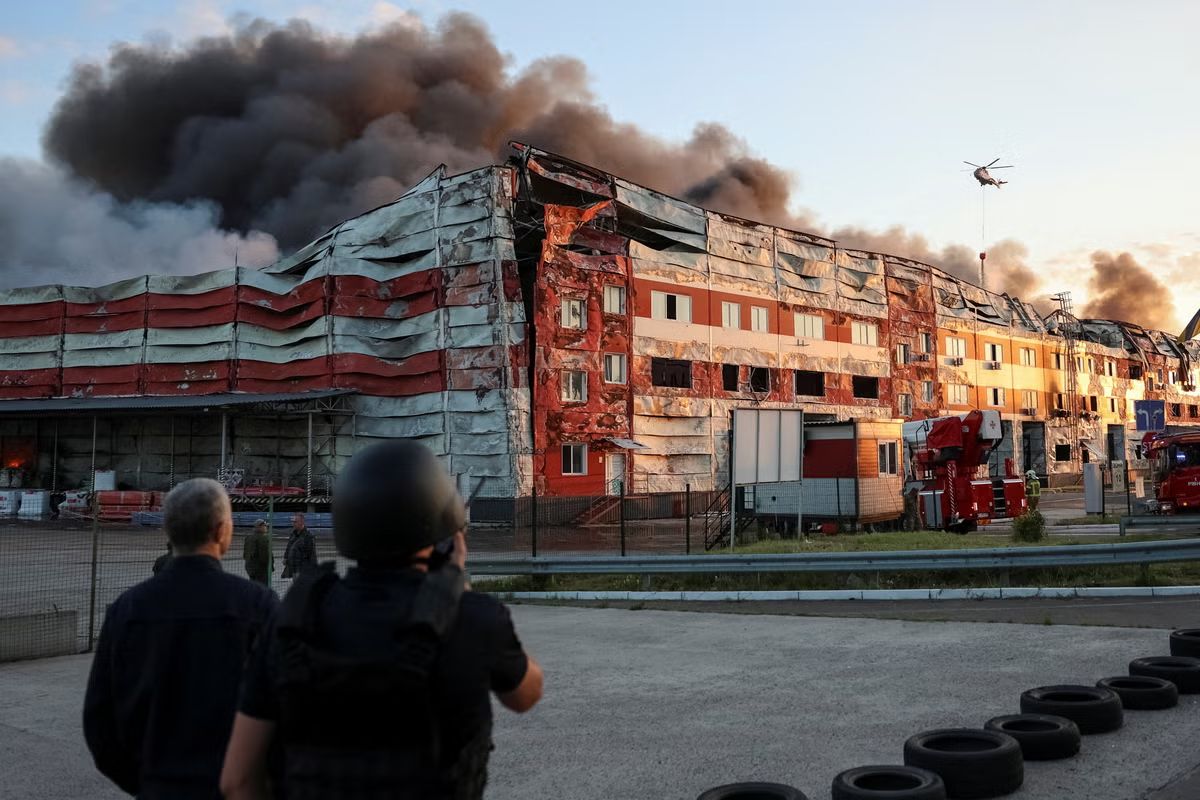
A massive Russian ballistic missile and drone attack on Kyiv on July 19, 2026, killed one person and injured 16. The strikes caused widespread fires and damage across five city districts, underscoring the severe strain on Ukraine's air defense capabilities amid ongoing shortages of critical interception systems.
A deadly overnight aerial assault on the Ukrainian capital has left one person dead and at least 16 injured, marking another escalation in the ongoing conflict.
Kyiv endured one of its largest ballistic missile attacks of the war early Sunday, July 19, 2026, as Russian forces launched an extensive aerial barrage that spanned several hours. The assault, which began around 1:30 a.m. local time, triggered air raid sirens across the capital and caused widespread destruction across five city districts. Emergency services were deployed throughout the night to battle fires at residential buildings, a dormitory, and commercial sites, while the death toll and injury counts were confirmed by local officials.
Escalating Air War Over the Capital
The attack involved a complex combination of weaponry. According to reports from the Ukrainian Air Force and President Volodymyr Zelensky, Russian forces deployed more than 40 missiles of various types—including over 20 high-speed ballistic missiles—alongside approximately 120 attack drones.
Kyiv Mayor Vitali Klitschko reported that the strikes ignited fires in the Solomyanskyi, Shevchenkivskyi, Sviatoshynskyi, Desnianskyi, and Dnipro districts. The impact was significant, resulting in charred apartment blocks, blown-out windows, and numerous mangled vehicles. Rescue workers were seen sifting through smoldering debris well into the morning to locate survivors and contain blazes.
"The missiles just kept coming one after another, the explosions were powerful, it was horrible," Ganna Zagorodnia, a 47-year-old resident, told reporters following the bombardment.
Strategic Context and Defense Challenges
The latest assault follows a pattern of intensifying air raids on Kyiv over the past month. Military analysts and officials point to a critical shortage of U.S.-designed Patriot air defense missiles, which remain the primary system capable of reliably intercepting incoming ballistic threats.
President Zelensky has repeatedly called for increased international support, noting that the consistent supply of anti-ballistic systems is a "top priority" for saving lives. While U.S. officials have expressed a willingness to authorize the domestic production of Patriot interceptors in Ukraine, the logistical timeline for such a project remains undetermined.
The attack also coincided with a period of rare domestic political turbulence in Ukraine, following the surprise dismissal of Defense Minister Mykhailo Fedorov, an event that has triggered public debate even as the battlefield situation remains volatile.
Why It Matters
For citizens in Kyiv, the frequency of these attacks has created a high-stakes environment where civilian infrastructure is increasingly targeted. For investors and the international community, the sustained intensity of the air war highlights the persistent strain on Ukraine's defense resources and the potential for long-term economic disruption as industrial and commercial sites are frequently struck.
Key Facts at a Glance
Casualties: At least 1 person killed, 16 injured.
Scale of Attack: Over 40 missiles and 120 attack drones launched.
Affected Areas: Significant damage reported in five districts of Kyiv, including residential buildings, a dormitory, and an entertainment center.
Defense Status: Air defenses intercepted 18 missiles and 108 drones; however, gaps in interception capacity remain a concern due to ammunition shortages.
FAQ
What was the primary weapon used in the July 19 attack?
Russian forces utilized a mix of weaponry, predominantly focusing on ballistic missiles which are notoriously difficult to intercept due to their high speed and rapid firing intervals.
How many people were affected?
At least one person was killed, and at least 16 others were reported injured by local authorities following the strikes.
Why is Kyiv being targeted so heavily recently?
Officials attribute the intensification of strikes to Russia's attempt to exploit current gaps in Ukraine’s air defense capabilities, particularly the shortage of Patriot-class interceptor missiles.
Source: Ukrainian President's Office, State Emergency Service of Ukraine, Kyiv City State Administration, Reuters, The Kyiv Independent