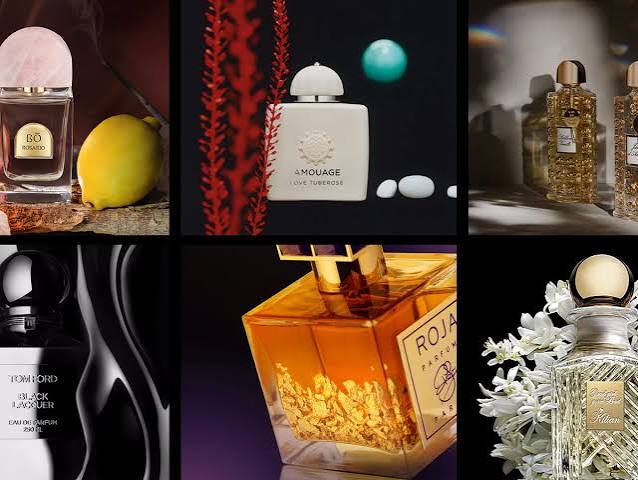
India's fragrance market is expanding rapidly across both luxury and budget perfume segments, projected to surpass ₹21,000 crore in 2026. Driven by rising disposable incomes, social media trends, and quick-commerce delivery, consumers are increasingly curating versatile scent vanity collections that combine premium international labels with accessible domestic masstige options.
MUMBAI, India — Retail beauty analysts and market research firms confirmed on August 6, 2026, that India's domestic fragrance sector is undergoing a structural expansion, with consumer purchasing spanning luxury to budget perfumes across urban and Tier-2 markets. According to industry disclosures from market research groups, the Indian perfume ecosystem is projected to surpass ₹21,000 crore in 2026, driven by higher spending on personal grooming, social media beauty trends, and rapid digital availability. The surge in consumer interest reflects a broader shift where personal fragrance has transitioned from an occasional luxury indulgence into an essential daily grooming accessory across diverse demographic segments.
Market Bifurcation and the Rise of Masstige Fragrances
Industry data indicates that consumer preferences are splitting into two primary growth engines: premium international heritage houses and domestic direct-to-consumer (D2C) brands. While luxury global brands like Byredo, Parfums de Marly, Guerlain, and Tom Ford continue to maintain strong market share among affluent buyers and duty-free retail, domestic digital-first brands are capturing volume growth among Gen Z and millennial consumers.
According to commercial intelligence, domestic brands offering luxury to budget perfumes in the ₹500 to ₹1,500 price band now account for nearly 25% to 30% of new fragrance purchases among consumers aged 20 to 32. Known as the "masstige" (mass-prestige) segment, these products provide high oil concentration, long-lasting eau de parfum (EDP) formulations, and modern olfactory profiles such as amber-gourmand, fresh aquatic, and woody spices at accessible price points.
| Fragrance Tier | Price Range | Target Audience | Key Olfactory Families |
| High-End Luxury | ₹11,000 – ₹30,000+ | Affluent consumers, niche collectors | Sheer Oud, White Amber, Rare Florals |
| Accessible Premium | ₹2,500 – ₹8,000 | Working professionals, lifestyle buyers | Woody Spices, Bergamot, Vanilla Musks |
| Value / Masstige | ₹500 – ₹1,800 | Young adults, daily commuters | Gourmand, Citrus Aquatic, Fruity Floral |
Distribution Shift Driven by Quick-Commerce and E-Commerce
The availability of luxury to budget perfumes has expanded beyond traditional brick-and-mortar department stores due to rapid logistics integration. Quick-commerce delivery platforms in major Indian metros now deliver selection kits, body mists, and full-sized eau de parfums within 10 to 15 minutes, lowering trial barriers for first-time buyers.
Concurrently, multi-brand beauty aggregators and specialized e-commerce platforms have introduced discovery sets and sample vials, allowing consumers to test complex note pyramids—comprising top, heart, and base notes—before committing to full bottles. Retail executives report that discovery sets have become one of the fastest-growing entry formats, driving higher repeat purchase rates across both domestic and imported scent portfolios.
Consumer Impact and Industry Implications
For consumers, the diversification of options across luxury to budget perfumes provides flexibility to build multi-functional fragrance wardrobes suited for work, evening events, and casual wear. Buyers increasingly layer lighter body mists or accessible daily EDPs with concentrated luxury extraits for enhanced longevity.
For retail businesses and investors, the rapid growth in mass-premium fragrance adoption presents strategic expansion opportunities. Foreign luxury fragrance houses are increasing their physical store footprint in Tier-1 shopping malls, while domestic consumer brands are raising growth capital to scale offline distribution networks and expand regional marketing campaigns.
Official Sources Section
Market data, consumer metrics, and industry forecasts cited in this news report were compiled from published market research by Research and Markets, industry intelligence reports archived on Persistence Market Research, and trade filings accessible via the Ministry of Commerce and Industry.
Official Quote Section
According to official briefings from industry analysts and retail distribution executives, personal fragrance has become a central component of personal identity in urban centers.
According to officials, "The consumer transition from viewing fragrance as an occasional gift to an everyday personal accessory is driving unprecedented growth across all price segments. The availability of options ranging from luxury to budget perfumes ensures that high-quality scent formulations are accessible to a much broader demographic, boosting overall market maturity."
Why It Matters
The expansion of choices from luxury to budget perfumes reflects evolving consumer spending behavior in India's personal care sector. As disposable incomes rise and digital discovery tools improve, consumers can curate vanity collections that blend high-end signature scents with cost-effective daily alternatives without compromising on quality or formulation standards.
Key Facts at a Glance
Market Valuation: The Indian perfume market is projected to reach ₹21,000 crore in 2026, expanding toward ₹35,000 crore by 2028.
Segment Growth: D2C and masstige brands priced between ₹500 and ₹1,500 represent nearly 30% of new consumer purchases.
Channel Evolution: Quick-commerce and online discovery sets are significantly reducing trial friction for urban buyers.
Note Trends: Warm gourmand, citrus aquatic, and subtle woody notes remain the fastest-growing olfactory families.
Frequently Asked Questions (FAQ)
What is driving the growth of budget and masstige perfumes in India?
Growth is driven by rising disposable incomes among young urban consumers, social media beauty trends, and the availability of high-quality formulations at accessible price points.
How do luxury perfumes differ from budget fragrances?
Luxury perfumes typically feature higher concentrations of rare raw materials, complex aging processes, and custom bottle design, whereas budget and masstige fragrances focus on accessible, everyday wearability using streamlined supply chains.
What are discovery sets and why are they popular?
Discovery sets contain small sample vials of multiple fragrances, allowing consumers to test different scent families on their skin over several days before purchasing full-sized bottles.
Where can readers inspect official retail and industry market reports?
Official market studies and sector reports are published on the web portals of Research and Markets and the Ministry of Commerce and Industry.
Source: Official sector reports from Research and Markets, retail market intelligence from Persistence Market Research, and trade metrics from the Ministry of Commerce and Industry.