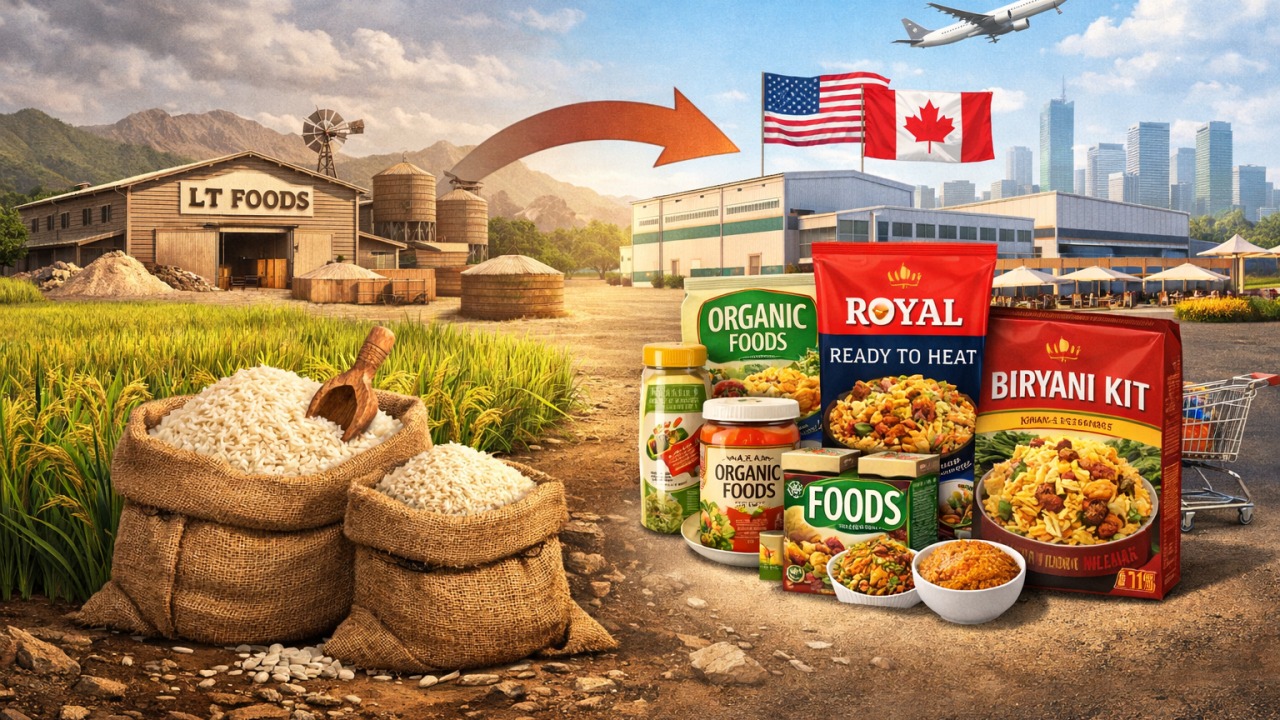
Global FMCG firm LT Foods Limited is incorporating a wholly owned subsidiary, LT Foods Australia Pty Limited, with an initial capital of AUD 2,100. The strategic expansion aims to transition its premium 'Daawat' basmati brand from an export model to an onshore distribution network, accelerating growth across the Asia-Pacific region.
NEW DELHI — Global consumer food giant LT Foods Limited has officially initiated the corporate process to establish a new, wholly owned subsidiary in Australia. In a regulatory disclosure filed on Monday, June 15, 2026, the New Delhi-headquartered company confirmed it is actively incorporating a local operational entity to be explicitly named LT Foods Australia Pty Limited.
The corporate expansion marks a significant step in the multi-national consumer staple provider's strategy to anchor its direct-to-consumer footprint in the Southern Hemisphere. By transitioning from a traditional export-led framework to an onshore corporate entity, LT Foods aims to optimize its consumer supply chains and build robust commercial ties with tier-one oceanic retail networks.
Financial Framework and Related-Party Compliance
According to statutory compliance documents submitted under listing regulations, the proposed Australian entity will operate as a direct, 100% subsidiary of the Indian parent company. The initial authorized capital for the overseas unit has been structured at a baseline entry cost of 2,100 Australian Dollars (AUD), paid entirely in cash.
Because the capital injection is managed directly between the parent entity and its internal startup node, LT Foods has classified the equity subscription as a related-party transaction. However, the company's compliance board verified that the capital structure operates completely on an arm's-length basis. As a newly created corporate unit, LT Foods Australia Pty Limited currently holds no prior financial turnover history or legacy operational liabilities.
Commercial Drivers and Regional Consumption Trends
The strategic decision to build an onshore distribution vehicle in Australia follows a period of strong financial gains for the global food enterprise. In its audited full-year financial outcomes released in May 2026, LT Foods reported a consolidated global revenue surge of 26% year-on-year to reach ₹11,026 crore, supported by robust double-digit growth in its core premium basmati brands.
The company's premium product segment anchored globally by its flagship Daawat label in India and the Royal brand in North America currently draws more than 60% of its top-line revenue from international consumer markets.
Historically, LT Foods has maintained an indirect presence in the Australian grocery ecosystem, distributing processed basmati varieties, jasmine rice, and its joint-venture "Kari Kari" roasted rice snacks through wholesale distributors and selective placement in retail formats like Costco. Management intends for the local subsidiary to serve as an administrative platform to coordinate local marketing campaigns, handle volatile shipping timetables, and drive retail shelf expansion for its organic food division, Nature Bio Foods.
Official Sources Section
The corporate resolutions, authorized capital counts, and target entity structures detailed in this report are compiled explicitly from formal statutory disclosures submitted by LT Foods Limited to the National Stock Exchange of India (NSE) under Regulation 30 of the SEBI (Listing Obligations and Disclosure Requirements) Regulations, 2015. Broad economic metrics and revenue margins are cross-verified against official financial presentations processed through the Ministry of Corporate Affairs (MCA) corporate database registry lanes.
Quote Section
"According to officials outlining the strategic roadmap in the regulatory texts, the establishment of the dedicated Australian platform will serve as an essential base for supporting business development, brand equity execution, and future multi-category product growth initiatives across Australia and the wider Asia-Pacific region."
Why It Matters
The transition from a passive international exporter to a registered local entity carries practical advantages for global supply chains. By utilizing a localized subsidiary, LT Foods can directly manage localized inventory buffers, insulating its brand from spot-freight price spikes and international shipping bottlenecks. For consumers and large supermarket retailers across Australia, this change ensures more predictable product availability, competitive wholesale pricing, and faster access to new product rollouts, including premium rice-based snack foods and organic pantry staples.
Key Facts at a Glance
Corporate Move: LT Foods has initiated the process to incorporate a 100% owned local subsidiary named LT Foods Australia Pty Limited.
Capital Infrastructure: Initial authorized equity capital set at AUD 2,100, managed on an arm's-length related-party transactional basis.
Core Portfolio: The expansion aims to boost market share for its global staple brands, including Daawat and Royal basmati products.
Fiscal Strength: Backed by a strong global consolidated revenue base of ₹11,026 crore for the financial cycle ending mid-2026.
FAQ Section
1. Why is LT Foods setting up a local company in Australia rather than exporting?
Establishing a local subsidiary allows the company to move beyond independent third-party distributors. It provides direct control over local inventory management, marketing strategy, and commercial negotiations with major supermarket chains, helping secure better profit margins.
2. What products will the new Australian subsidiary focus on distributing?
The platform will support LT Foods' core premium specialty grains, including Daawat Basmati variants, alongside its higher-margin convenience portfolios like ready-to-heat jasmine rice packs and Kari Kari rice snacks.
3. Does the promoter group have any personal financial interest in this transaction?
No. In compliance with SEBI master circulars, the transaction operates completely as an arm's-length investment into a wholly owned subsidiary, with zero promoter or director holding conflict of interest.
Source: