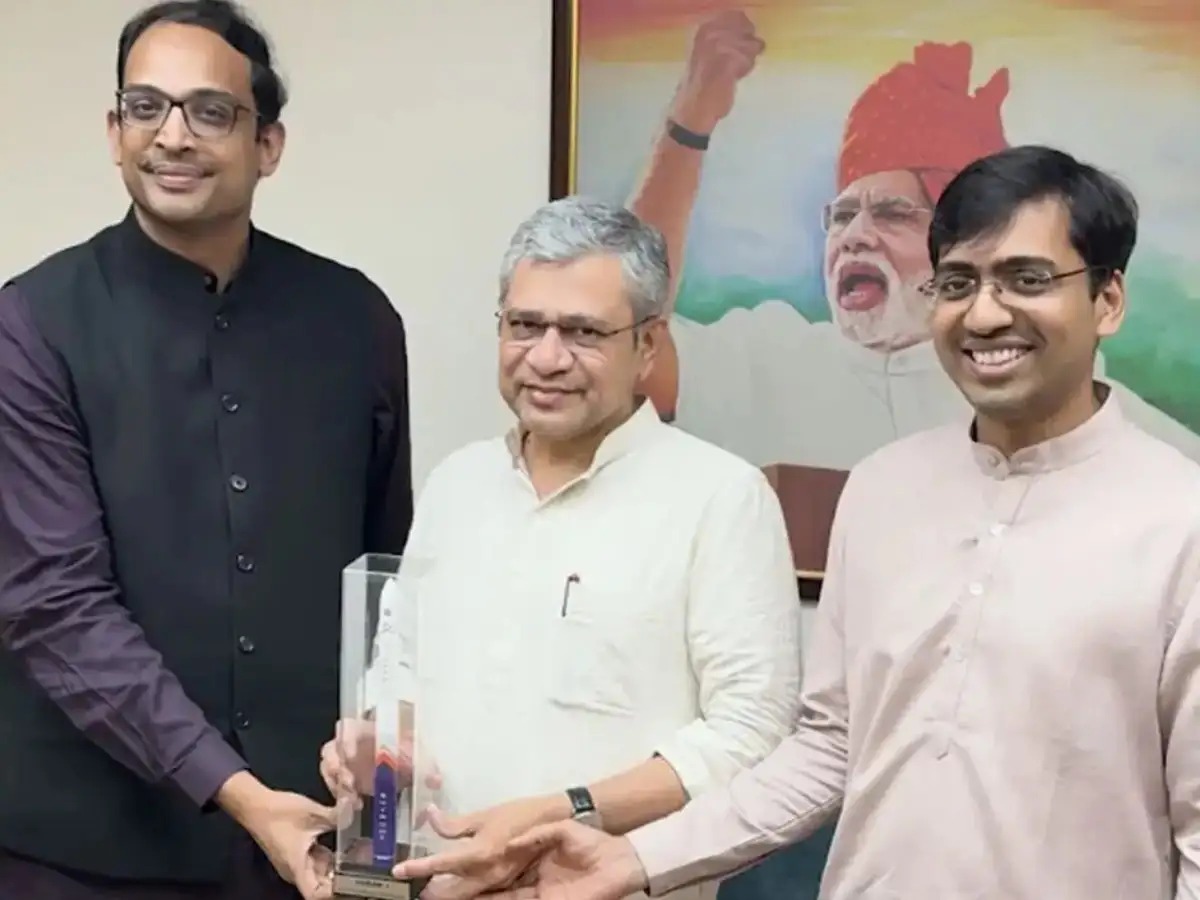
Union Minister Ashwini Vaishnaw announced that Indian space launch vehicles will soon be equipped with domestically produced semiconductor chips. Following a high-level meeting with Skyroot Aerospace founders after their Vikram-1 test flight successfully reached orbit, the government highlighted rapid progress in integrating homegrown hardware across the national space ecosystem.
NEW DELHI — India will soon integrate domestically manufactured semiconductor chips across its space launch vehicles, Union Minister for Electronics and Information Technology Ashwini Vaishnaw announced.
The statement followed a formal interaction between the Union Minister and leadership from private space technology firm Skyroot Aerospace. The meeting took place after Skyroot's Vikram-1 Test Flight-1 successfully reached a 450-kilometer orbit, marking India’s maiden orbital insertion by a privately developed launch vehicle. In a public statement on social media platform X, Vaishnaw confirmed the imminent operational deployment of homegrown microprocessors in national space hardware.
Strategic Microprocessor Integration and Private Deep-Tech Scale
The transition toward domestically produced electronics in space launch systems represents a critical step in reducing reliance on foreign hardware suppliers for mission-critical aerospace infrastructure.
Skyroot Aerospace acknowledged the policy push, stating that India's deep-tech sector is accelerating through forward-looking reforms, digital infrastructure, and targeted support for private aerospace startups. The integration strategy aligns with earlier milestones under the India Semiconductor Mission (ISM), including the space-qualified 32-bit "Vikram" processor developed jointly by the Vikram Sarabhai Space Centre (VSSC) and the Semiconductor Laboratory (SCL) in Chandigarh.
National Policy Framework and Commercial Impact
India's private space and semiconductor ecosystems have expanded rapidly following structural reforms aimed at encouraging domestic technology manufacturing.
Prime Minister Narendra Modi also held discussions with Skyroot Aerospace founders Pawan Chandana and Naga Bharath Daka to review the Vikram-1 mission and discuss long-term private sector participation in satellite launch operations. For defense contractors, commercial satellite operators, and deep-tech investors, equipping rockets with domestically designed and fabricated semiconductors provides enhanced supply chain security and lowers operational procurement overheads across launch missions.
Official Sources Section
According to official dispatches from the Ministry of Electronics and Information Technology (MeitY) and project disclosures from the Indian Space Research Organisation (ISRO), domestic chip integration efforts are supported under the India Semiconductor Mission. Operational updates were further confirmed through official press briefs by the Press Information Bureau (PIB) and verified corporate releases from Skyroot Aerospace.
Official Statement
"According to officials, the upcoming deployment of 'Made in Bharat' semiconductors in launch vehicles reinforces national technological sovereignty while validating India's growing capability in end-to-end chip design and aerospace manufacturing."
Why It Matters
Deploying locally produced chips in space rockets protects India's space program from global supply chain disruptions and export control restrictions. For domestic semiconductor design startups and commercial space enterprises, government adoption of indigenous chips creates guaranteed demand, accelerates hardware validation under extreme aerospace conditions, and strengthens the country's position as a global deep-tech hub.
Key Facts at a Glance
Policy Announcement: Indian space launch vehicles to adopt "Made in Bharat" semiconductor chips soon.
Primary Event: Announcement followed the successful orbital flight of Skyroot Aerospace's Vikram-1 rocket.
Core Technology: Built upon space-qualified processors like ISRO's indigenously developed Vikram 32-bit chip.
Strategic Ecosystem: Supported by the India Semiconductor Mission (ISM) and private aerospace reforms.
Frequently Asked Questions (FAQ)
What are "Made in Bharat" chips for space rockets?
They are microprocessors designed, developed, and fabricated within India specifically engineered to handle flight control, telemetry, and avionics in extreme space conditions.
Which organization recently achieved a major private launch milestone in India?
Skyroot Aerospace successfully launched its Vikram-1 rocket into a 450-km orbit, making India the third country with private orbital launch capabilities.
Who developed India's space-qualified microprocessors?
ISRO's Vikram Sarabhai Space Centre (VSSC) and the Semiconductor Laboratory (SCL) in Chandigarh developed the indigenously designed Vikram series processors.
Where can citizens verify official developments in India's semiconductor and space sectors?
Updates are published on the official web portals of the Ministry of Electronics and Information Technology (MeitY) and the Indian Space Research Organisation (ISRO).
Source: Official statements published by the Ministry of Electronics and Information Technology, mission dispatches from the Indian Space Research Organisation, media updates from the Press Information Bureau, and corporate dispatches from Skyroot Aerospace.