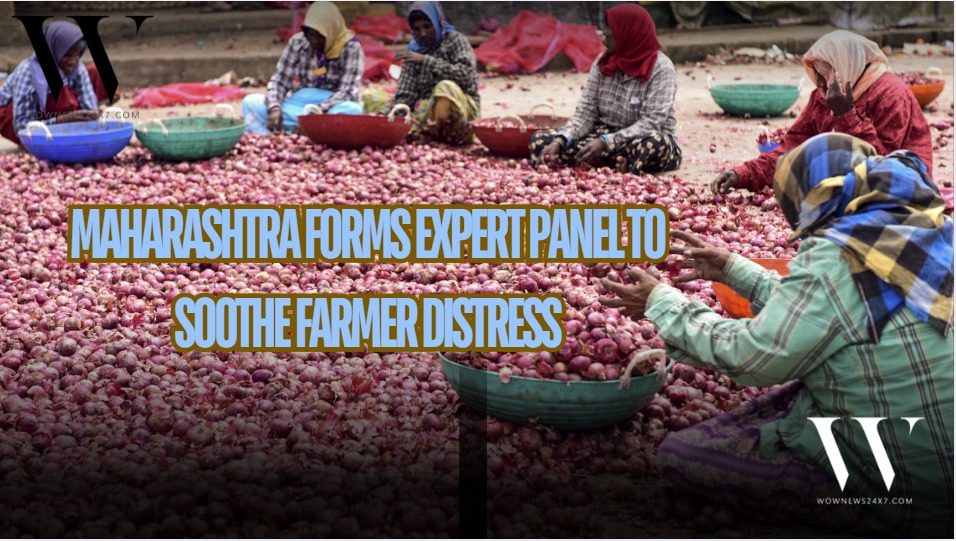
Maharashtra has formed a high-level committee to address the onion price crisis, as farmers demand a ₹3,000 per quintal minimum support price. The state has waived APMC fees for central procurement agencies to improve efficiency, while the Centre has eased quality norms to help stabilize market arrivals and farmer incomes.
Amidst a deepening agricultural crisis in Maharashtra’s onion-growing belt, the state government has constituted a high-level committee to devise immediate relief measures and long-term structural solutions for persistent price volatility. The panel, comprising senior officials from the Agriculture and Finance departments, is tasked with stabilizing farmer incomes following a sharp decline in wholesale prices that has left growers struggling to cover production costs.
The intervention follows weeks of intense protests across districts including Nashik, Pune, and Ahilyanagar, where farmers have faced wholesale market prices as low as ₹2 to ₹6 per kilogram—a figure many growers claim is insufficient even for transportation expenses.
Addressing the Onion Price Crunch
The Maharashtra government’s decision to form the expert panel follows a series of high-level meetings between state leaders, including Chief Minister Devendra Fadnavis and Deputy Chief Ministers Eknath Shinde and Sunetra Pawar, and Union ministers in New Delhi. While the Centre has recently relaxed procurement norms—expanding the acceptable size range for onions from 45-65mm to 35-70mm and easing quality restrictions—farmer organizations argue that these measures do not address the core issue: low remuneration.
"According to officials," the committee’s mandate includes a comprehensive review of the onion supply chain, the curbing of unfair trade practices by middlemen, and the implementation of long-term strategies to transition farmers toward higher-return crops where necessary.
Demands for Remunerative Pricing
The Maharashtra State Onion Growers Association has pushed back against current central procurement rates of approximately ₹1,580 per quintal, maintained by the National Agricultural Cooperative Marketing Federation of India (NAFED) and the National Cooperative Consumers' Federation of India (NCCF).
Association leaders, including founder-president Bharat Dighole, contend that the average cost of production is roughly ₹1,800 per quintal, rendering current procurement levels financially unsustainable. They are demanding a minimum procurement price of ₹3,000 per quintal and have called for a ₹10,000 crore economic revival package to support farming families hit by previous export bans and market fluctuations.
Strategic Market Interventions
To facilitate the procurement process, the Maharashtra government has officially waived Agricultural Produce Market Committee (APMC) fees on transactions conducted by NAFED and NCCF. This policy change aims to reduce transaction costs and encourage central agencies to ramp up their buffer stock operations, which have a target of 2 lakh tonnes for the current season.
Fee Waiver: The removal of the 0.75% APMC market fee is intended to accelerate direct procurement from farmers.
Transparency Measures: Farmer groups are urging the government to mandate daily disclosure of procurement lists to ensure that the benefits reach actual growers rather than traders.
Grading Reforms: Union Agriculture Minister Shivraj Singh Chouhan has assured the state that mechanised grading systems will be prioritized to prevent arbitrary rejection of produce by procurement agencies.
Why It Matters
For the rural economy of Maharashtra, which produces a significant portion of India's onion supply, the current price crash represents a major threat to agricultural viability. Successfully balancing consumer price stability with fair returns for farmers is a perennial challenge. The panel’s recommendations are expected to shape the state's agricultural policy for the upcoming Kharif season, with a potential shift toward crop diversification and decentralized processing infrastructure—such as onion powder and dehydrated flake units—to reduce reliance on volatile fresh-produce markets.
Key Facts at a Glance
Committee Focus: Immediate financial relief and long-term structural market reforms.
Procurement Target: 2 lakh tonnes of onion for the Price Stabilisation Fund (PSF).
Primary Demand: Farmer organizations are seeking a minimum procurement price of ₹3,000 per quintal.
Recent Policy Action: APMC fees waived for central procurement agencies (NAFED and NCCF).
FAQ Section
1. Why are onion farmers in Maharashtra protesting?
Farmers are protesting against prices that have fallen below production costs, citing recurring policy shocks like export bans and inadequate procurement rates that leave them unable to recover investments.
2. What is the role of the newly formed committee?
The committee is tasked with identifying immediate financial relief for distressed farmers and proposing long-term systemic fixes to break the cycle of price crashes and supply chain inefficiencies.
3. Have procurement rules been changed?
Yes, the Centre has relaxed size and quality specifications to allow more onions to be purchased, and the state government has waived APMC fees to streamline the process.
4. What is the current demand regarding compensation?
Farmer associations are demanding a ₹10,000 crore revival package and a subsidy of ₹1,500 per quintal for those who were forced to sell their produce at loss-making prices over the last few months.
Source: [suspicious link removed], Press Information Bureau, Business Standard, India Today