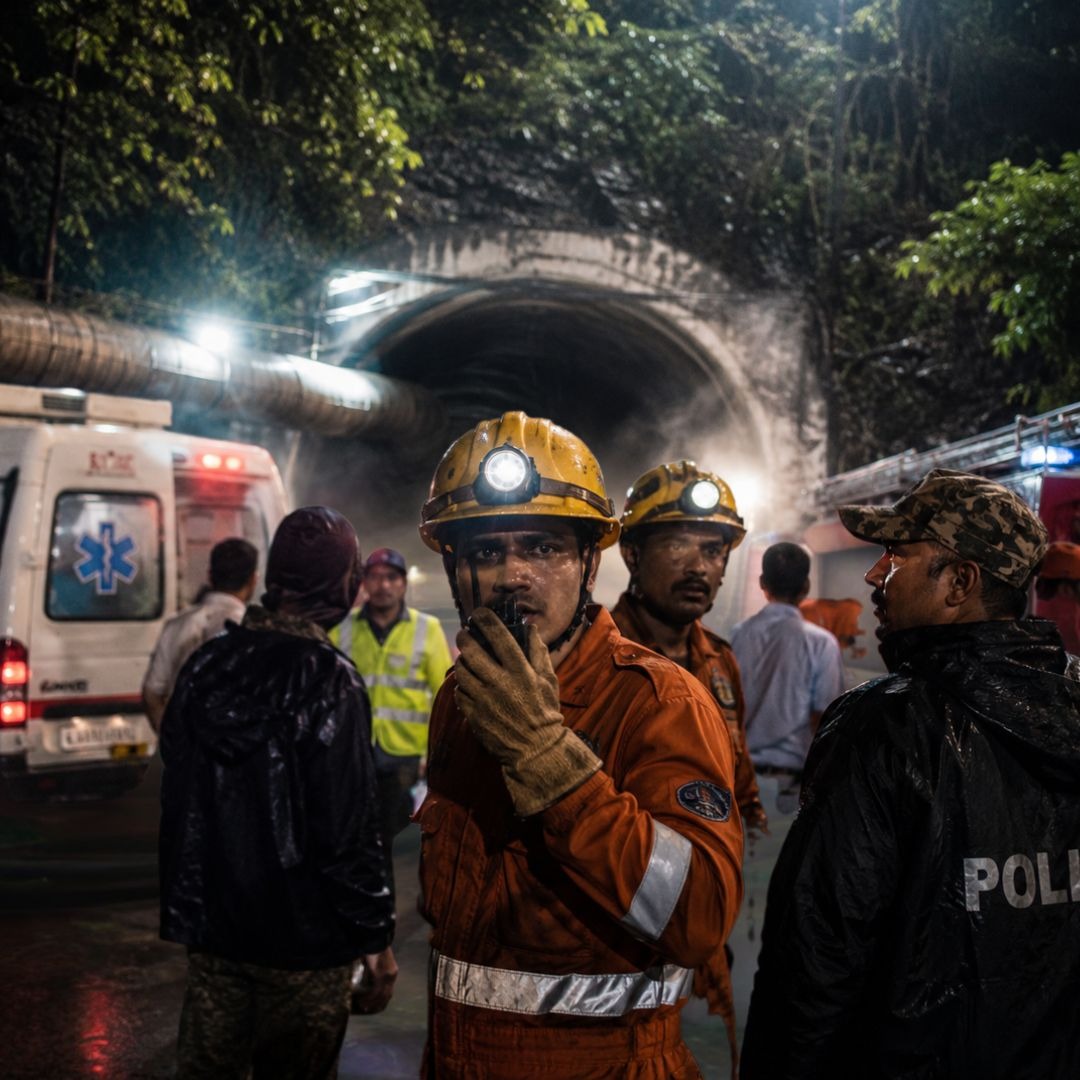
A sudden methane gas explosion triggered a massive landslide and tunnel collapse at the NHPC Teesta Stage VI Hydroelectric Project in Sikkim's Namchi district. The disaster left 10 personnel dead and several others trapped. Multi-agency rescue operations continue amidst hazardous toxic gas accumulation and unstable subterranean conditions.
NAMCHI — A fatal industrial disaster struck the under-construction tunnel of the NHPC Teesta Stage VI Hydroelectric Project (500 MW) at Samardung in Sikkim’s Namchi district on Monday, July 20, 2026. According to official reports, a sudden burst of underground methane gas—trapped within local rock formations—ignited an explosion that caused an immediate cave-in and landslide at the tunnel entrance.
Out of 25 personnel and staff inside the shaft at the time of the incident, rescue authorities confirmed that 10 fatalities have been reported so far, while efforts to locate and extract remaining workers continue. Prime Minister Narendra Modi spoke with Sikkim Chief Minister Prem Singh Tamang to review the crisis, assuring full central assistance for ongoing relief operations.
Hazardous Rescue Operations and Subterranean Risks
According to district administration briefings, emergency response teams have faced extraordinary challenges due to dense concentrations of toxic methane fumes, low oxygen levels, and poor visibility deep inside the 7-kilometer tunnel. Initial attempts by local responders were temporarily hampered when several primary rescue personnel experienced severe dizziness and breathing difficulties upon entering the shaft.
To counteract the hazardous atmosphere, specialized units equipped with gas-resistant breathing apparatuses were mobilized from Pakyong and Siliguri, joining teams from the National Disaster Response Force (NDRF), State Disaster Response Force (SDRF), local police, and medical personnel. Officials stated that a detailed forensic and technical investigation will be launched to ascertain the exact geological triggers behind the gas accumulation and subsequent blast.
Official Sources Section
Information regarding casualties, operational updates, and inter-agency coordination has been released through official government statements, corporate disclosures by NHPC, and communications from the Sikkim Chief Minister’s Office.
"According to officials, rescue operations are continuing under extreme caution with specialized gas-protection equipment, while top authorities monitor the deployment of all available disaster response resources."
Further administrative updates, corporate filings, and regulatory notices can be tracked via the National Hydroelectric Power Corporation (NHPC) and the Government of Sikkim.
Why It Matters
For workers, families, and communities across the region, the tragedy underscores the severe, hidden hazards of tunneling through fragile Himalayan geological strata. For investors, developers, and corporate stakeholders associated with NHPC and project executors like Patel Engineering, the incident highlights the critical need for advanced subterranean gas-monitoring systems, stricter enforcement of on-site safety protocols, and rigorous risk assessments during major hydropower construction.
Key Facts at a Glance
Project: Teesta Stage VI Hydroelectric Project (500 MW).
Location: Samardung, Namchi District, Sikkim.
Incident Date: July 20, 2026.
Cause: Sudden explosion of trapped underground methane gas leading to a structural cave-in.
Casualties: 10 fatalities reported, with multi-agency rescue teams working to locate trapped personnel.
Frequently Asked Questions
What caused the accident at the NHPC Teesta Stage VI project?
Authorities reported that a sudden release and explosion of underground methane gas trapped within rock formations triggered a landslide and tunnel collapse.
How many personnel were affected by the disaster?
A total of 25 personnel were inside the tunnel when the incident occurred, resulting in 10 reported fatalities and ongoing rescue operations for others trapped inside.
Which agencies are leading the rescue operations?
Operations are being executed jointly by the NDRF, SDRF, Sikkim Police, local administration, fire services, and specialized technical teams.
Why have rescue efforts been delayed or complicated?
Efforts have faced severe hurdles due to the accumulation of toxic methane gas, low oxygen levels, poor visibility, and unstable debris inside the shaft.
Source: National Hydroelectric Power Corporation (NHPC), Government of Sikkim, Official District Administration Reports