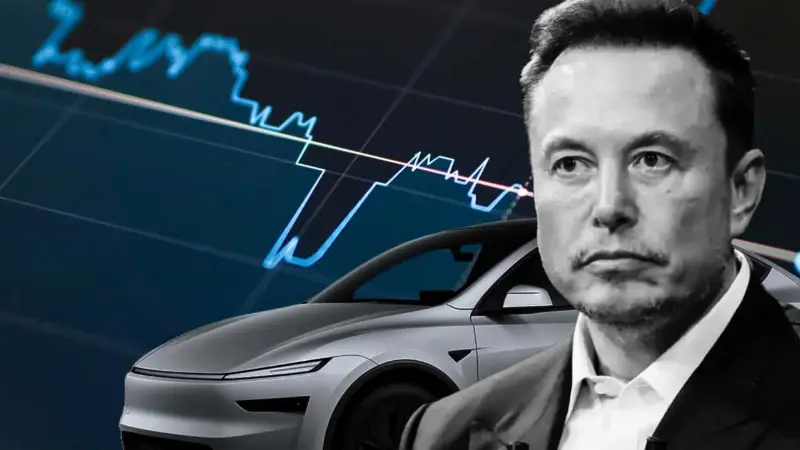
Tesla is navigating a confluence of headwinds - the formal abandonment of its India manufacturing plans, a fresh recall of over 14,000 Model Y vehicles in the US, and deepening commercial ties with SpaceX ahead of its blockbuster IPO. Together, these developments are raising pointed questions about Tesla's risk profile, Elon Musk's divided attention and whether the stock's elevated premium can hold.
India Door Closes, Retail Strategy Stays
India's Minister of Heavy Industries confirmed on May 19, 2026 that Tesla has officially abandoned plans to build a manufacturing facility in India, ending years of on-again, off-again negotiations. The company skipped later rounds of discussions on India's EV manufacturing incentive scheme, which offered import duty cuts from 100 percent to 15 percent in exchange for a minimum investment of 4,150 crore rupees. Tesla instead pursues a retail-first approach - operating four showrooms across Mumbai, Delhi, Gurugram and Bengaluru - while continuing to import vehicles at full duty rates, a structure that puts it at a significant price disadvantage against locally assembled rivals.
Recall Adds To Near Term Risk
Tesla is simultaneously managing a recall of over 14,000 Model Y vehicles in the United States over a safety label issue, adding another layer of near term operational noise to an already crowded news cycle. While the recall is not large by industry standards, it lands at a sensitive moment when investor scrutiny of Tesla's execution and quality controls is already elevated.
The SpaceX Question And Musk's Divided Attention
Perhaps the most structurally significant issue for long term Tesla shareholders is the thickening web of ties between Tesla and SpaceX. Tesla owns nearly 19 million shares of SpaceX - worth approximately 4.1 billion dollars at SpaceX's target valuation of 1.5 trillion dollars - and the two companies are increasingly collaborating on AI and semiconductor projects, including a joint chip plant called Terafab in East Texas. SpaceX's S-1 filing, released on May 20, 2026, openly acknowledges "conflicts of interest" between the two entities. With SpaceX's IPO reportedly scheduled for June 2026 at a projected valuation of 1.75 trillion dollars - which would dwarf Tesla's roughly 1 trillion dollar market cap - analysts warn that Musk's "new baby" could divert both investor capital and his personal focus away from the EV maker.
Tesla Valuation Watch
Tesla stock at roughly 426 dollars trades about 3.4 percent above the analyst consensus target of around 412 dollars, and Simply Wall Street estimates imply shares trade at nearly 371 percent above estimated fair value.
SpaceX's IPO is expected to offer a "cleaner, purer Musk innovation bet" that could structurally benchmark Tesla's AI and autonomy thesis against a more credible competitor.
Wedbush's Dan Ives has put an 80 percent probability on a Tesla-SpaceX merger following the S-1 filing, though no formal discussions have been confirmed.
Tesla's India exit removes a long awaited growth narrative, leaving the company dependent on existing markets where EV competition is intensifying.
The Model Y recall, though limited in scale, adds short term headline risk at a moment when operational execution is under close watch.
SpaceX's retail IPO allocation - reportedly around 30 percent for individual investors - could pull directly from Tesla's most loyal shareholder base.
Sources: Yahoo Finance, Simply Wall St, Teslarati, YouTube, Business Insider, Barron's, Fortune and Yahoo Finance