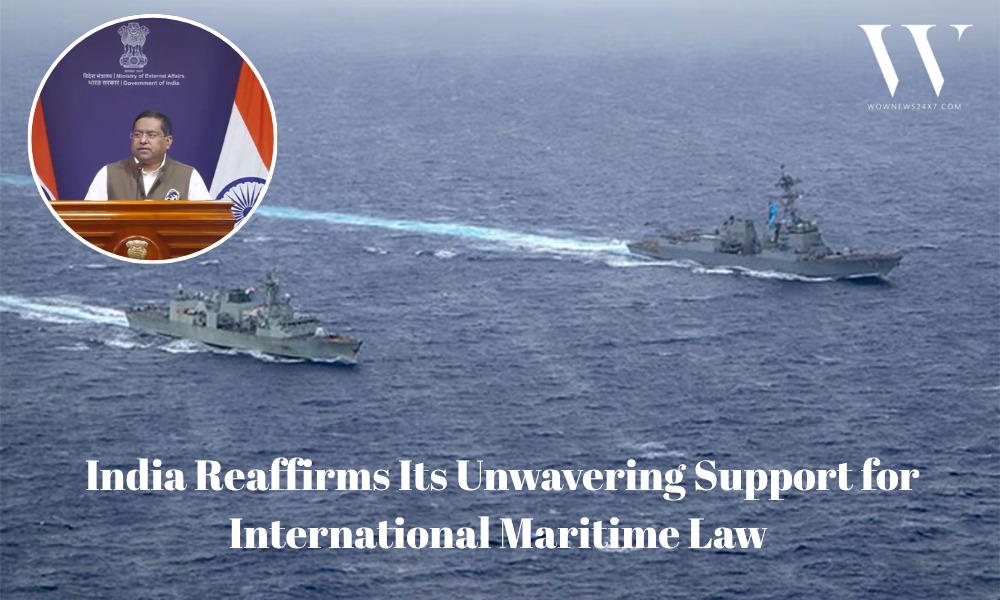
India has reaffirmed its clear and consistent position on the South China Sea, emphasizing freedom of navigation, overflight, and unimpeded commerce in accordance with UNCLOS. Highlighting the 2016 arbitral tribunal milestone, New Delhi underscores that maritime disputes must be resolved peacefully to uphold a stable, rules-based Indo-Pacific regional order.
NEW DELHI — India’s Ministry of External Affairs (MEA) reiterated its principled stance on the South China Sea, stressing the critical necessity of maintaining a rules-based maritime order. Speaking during a media briefing in New Delhi, MEA official spokespersons emphasized that freedom of navigation, unimpeded commerce, and lawful overflight must be strictly respected in line with the United Nations Convention on the Law of the Sea (UNCLOS).
The diplomatic reaffirmation arrives amid ongoing regional dialogues marking the milestone anniversary of the 2016 arbitral tribunal award, which continues to serve as an essential legal foundation for addressing competing maritime claims.
Strategic Significance and Legal Framework
According to official statements, New Delhi maintains that international waterways are global commons requiring absolute adherence to multilateral legal frameworks. The 2016 ruling by the Permanent Court of Arbitration remains a vital benchmark for peaceful dispute resolution.
India's consistent policy advocates for cooperative dialogue among claimant states, rejecting unilateral coercive actions that disrupt commercial shipping lanes or destabilize regional security across the Indo-Pacific theatre.
Official Sources Section
Positions regarding maritime security and international law compliance have been formally outlined through briefings and releases by the Ministry of External Affairs.
"According to officials, India's position on the South China Sea issue is clear and well-known, emphasizing that all related disputes must be settled peacefully through legal mechanisms consistent with UNCLOS."
Further policy documents and diplomatic transcripts are available via the Ministry of External Affairs portal.
Why It Matters
For international trade, energy transit, and global supply chains, stability in the South China Sea directly impacts commercial shipping costs and regional economic security. A significant portion of India's external trade traverses these vital sea lanes, making adherence to international maritime law a matter of core economic and strategic interest.
For investors and businesses, a predictable, rules-based maritime environment prevents geopolitical escalation and ensures uninterrupted commercial connectivity across Asian markets.
Key Facts at a Glance
Core Principle: Upholding freedom of navigation and overflight under UNCLOS.
Legal Benchmark: Recognition of the 2016 arbitral tribunal award as a foundation for dispute resolution.
Geopolitical Focus: Ensuring regional stability, unimpeded commerce, and a rules-based order in the Indo-Pacific.
Spokesperson: MEA official representative during New Delhi media interactions.
Frequently Asked Questions
What is India's official stance on the South China Sea?
India maintains that maritime disputes must be resolved peacefully in strict accordance with international law, particularly UNCLOS, while safeguarding freedom of navigation and commerce.
Why is the 2016 arbitral tribunal award significant?
The award serves as an important legal milestone and basis for the peaceful resolution of competing territorial claims between regional parties.
How does the South China Sea impact international trade?
The waterway carries a substantial share of global merchant shipping and energy supplies, making regional peace critical for worldwide economic stability.
Where can official updates on India's foreign policy be found?
Statements and diplomatic briefs are regularly updated through the official Ministry of External Affairs portal.
Source: Ministry of External Affairs, UNCLOS Framework Documents