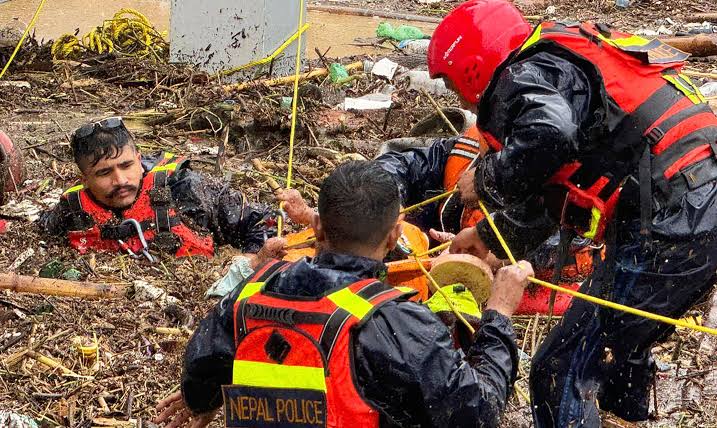
Nepalese police confirmed that the death toll from catastrophic flash floods along the northern border has reached 270 after emergency teams recovered more bodies from buried river settlements. Triggered by an upstream glacial collapse, the disaster caused widespread destruction across bridges, highways, and hydropower stations.
KATHMANDU — Nepalese police and emergency services confirmed that the verified death toll from catastrophic flash floods and debris torrents in northern Nepal has risen sharply to 270 bodies. The updated casualty count, issued through law enforcement updates and district disaster control rooms in Kathmandu, marks a severe escalation in one of the deadliest trans-Himalayan natural disasters in recent memory. The surge in confirmed fatalities comes as multi-agency search squads, backed by the Nepal Army and Armed Police Force, penetrated isolated riverbank settlements, customs crossings, and landslide-buried highway corridors across Rasuwa, Nuwakot, and adjoining districts.
Escalating Death Toll and Ongoing Recovery
The surge in fatalities followed an avalanche and glacial collapse that blocked the upper reaches of the Lhende River before unleashing an immense wall of mud, boulders, and floodwaters down the Bhote Koshi and Trishuli river systems.
As flood levels receded, search teams uncovered victims submerged under deep mud deposits and inside structural wreckage along key border points, including Timure, Syafrubesi, and Rasuwagadhi. Local authorities noted that the deceased include local residents, international travelers, infrastructure project personnel, and border security forces stationed along the frontier.
Medical personnel and forensic identification teams have been mobilized to field hospitals and district centers to conduct autopsies and facilitate the identification of victims, many of whom were swept tens of kilometers downstream into broader river basins.
Massive Infrastructure Destruction
The disaster has crippled surface transit and commercial activity across northern Nepal. According to situational updates from the National Disaster Risk Reduction and Management Authority (NDRRMA), dozens of motorable bridges and vital sections of national highway infrastructure have been destroyed or washed away.
Over 300 commercial freight trucks and passenger vehicles waiting at border customs checkpoints were buried or carried off by the current. Furthermore, catastrophic damage to regional hydropower projects along the Bhote Koshi basin has disrupted hundreds of megawatts of electricity generation, cutting off local power networks and complicating emergency operations.
Humanitarian Coordination and Cross-Border Warnings
The scale of the crisis has prompted multi-nation diplomatic mobilization. Foreign embassies in Kathmandu are coordinating with Nepal’s Home Ministry to trace missing foreign tourists, including pilgrims bound for the Kailash Mansarovar circuit and alpine trekking groups.
Downstream, disaster response authorities in the neighboring Indian states of Bihar and Uttar Pradesh remain on high alert as surging tributaries merge into the Gandak and Narayani river systems, raising water levels in low-lying plains.
Why It Matters
The rising death toll underscores the severe vulnerability of mountainous regions and high-altitude transport corridors to climate-induced hazards, including glacial lake outbursts and sudden river blockages. For border economies, travelers, and international logistics providers, the extensive loss of life and structural destruction will necessitate prolonged reconstruction, enhanced cross-border early warning networks, and re-evaluated safety standards along trans-Himalayan routes.
Key Facts at a Glance
Confirmed Fatalities: 270 bodies recovered by Nepal Police and rescue units.
Affected Areas: Rasuwa, Nuwakot, Dhading, and the Bhote Koshi–Trishuli river corridors.
Primary Trigger: Glacial and rock avalanche upstream blocking the Lhende river tributary.
Infrastructure Impact: Heavy destruction of bridges, national highways, customs stations, and regional hydropower plants.
Official Sources
According to official briefings released by Nepal Police headquarters, the Ministry of Home Affairs, and the NDRRMA:
"Search and rescue operations remain active across all impacted river corridors, with emergency personnel working continuously to locate missing individuals, clear blocked transport lines, and recover victims."
Frequently Asked Questions
How many bodies have been found following the Nepal flood?
Nepal Police confirmed that the recovered death toll has reached 270 as search teams access remote valleys and buried settlements.
What caused the devastating flash floods in northern Nepal?
The disaster was triggered by an ice and rock avalanche upstream along the border, which blocked river tributaries before releasing a destructive surge of water and debris.
Which areas suffered the most severe damage?
The hardest-hit areas include Rasuwa district—specifically Timure, Syafrubesi, and the Rasuwagadhi border corridor—along with downstream settlements in Nuwakot and Dhading.
Source: Nepal Police Headquarters | Ministry of Home Affairs Nepal | National Disaster Risk Reduction and Management Authority (NDRRMA)