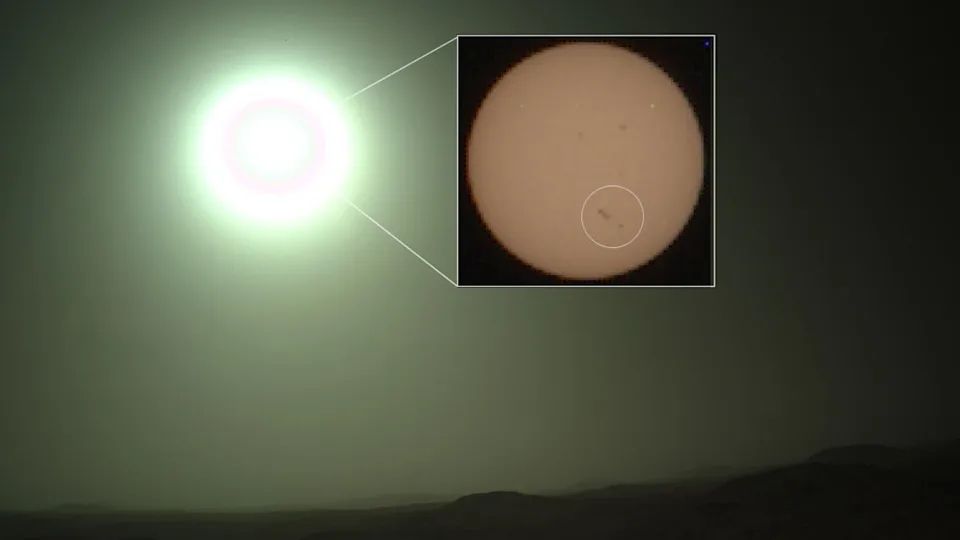










A giant Earth-facing sunspot complex, labeled AR 4294–4296, has rotated onto the Sun’s near side and rivals the scale of the 1859 Carrington Event. Scientists are monitoring for powerful flares and CMEs that could impact satellites, radio communications, and power grids over the coming days.
A massive, magnetically tangled sunspot cluster—designated AR 4294–4296—has emerged on the Earth-facing side of the Sun, drawing comparisons to the historic 1859 Carrington Event, the most intense solar storm on record. The complex is currently aimed almost squarely at Earth, prompting heightened monitoring for significant solar flares and coronal mass ejections (CMEs).
Spaceweather trackers note the complex’s size and magnetic complexity make it capable of producing M- and X-class flares. If accompanied by Earth-directed CMEs, impacts could include geomagnetic storms, enhanced auroras, and potential disruptions to satellites, GPS, HF radio, and power grid stability. Observers expect elevated space weather activity in the next several days as the region continues to evolve.
Major takeaways
Earth-facing region: AR 4294–4296 is directly oriented toward Earth, increasing the likelihood of geoeffective events.
Historic comparison: The cluster’s scale rivals sunspots associated with the 1859 Carrington Event, warranting close scrutiny.
Potential impacts: Risk to communications, navigation systems, satellites, and grid operations if strong CMEs strike.
Active monitoring: Space weather networks are tracking flare probabilities and CME trajectories in real time.
Notable updates
Recent rotation: The cluster turned onto the near side in late November and intensified into early December.
Aurora chances: Recent G2–G3 geomagnetic activity has already boosted auroral visibility; further storms remain possible if CMEs arrive.
Conclusion
While no severe impacts are guaranteed, the Carrington-scale sunspot demands vigilant monitoring. Preparedness across communications, aviation, and grid operations will be key if AR 4294–4296 unleashes powerful Earth-directed CMEs.
Sources: TS2 Tech; Moneycontrol; Daily Galaxy