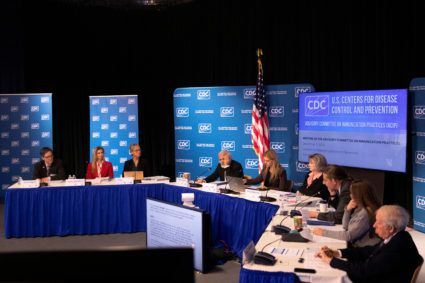
In a landmark decision, the CDC’s Advisory Committee on Immunization Practices (ACIP) voted to end the universal recommendation for administering the hepatitis B vaccine within 24 hours of birth. Now, infants born to mothers who test negative for hepatitis B may delay vaccination until two months, with decisions guided by healthcare providers.
The CDC’s Advisory Committee on Immunization Practices (ACIP) has overturned a decades-long policy that all newborns receive the hepatitis B vaccine at birth. In an 8–3 vote on December 5, 2025, the panel recommended that vaccination timing be determined by maternal hepatitis B status and consultation with healthcare providers.
Under the new guidance, infants born to mothers who test negative for hepatitis B will no longer be universally required to receive the vaccine within 24 hours of birth. Instead, parents may choose to delay the first dose until two months of age, in consultation with pediatricians. However, the recommendation remains unchanged for infants born to mothers who test positive or whose status is unknown—these newborns must still receive the vaccine immediately after birth.
This marks the first major change in hepatitis B vaccination policy since 1991, when universal birth-dose recommendations were introduced to curb transmission. Critics, including several medical organizations, warn that the shift could increase risks if maternal testing is missed or inaccurate. Supporters argue that individualized decision-making respects parental choice and reduces unnecessary interventions for low-risk infants.
Major Takeaways
Policy Change: Universal hepatitis B birth-dose recommendation ended after more than 30 years.
New Guidance: Infants of hepatitis B-negative mothers may delay vaccination until 2 months.
High-Risk Infants: Immediate vaccination still required for babies of hepatitis B-positive or unknown-status mothers.
Debate: Experts divided—some warn of increased transmission risk, others support parental choice.
Historical Context: Universal recommendation began in 1991 to combat rising hepatitis B infections.
Notable Updates
Voting Outcome: ACIP voted 8–3 in favor of ending universal birth-dose policy.
Oversight: Committee members were appointed by Health and Human Services Secretary Robert F. Kennedy Jr.
Public Health Impact: Ongoing debate about balancing parental autonomy with community protection.
Conclusion
The CDC panel’s decision represents a significant shift in U.S. vaccine policy, moving from universal newborn hepatitis B vaccination to individualized, risk-based recommendations. While the change emphasizes parental choice and maternal testing, it raises questions about long-term public health outcomes and the potential for gaps in protection.
Sources: CBS News, PolitiFact, ABC News, CNBC, USA Today