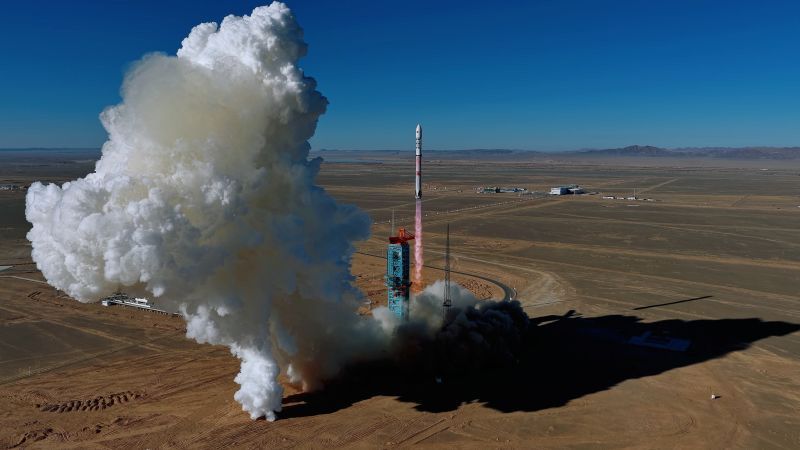










China’s private space firm LandSpace achieved a milestone with the Zhuque-3 reusable rocket, which successfully reached orbit on December 3, 2025. However, the first-stage booster exploded during its landing attempt in the Gobi Desert. Despite the setback, the mission highlights China’s growing ambitions in the global race for reusable rocketry.
China’s commercial space sector took a bold step forward with the maiden flight of the Zhuque-3 reusable rocket, launched by LandSpace Technology from the Jiuquan Satellite Launch Center. The methane-fueled rocket, powered by nine TQ-12A engines, successfully placed a dummy payload into low Earth orbit, marking a significant achievement in orbital launch capability.
The mission’s primary objective—achieving orbit—was met. However, the secondary goal of recovering the first-stage booster ended in failure when the rocket caught fire mid-air and exploded near its designated landing site in the Gobi Desert.
Despite the fiery setback, analysts view the test as a partial success, demonstrating China’s progress in reusable rocket technology, a field dominated by SpaceX’s Falcon 9 for over a decade.
Major Takeaways
Successful Orbit: Zhuque-3 placed a dummy payload into low Earth orbit.
Landing Failure: First-stage booster exploded during landing attempt.
Methane Fuel: Rocket powered by nine TQ-12A methane engines.
Global Race: China joins the competition for reusable rockets against U.S. firms like SpaceX.
Future Outlook: LandSpace aims to refine recovery technology in upcoming tests.
Conclusion
While Zhuque-3’s debut ended with a dramatic fireball, the mission underscores China’s determination to catch up in reusable rocketry. The partial success signals both progress and challenges ahead as Beijing’s private space sector intensifies its rivalry with established global players.
Sources: NewsBytes, LiveMint, SpaceNews, Yahoo Tech, Space.com