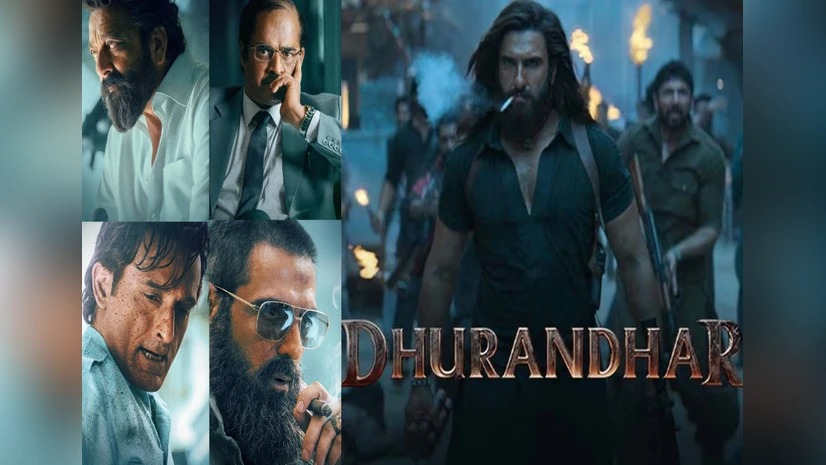






Aditya Dhar’s Dhurandhar, starring Ranveer Singh, has sparked controversy for allegedly pushing a bigoted vision while gaslighting audiences under the guise of patriotism. Despite strong advance bookings and CBFC clearance, critics question its narrative responsibility. The film’s release reignites debates on Bollywood’s role in shaping cultural attitudes and national identity.
Aditya Dhar’s much-anticipated film Dhurandhar, starring Ranveer Singh, has ignited both excitement and controversy following its release on December 5, 2025. While the film has drawn praise for its high-octane action and Singh’s powerful performance, critics argue that it pushes a bigoted vision and gaslights audiences into accepting it as entertainment, raising questions about representation and narrative responsibility in Bollywood.
Key Highlights
Box office momentum: Despite the controversy, Dhurandhar has recorded strong advance bookings, crossing ₹2.15 crore in ticket sales with over 12,000 tickets sold before release.
Critical divide: Early reviews from international screenings praised the film’s patriotic tone and emotional intensity, with Ranveer Singh hailed for delivering one of his most gritty performances.
Censorship clearance: The Central Board of Film Certification (CBFC) granted the film an A certificate after demanding cuts to violent visuals and muting cuss words. The Delhi High Court also cleared the film, ruling it a work of fiction with no direct link to Major Mohit Sharma, whose family had raised objections.
Controversial narrative: Critics and commentators argue that Dhar’s storytelling leans into polarizing themes, presenting a vision that risks normalizing prejudice under the guise of patriotism. This has sparked heated debates across social media and film forums.
Audience reaction: While some viewers celebrate the film’s adrenaline-fueled spectacle, others express discomfort at its ideological undertones, questioning whether mainstream cinema should blur the line between entertainment and propaganda.
Broader Impact
The Dhurandhar controversy highlights the growing tension between artistic freedom and social responsibility in Indian cinema. As Bollywood increasingly embraces patriotic thrillers, filmmakers face scrutiny over how narratives shape public perception. Dhar’s film, though commercially successful, underscores the challenge of balancing creative vision with cultural sensitivity.
For audiences, Dhurandhar is more than just a spy thriller—it is a reminder of how cinema can both entertain and influence societal attitudes. The debate surrounding its release may well define how future films navigate themes of nationalism, identity, and inclusivity.
Sources: Mint, Pragativadi, WION, India Today, The Statesman, NDTV