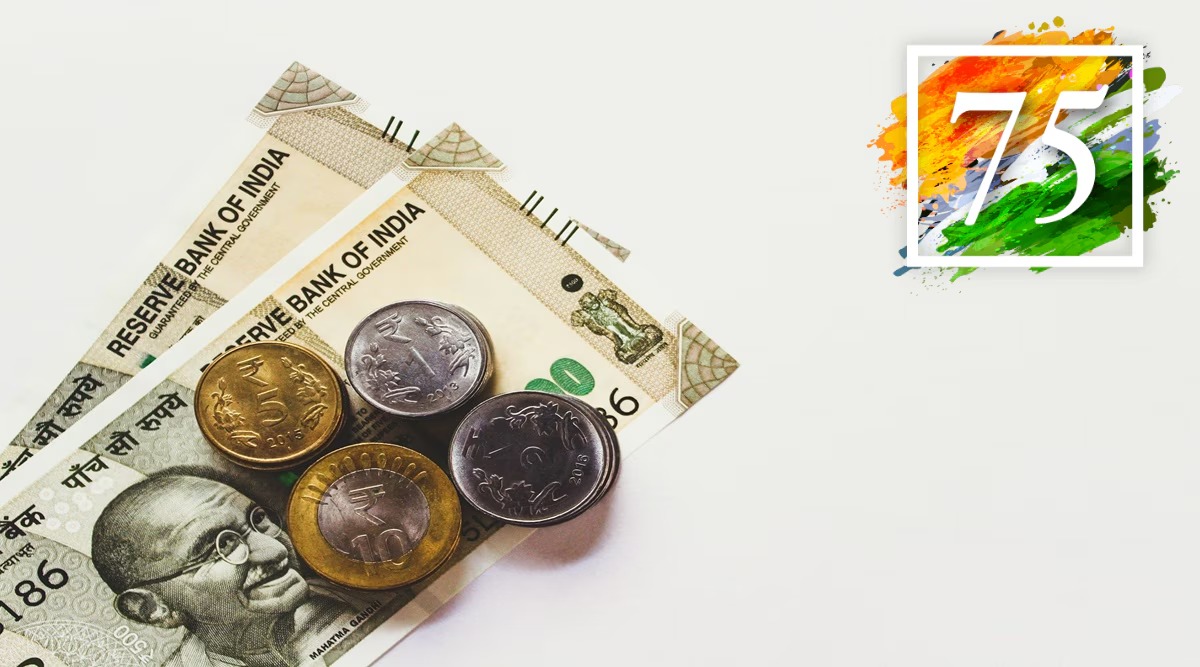



Image Source: The Financial Express
Celebrating 75 years of the Indian rupee since Independence, the currency’s journey reflects India’s economic evolution. From its ancient roots and post‑colonial symbolism to long‑term depreciation against global currencies, the rupee has mirrored the nation’s growth, policy shifts, and integration into the global financial system.
Show more
The rupee’s origins trace back to the Sanskrit word rūpya (wrought silver), with standardized coinage credited to Sher Shah Suri in the 16th century. After Independence, India adopted the Lion Capital of Ashoka on coins in 1950, replacing British monarch imagery to symbolize sovereignty. Over decades, the rupee’s value against the US dollar shifted dramatically—from around Rs 4 per USD in 1947 to nearly Rs 80 per USD by 2022—reflecting inflation, external shocks, and policy adjustments. The rupee’s trajectory highlights India’s resilience and adaptation in global markets.
Notable updates
• Ancient lineage: Sanskrit rūpya meaning wrought silver
• Sher Shah Suri introduced standardized silver rupee in the 16th century
• Post‑Independence coins adopted Lion Capital of Ashoka in 1950
• Exchange rate shift: ~Rs 4 per USD in 1947 to ~Rs 80 per USD in 2022
• 2025 marks 75 years of India’s independent currency journey
Major takeaway
The rupee’s 75‑year story blends heritage with economics: a symbol of sovereignty and a mirror of India’s growth. Its evolution from silver coinage to modern currency captures the nation’s transformation into a globally connected economy.
Sources: Deccan Herald, Financial Express, Wikipedia
Stay Ahead – Explore Now!
The Beast Returns: Kawasaki Versys 1100 2026 Edition Hits India with Power Boost and Smart Features

Advertisement
Advertisement