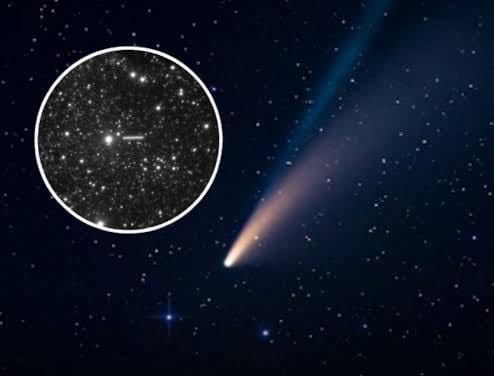






Astronomers are closely studying interstellar comet 3I/ATLAS after discovering it spins at an extraordinarily high speed, defying established comet physics. Its unusual rotation, jets, and structure are forcing scientists to reconsider how comets form, evolve, and survive extreme conditions beyond our solar system.
A rare interstellar visitor is reshaping scientific understanding of comet behavior. Known as 3I/ATLAS, this comet originated outside our solar system and is only the third confirmed interstellar object ever observed. What has astonished researchers is not just its distant origin, but its extremely rapid spin, a characteristic that appears incompatible with long-standing models of comet stability and structure.
Key Highlights
-
3I/ATLAS follows a hyperbolic trajectory, clearly confirming that it did not originate within the gravitational influence of the Sun. Its speed and path indicate it traveled through interstellar space for millions or even billions of years before entering our solar system.
-
Observations reveal that the comet rotates far faster than typical solar-system comets. Such rapid spinning would normally cause a comet to break apart, yet 3I/ATLAS appears structurally intact, raising new questions about its internal composition and strength.
-
Unusual jet activity has been detected on the comet’s surface, with powerful outbursts of gas and ice contributing to its accelerated rotation. These jets may behave differently from those seen on familiar comets, possibly due to exotic materials or extreme thermal conditions.
-
Scientists believe the comet may be significantly older than the Sun, meaning it formed around another star long before our solar system existed. This makes 3I/ATLAS a valuable cosmic time capsule, offering clues about planetary formation in other regions of the galaxy.
-
High-resolution imaging suggests the comet’s surface activity could resemble cryovolcanic processes, where volatile substances erupt in ways not typically observed on solar-system comets.
Current Scientific Debate
The extreme spin rate of 3I/ATLAS challenges conventional comet physics, prompting discussions about whether current models underestimate the strength or diversity of cometary materials. Researchers are now exploring whether interstellar comets follow fundamentally different physical rules. Continued observations are expected to refine theories and potentially redefine how scientists classify and study comets from beyond our solar neighborhood.
Sources: Phys.org, LiveScience, NASA Science, Times Of India