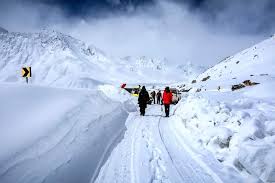






The Manali-Leh highway has been closed beyond Darcha after fresh snowfall at Rohtang Pass made travel unsafe. Authorities confirmed the route will reopen only in May–June 2026. While the closure is routine in winter, the snow has delighted tourists, shifting focus to accessible destinations like Manali and Solang Valley.
The strategic Manali-Leh highway, a lifeline connecting Himachal Pradesh with Ladakh, has been officially closed to vehicular traffic following fresh snowfall at Rohtang Pass and other high-altitude regions. Authorities confirmed the closure on December 8–9, 2025, citing unsafe road conditions due to snow accumulation, black ice, and plunging temperatures.
Key Highlights
-
Rohtang Pass (13,052 ft) in Kullu district received a fresh spell of snow, blanketing the region and making roads slippery.
-
The Lahaul-Spiti District Disaster Management Authority had earlier shut the Gramphoo-Losar road, and now the Manali-Leh route has been closed beyond Darcha.
-
Officials stated that the road will remain closed until May–June 2026, when weather conditions improve and snow clearance operations are completed.
-
During a limited window between November 21 and December 7, tourists were allowed to travel only up to Baralacha Pass, but worsening conditions forced a complete shutdown.
-
The closure is an annual winter phenomenon, as heavy snowfall and black ice make the route unsafe for both locals and tourists.
-
Despite the restrictions, the snowfall has brought cheer to visitors and locals, turning valleys like Lahaul and Spiti into scenic winter destinations.
Authorities have urged travelers to avoid attempting the route, highlighting risks of slippery surfaces, sudden weather changes, and poor visibility. Meanwhile, tourism stakeholders expect winter visitors to shift focus to Manali, Solang Valley, and other accessible snow points, ensuring continued inflow despite the highway closure.
The Manali-Leh road remains a strategic and cultural artery, but its seasonal closure underscores the challenges of maintaining connectivity in India’s high-altitude regions.
Sources: Hindustan Times, UNI India, The Week, Divya Himachal, The Tribune