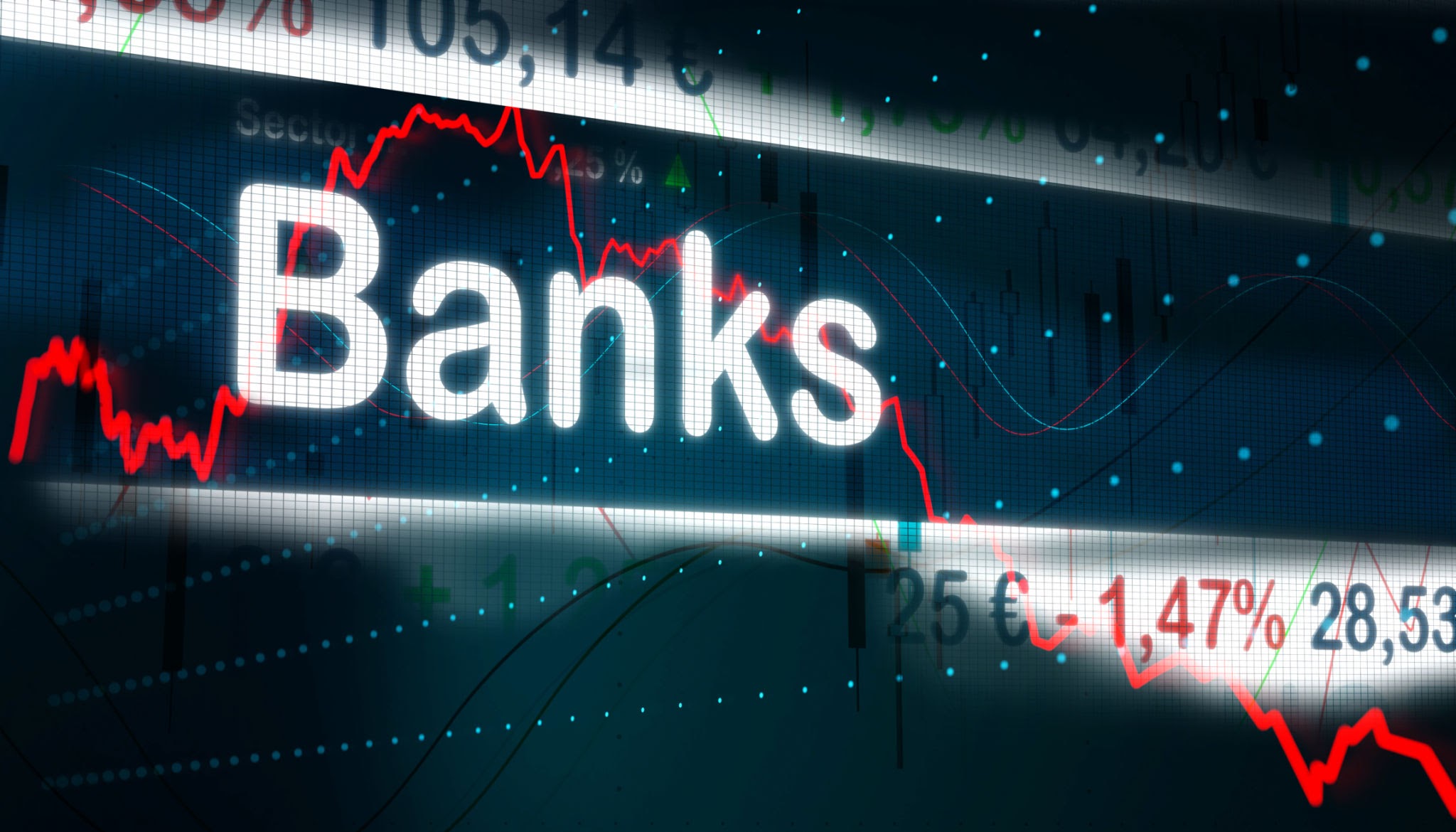
The Nifty Private Bank Index fell 2.5% today, July 20, 2026, driven by institutional selling across major financial counters. The downturn follows Q1 FY27 earnings reports from heavyweights like HDFC Bank, where compressed net interest margins signaled rising deposit costs and tougher lending competition.
MUMBAI, India — India's private sector banking stocks suffered acute selling pressure today, July 20, 2026, as investor sentiment soured over compressed lending margins reported by large corporate anchors.
The benchmark Nifty Private Bank Index tumbled 2.5% during intraday trade on the National Stock Exchange (NSE), leading a broader market correction that erased substantial capitalization from the financial services sector. The sharp downward trajectory was triggered by weekend first-quarter (Q1 FY27) earnings reports from index heavyweights, where rising compliance structures and intense term-deposit competition severely compressed net interest margins, casting a shadow over the sector's short-term profitability.
Heavyweight Drag: Margin Pressures at HDFC and Axis Bank
The principal source of the market correction stemmed from the performance of the sector's anchor companies. Financial logs show that the heavy volume liquidations targeted the most highly weighted components of the index.
The performance of key private lenders highlights the broad nature of the decline:
HDFC Bank Limited: India's largest private lender saw its stock decline over 4.5% intraday. Although the bank recorded a 5% year-on-year increase in net profit to ₹19,060 crore, investors reacted defensively to its net interest margin (NIM) compressing to 3.26%. The compression indicates that the bank is paying higher rates for term deposits to outpace credit growth.
Axis Bank Limited: Shares of the Mumbai-based lender slipped 3.2% as asset quality metrics showed slight localized friction in retail segments, prompting institutional traders to rebalance their positions.
ICICI Bank Limited: Despite maintaining relatively stable asset parameters, the company's shares dropped 2.1% due to sector-wide risk-off adjustments.
Competition for Deposits Strains Core Banking Yields
Equity researchers from major domestic brokerages note that the correction in the Nifty Private Bank Index highlights a systemic struggle across the domestic banking landscape. Commercial banks are facing tight banking system liquidity, forcing them to compete aggressively for term deposits by offering higher interest rates.
This dynamic has created a distinct shift in funding structures:
CASA Ratio Decompression: Current Account and Savings Account (CASA) ratios have compressed as depositors move idle retail funds into fixed-yield instruments.
Elevated Cost of Funds: As high-cost term deposits make up a larger portion of total funding, the banking sector's overall cost of funds has risen.
Yield Compression: Because lending rates cannot be adjusted upward at the same pace due to regulatory oversight and market competition, net interest spreads are narrowing across both retail and commercial banking books.
Macro Environment Amplifies Foreign Capital Outflows
The pressure on the Nifty Private Bank Index is further amplified by broader global macroeconomic crosswinds. International Brent crude prices rising above $85 per barrel have renewed concerns over imported inflation in high-consumption Asian economies.
Fearing sticky retail inflation could prompt the central bank to keep interest rates higher for longer, Foreign Portfolio Investors (FPIs) accelerated their net liquidations of Indian financial assets. Because large private banks are highly liquid and feature prominently in foreign institutional portfolios, they bear the brunt of broad-based capital outflows during global risk-off cycles.
Official Sources Section
According to official trading logs published by the National Stock Exchange of India (NSE) and statutory compliance disclosures submitted to the Securities and Exchange Board of India (SEBI), the index calculations and individual stock corrections occurred within standard automated price bands.
Quote Section
"According to officials and derivative clearing managers at major institutional desks, today's sharp adjustment in the Nifty Private Bank Index represents a fundamental valuation reset," stated a senior fixed-income macro strategist. "For several quarters, market participants expected credit expansion to offset rising deposit costs. Now that audited data confirms loan yields are softening while funding costs remain sticky, institutions are systematically adjusting their banking sector weightings until spreads stabilize."
Why It Matters
For self-directed investors, financial consumers, and retail account holders, the drop in private banking shares signals a cooling period after a long stretch of high credit growth. As net interest margins compress, major private institutions may adopt a more conservative lending stance, tightening credit criteria for consumer credit lines, personal vehicle loans, and corporate debt packages to protect their balance sheets.
Key Facts at a Glance
Index Decline: The Nifty Private Bank Index dropped 2.5% intraday, hit by earnings revisions at core financial firms.
Heavyweight Drag: HDFC Bank led the downward move with a drop of more than 4.5% as its net interest margin narrowed to 3.26%.
Funding Pressures: Intense competition for term deposits is driving up funding costs, putting pressure on net interest margins across the sector.
Foreign Outflows: Geopolitical oil price spikes are driving foreign portfolio outflows, weighing heavily on liquid banking stocks.
FAQ Section
What components make up the Nifty Private Bank Index?
The index is managed by the National Stock Exchange of India and tracks the performance of the top 10 private sector banking institutions listed on the exchange, weighted by free-float market capitalization.
Why are rising deposit volumes hurting bank profitability right now?
To attract deposits in a tight liquidity environment, private banks must offer higher interest rates on term accounts. Because loan yields are not rising at the same pace, these higher funding costs compress net interest margins.
Where can investors check the live value of the index?
Real-time index quotes, intraday charts, and official factsheets are updated constantly on the market tracking dashboard of the National Stock Exchange of India.
Source: National Stock Exchange of India (NSE) Index Watch, Securities and Exchange Board of India Compliance Database, Reserve Bank of India Monetary Bulletins.