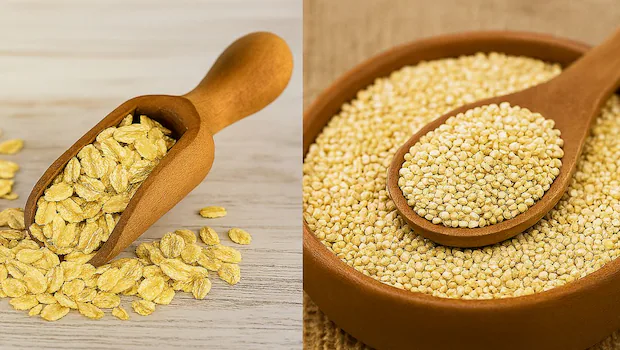
The USDA's updated nutritional analysis shows that while raw oats possess slightly more protein and iron per 100 grams than raw quinoa, cooked quinoa delivers a higher concentration of both nutrients per cup. Furthermore, quinoa stands out as a complete protein, offering all nine essential amino acids necessary for optimal plant-based nutrition.
WASHINGTON, United States — As the global shift toward meat-free alternatives accelerates, global food laboratories have intensified empirical research into staple grains to clarify lingering consumer debates. On Wednesday, June 17, 2026, the United States Department of Agriculture (USDA) FoodData Central database published its updated annual nutritional review, providing direct answers to the ongoing marketplace debate of Oats vs. Quinoa: Which Has More Plant-Based Protein and Iron? The findings provide essential clarity for food manufacturers, clinical nutritionists, and health-conscious consumers looking to optimize their daily intake of macronutrients and essential minerals without relying on animal products.
Evaluating the Plant-Based Protein Metrics
The data published by government laboratory analysts highlights a common misconception regarding raw vs. cooked measurements. When evaluating dry, uncooked measurements, raw oats contain a higher total concentration of plant-based protein compared to raw quinoa. Specifically, 100 grams of whole-grain dry oats delivers approximately 13.2 to 16.9 grams of protein, depending on the specific cultivar. In contrast, 100 grams of raw quinoa yields 14.1 grams of protein.
However, because quinoa is a pseudo-cereal that absorbs significantly less water weight during preparation, the dynamic alters once cooked.
According to researchers at the National Institutes of Health (NIH), a standard cooked cup of quinoa provides approximately 8 grams of plant-based protein, while an equivalent cup of cooked oatmeal yields roughly 6 grams. More importantly, the quality of the protein differs fundamentally: quinoa is classified as a "complete protein," meaning it naturally contains all nine essential amino acids that the human body cannot synthesize independently. Oats, while rich in the muscle-building amino acid leucine, remain low in lysine and threonine, requiring consumers to pair them with legumes or nuts to achieve complete amino acid profiles.
The Iron Content Breakdown
Beyond basic macronutrients, iron deficiency remains one of the most widespread micronutrient challenges globally, impacting energy levels, immune functions, and red blood cell production. The updated USDA clinical profiles reveal that both grains function as potent non-heme (plant-based) iron sources, but one holds a clear structural advantage in raw concentrations.
| Grain Type (per 100g raw) | Protein Content | Iron Content | Primary Fiber Type |
| Whole Grain Oats | 13.2g – 16.9g | 4.7 mg | Beta-glucan (Soluble) |
| Raw Quinoa | 14.1g | 4.6 mg | Cellulose/Lignin (Insoluble) |
While raw oats show a slight lead in pure milligrams per 100 grams, clinical data from the World Health Organization (WHO) emphasizes that plant-based iron absorption is highly dependent on compound inhibitors known as phytates. Both oats and quinoa contain phytic acid, which binds to minerals and reduces their bioavailability in the human digestive tract.
To counteract this, the absolute volume of iron absorbed by consumers can be drastically elevated through localized kitchen preparation techniques. Soaking, sprouting, or thoroughly rinsing quinoa prior to boiling removes its outer coat of bitter saponins and lowers phytate concentrations, making its iron content more biologically accessible than that of un-soaked, quick-cooking commercial oats.
Impact on Agri-Business and Consumer Markets
The publication of these comparative nutritional metrics alters operations across several sectors of the global food economy:
Agricultural Producers: Increased demand for complete plant proteins encourages farmers across South America and the North American plains to scale up sustainable quinoa and oat crop rotations.
Food Packaging Firms: Functional food manufacturers are increasingly blending oat flour and quinoa flakes into hybrid consumer products to balance amino acid profiles while lowering raw production costs.
Retail Consumers: Shoppers can better allocate their grocery budgets by selecting oats for affordable, high-fiber breakfast bases and utilizing quinoa as a nutrient-dense, high-iron rice replacement for evening meals.
Official Sources Section
The biochemical metrics, nutritional statistics, and dietary findings referenced throughout this report are sourced from official publications by the following organizations:
Quote Section
"According to officials at the global food laboratory networks, maximizing the actual metabolic utility of these grains requires consumers to pair them alongside Vitamin C sources, such as citrus fruits or fresh bell peppers, which can boost plant-based iron absorption rates by over 200 percent."
Why It Matters
Understanding the exact nutritional differences between these grains is essential for avoiding micro-nutritional deficiencies in populations transitioning away from meat. While oats offer cost-effective bulk protein and heart-healthy soluble fiber, quinoa provides the vital amino acid structures necessary for tissue repair. Balancing both ingredients within a modern diet allows consumers to build long-term physiological resilience without relying on synthetic dietary supplements.
Key Facts at a Glance
Raw Protein Winner: Dry whole oats contain a slightly higher raw protein range (13.2g–16.9g per 100g) than raw quinoa (14.1g).
Cooked Volume Dynamics: Cooked quinoa yields more protein per cup (8g) than cooked oatmeal (6g) due to differences in moisture retention.
Amino Acid Profiles: Quinoa is an independent complete protein, whereas oats lack sufficient levels of the essential amino acid lysine.
Iron Concentrations: Both staples offer nearly identical raw iron metrics, averaging roughly 4.6 to 4.7 milligrams per 100-gram serving.
Bioavailability Factors: Pre-rinsing and soaking quinoa successfully neutralizes phytic acid, which significantly enhances human iron absorption.
FAQ Section
Q1: Is oats or quinoa a better choice for someone managing type 2 diabetes?
A: Both are highly beneficial, but they function differently. Oats contain high levels of beta-glucan, a soluble fiber that slows glucose absorption. Quinoa offers a lower glycemic response due to its complete protein and complex carbohydrate structures, which prevents sudden insulin spikes.
Q2: Does instant oatmeal have the same amount of protein and iron as steel-cut oats?
A: The base protein and iron levels remain similar, but instant oats are often pre-cooked and rolled thinner, which increases their glycemic index. Many commercial instant packets also contain added sugars, which can lower their overall nutritional value compared to less processed steel-cut varieties.
Q3: Can people with gluten sensitivities eat both oats and quinoa safely?
A: Quinoa is naturally completely gluten-free. While oats are also inherently gluten-free, they are frequently processed in facilities that handle wheat. Individuals with celiac disease should strictly purchase oats explicitly certified as gluten-free to avoid cross-contamination.
Source: USDA FoodData Central Database, National Institutes of Health (NIH) Office of Dietary Supplements.