A viral post by social media user Nalini Unagar sparked widespread online debate after she ordered eight samosas on Swiggy for ₹104 down from ₹180 during heavy rain. Her light-hearted warning that Swiggy might go bankrupt from deep discounts highlighted consumer discussions surrounding delivery pricing, restaurant commissions, and app discounts.
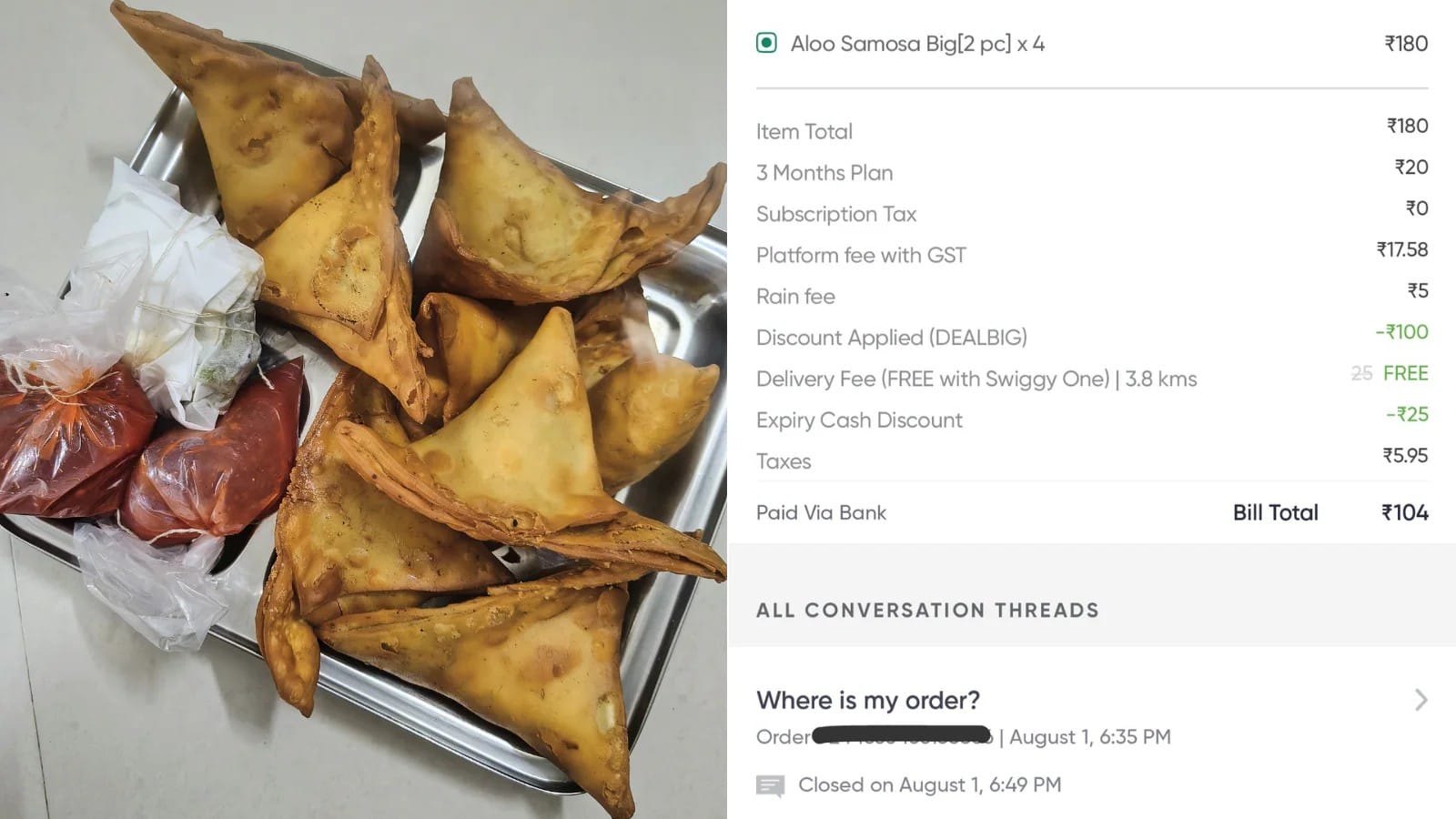
MUMBAI — A social media user's humorous "warning" to online food delivery platform Swiggy went viral on social media after she purchased eight large samosas for ₹104 during a rainy day. The customer, identified as Nalini Unagar, posted a screenshot of her invoice alongside a photograph of the dish on platform X (formerly Twitter), light-heartedly cautioning the company that providing such steep discounts could lead to financial distress. The post has sparked widespread public debate regarding e-commerce discounting strategies, restaurant commission structures, and platform pricing transparency across India's quick-commerce sector.
Heavy Discounts on Rain-Day Order Prompt Viral Exchange
According to the order receipt shared publicly on social media, the initial menu total for eight large aloo samosas was listed at ₹180. Following the application of promotional discounts, along with statutory Goods and Services Tax (GST) and a ₹5 rain surge fee, the final bill amounted to ₹104.
Addressing the food delivery aggregator directly in her viral post, Unagar wrote: "Dear @Swiggy, I ordered eight big samosas online because it was raining. It cost me only ₹104. If you continue giving discounts like this, you will go bankrupt very soon."
The post quickly accumulated thousands of impressions, drawing responses from online consumers, industry observers, and delivery ecosystem participants. While several commentators shared humorous theories, others initiated broader discussions on how promotional subsidies function within the hyperlocal food delivery business model.
Social Media Reactions Highlight Delivery Economics and Pricing Realities
The viral post triggered a wide spectrum of responses from social media users, reflecting varying perspectives on food app pricing models:
Corporate Economics: Multiple commenters clarified that promotional discounts on delivery aggregators are frequently co-funded or entirely absorbed by participating partner restaurants rather than the tech platform alone.
Quality and Freshness Debates: In response to a user humorously speculating whether the food was discounted due to lack of freshness, Unagar publicly clarified that the samosas were delivered hot and fresh.
Local Market Comparisons: Other netizens pointed out that direct over-the-counter purchases at local neighborhood sweet shops often cost less than online rates once platform packaging fees, platform charges, and delivery surcharges are added.
Gig Worker Compensation: Several users highlighted the role of delivery executives operating in adverse weather conditions, advocating for fair tipping practices during heavy rainfall.
Official Sources and Billing Documentation
According to public billing documentation released by the customer on X and public disclosures on the Swiggy Platform:
The item subtotal before promotional markdown was ₹180 for eight pieces.
Applied platform discounts reduced the consumer payable amount to ₹104 inclusive of taxes and weather-related delivery surcharges.
Discount allocations on the platform operate under contractual agreements between restaurant partners and the aggregator service, regulated broadly under general guidelines from regulatory authorities like the
Ministry of Consumer Affairs, Food and Public Distribution
Quote Section
Regarding the order pricing and viral reaction, public social media statements recorded:
"Dear @Swiggy, I ordered eight big samosas online because it was raining. It cost me only ₹104. If you continue giving discounts like this, you will go bankrupt very soon."
— Nalini Unagar, Swiggy customer on platform X
In response to internet commentary questioning the quality of discounted food items, Unagar noted in a public follow-up statement:
"It tasted really good. It was hot and fresh."
According to comments from industry analysts, consumer tech platforms typically utilize promotional pricing structures to drive order volumes during high-demand weather conditions.
Why It Matters to Consumers and Industry
The viral exchange underscores several important operational aspects of India's fast-growing online food delivery industry:
Understanding App Pricing: Discounts shown on food apps do not always indicate financial losses for the platform; they are often structured marketing expenses shared between restaurants and delivery apps to acquire customers.
Impact of Surcharges: Weather-related fees and delivery charges ensure operational continuity during rainy periods while compensating delivery drivers navigating difficult road conditions.
Consumer Awareness: Transparency around menu markups versus direct shop prices remains a key topic of interest for budget-conscious Indian households.
Key Facts at a Glance
Event: A customer's humorous warning to Swiggy over a discounted snack order went viral on social media.
Order Details: 8 aloo samosas priced originally at ₹180 were delivered for ₹104 after discounts.
Includes: The total cost covered promotional discounts, applicable GST, and a ₹5 rain delivery fee.
Customer Name: Nalini Unagar, who shared the receipt and dish photos on platform X.
Key Outcome: Sparked wider public discourse on restaurant discount funding, delivery surcharges, and direct vs online food costs.
Frequently Asked Questions (FAQ)
What caused the woman's post about Swiggy to go viral?
The customer posted a receipt showing she bought eight large samosas for ₹104 instead of ₹180 on a rainy day, along with a humorous note warning Swiggy that such generous discounts could lead to bankruptcy.
Who pays for discounts on food delivery platforms like Swiggy?
Discounts on food delivery platforms are usually funded through co-sharing agreements between the food delivery app and the partner restaurant. In many cases, restaurants fund discounts to drive volume during specific hours or weather conditions.
Are food prices on delivery apps higher than in physical stores?
Yes, restaurants often list higher menu prices on delivery apps to absorb platform commissions, packaging fees, and operational costs compared to direct over-the-counter purchases.
What is a rain fee on food delivery apps?
A rain fee or rain surge fee is an additional charge added to delivery orders during heavy rainfall to incentivize delivery partners to operate safely during inclement weather conditions.