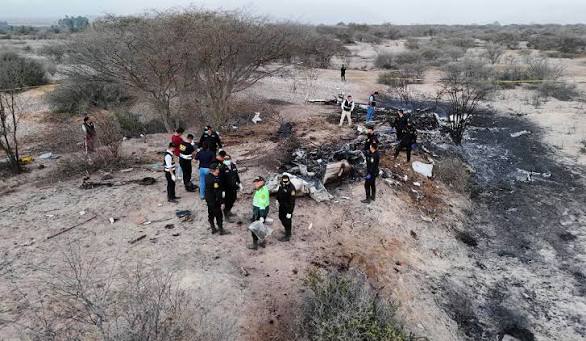
A tourist plane carrying European visitors crashed near Peru's famed Nazca Lines on Saturday, August 1, 2026, killing all 13 people on board. According to the Ministry of Transport, the Aerodiana-operated Cessna Grand Caravan crashed in a field outside Nazca after declaring an in-flight emergency.
LIMA — All 13 people on board a sightseeing aircraft—including 11 European tourists and two Peruvian crew members—were killed on Saturday, August 1, 2026, when their plane crashed near the historic Nazca Lines in southern Peru. According to official reports released by Peru's Ministry of Transport and Communications and local police authorities, the Cessna Grand Caravan operated by local aviation carrier Aerodiana crashed into an open field in the Pueblo Viejo area, roughly six kilometers outside the city of Nazca.
The fatal incident occurred shortly after 1:00 PM local time (1800 GMT) after the aircraft completed its aerial tour over the UNESCO World Heritage site. The disaster marks one of the deadliest aviation accidents in recent years involving sightseeing overflights in the Ica region.
Passenger Manifest and Flight Sequence
According to official identification reports issued by Peru's Transportation Ministry, the 11 European passengers included seven Italian citizens aged between 18 and 54, two 52-year-old Spanish nationals, and two German citizens aged 77 and 78. The flight crew members were identified as pilot Américo Salazar and co-pilot Irenka Guanilo del Carpio.
| Category | Official Details & Figures |
| Aircraft Type | Cessna Grand Caravan C-208 |
| Operating Carrier | Aerodiana |
| Departure Point | Pisco / Ica Regional Airport Hubs |
| Passenger Fatalities | 7 Italians, 2 Spaniards, 2 Germans |
| Crew Fatalities | 2 Peruvian Pilots |
| Crash Site Location | Pueblo Viejo, Vista Alegre District (Nazca) |
Aviation control records show the flight departed at approximately 12:10 PM local time. At around 1:00 PM, the flight crew communicated an in-flight emergency to the Nazca airport control tower before losing radio contact. Eyewitnesses in the nearby Vista Alegre district reported seeing the aircraft descend rapidly before exploding upon impact in an unpopulated field. Firefighters and National Police officers arrived shortly after to contain the resulting brush fire and secure the site.
Aviation Authority Investigation and Regulatory Context
Peruvian Civil Aviation Authority (DGAC) investigators were dispatched to Pueblo Viejo to collect flight recordings, structural fragments, and engine telemetry. Peruvian President Keiko Fujimori expressed condolences to the families of the victims and stated that a temporary suspension of regional airport operations in Nazca is under consideration pending preliminary safety reports from the relevant ministries.
The Nazca Lines—massive ancient geoglyphs etched into the desert soil depicting animals and geometric patterns—draw roughly 100,000 international visitors annually, with overflights serving as the primary viewing method. Saturday's crash highlights recurring safety concerns surrounding low-altitude commercial tourist flights in the region, where similar fatal accidents occurred in 2008, 2010, and 2022.
Practical Impact on Travelers, Tour Operators, and Diplomatic Missions
The fatal accident generates immediate operational consequences across several sectors:
For International Travelers: Potential temporary closures or flight suspensions at Nazca and Pisco airports may disrupt booked aerial tour itineraries.
For Diplomatic Consulates: Foreign ministries in Italy, Spain, and Germany are coordinating alongside Peru's Ministry of Foreign Trade and Tourism to facilitate victim identification and repatriation protocols.
For Regional Tour Operators: Stricter regulatory audits and potential maintenance reviews are expected for all commercial charter airlines operating over the Ica desert basin.
Official Sources Section
According to official administrative announcements, transportation releases, and embassy updates:
Quote Section
According to official executive releases and emergency response statements:
"According to officials, an emergency was reported by the crew shortly before all radio contact was lost, leading to the fatal crash that claimed the lives of 11 foreign tourists and two pilots outside Nazca."
Why It Matters
Low-altitude aerial tours provide the primary vantage point for observing UNESCO-protected heritage sites like the Nazca Lines. Investigating structural or operational causes behind this tragedy is critical to strengthening civil aviation enforcement, ensuring passenger safety, and protecting international tourism across South America.
Key Facts at a Glance
Total Fatalities: 13 people died, including 11 European tourists and two Peruvian pilots.
Victim Nationalities: Seven Italians, two Spaniards, and two Germans were on board.
Operating Airline: Aerodiana Cessna Grand Caravan flying from regional airport hubs.
Crash Location: Pueblo Viejo area, roughly 6 km from Nazca.
Regulatory Action: Government evaluating temporary airport suspensions pending investigation outcomes.
Frequently Asked Questions (FAQ)
What caused the tourist plane crash near the Nazca Lines?
The official cause remains under investigation by Peru's civil aviation authorities. The flight crew reported an in-flight emergency shortly before radio contact was lost.
Which airline operated the fatal flight?
The flight was operated by Aerodiana, a local Peruvian aviation company that conducts scenic overflights over the Nazca Lines using Cessna Grand Caravan aircraft.
Were there any survivors from the accident?
No. Police and emergency officials confirmed that all 13 occupants on board died in the crash.
Where can citizens access official updates regarding victim support?
Official diplomatic and regulatory updates are available through the portals of the Ministry of Transport and Communications of Peru and the Ministry of Foreign Trade and Tourism of Peru.
Source: Ministry of Transport and Communications of Peru | Ministry of Foreign Trade and Tourism of Peru | Ministry of Culture of Peru