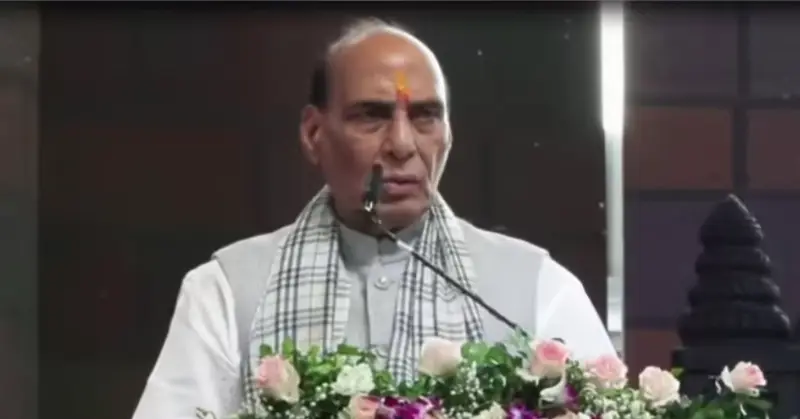
Defence Minister Rajnath Singh has made a strong push for greater private sector participation in defence manufacturing, arguing that India cannot achieve true military self-reliance without industry-led innovation and scale. In a detailed address, he highlighted how private companies, MSMEs and startups are now central to India’s “Aatmanirbhar Bharat” defence vision. Singh also outlined India’s expanding positive indigenisation lists, which progressively bar imports of specific military platforms, components and ammunition to promote domestic production.
Positioning India as an emerging global defence manufacturing hub, he stressed that the days of heavy import dependence must end if India wants strategic autonomy and resilience in future wars. The message was clear: public sector units and private players must move in lockstep, but the private sector has to carry much more weight than before.
Why Private Sector Matters In Defence
Rajnath Singh underlined that warfare today extends beyond land, sea and air into domains like cyber, space, energy and trade, demanding faster innovation cycles and advanced technology. For this, the government believes the private sector’s agility, R&D capabilities and access to global supply chains are indispensable. He reiterated the target of raising the private sector’s share in defence manufacturing to around 50 percent in the coming years, with policy support, easier procurement norms and deeper industry engagement.
India’s Indigenisation List: What Changes On The Ground
The minister linked this vision to the “positive indigenisation lists” that now cover thousands of defence items, from complex systems and sensors to line-replacement units, sub-systems, spares and raw materials. These lists set clear timelines after which such items can no longer be imported and must be sourced from Indian manufacturers. The Ministry of Defence has already indigenised a large chunk of earlier-listed items, and new lists keep expanding the domestic manufacturing mandate, including for Defence Public Sector Undertakings (DPSUs) and private vendors.
Aatmanirbhar Bharat In Defence: The New Targets
Rajnath Singh pointed out that India already produces a significant share of its defence hardware domestically, with output and exports both rising sharply in the last decade. Ambitious targets have now been set to scale defence production and exports further by 2029, backed by corridors in Uttar Pradesh and Tamil Nadu, higher domestic procurement allocations and incentives for industry-led R&D. The long-term aim is to move from being one of the world’s largest defence importers to a major manufacturing and export hub, with the private sector driving much of the growth story.
Defence Manufacturing And Indigenisation Highlights
- Government wants private sector share in defence production to rise sharply in coming years
- Private companies, MSMEs and startups seen as key to innovation and advanced defence technologies
- Positive indigenisation lists progressively restrict imports of thousands of items
- DPSUs and private sector both mandated to source more systems and components domestically
- India targets higher defence production and exports as part of Aatmanirbhar Bharat vision
Sources: Defence Minister’s recent speeches and statements; Ministry of Defence indigenisation list notifications; official data on defence production and export targets; national defence and policy coverage