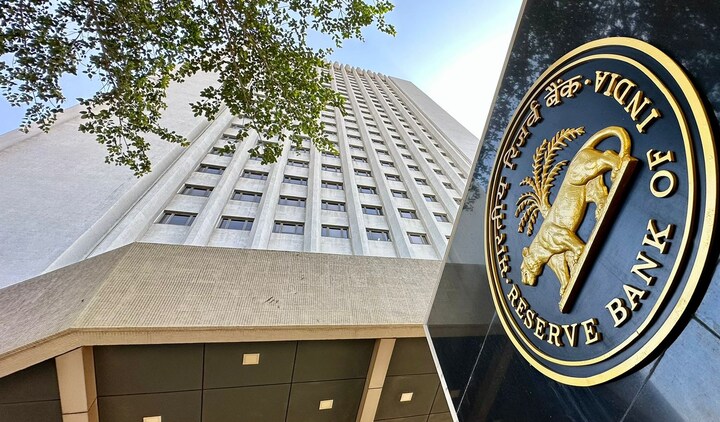
The Reserve Bank of India announced the results of its Treasury Bill auctions, executing partial allotments of 13.8798% on 4 bids (91-day), 34.4091% on 2 bids (182-day), and 46.0000% on 1 bid (364-day). The proportional allocations reflect active institutional bidding demand across all three sovereign paper tenors.
MUMBAI — The Reserve Bank of India (RBI) announced the results of its weekly Treasury Bill (T-Bill) auction on Thursday, August 27, 2026, implementing partial allotments across the 91-day, 182-day, and 364-day tenors to manage sovereign borrowing targets and money market liquidity. According to official data released by the central bank's financial markets operations desk, competitive bidding resulted in a partial allotment of 13.8798% on 4 bids for the 91-day paper, 34.4091% on 2 bids for the 182-day paper, and 46.0000% on 1 bid for the 364-day paper. The weekly sovereign debt sale reflects ongoing domestic liquidity management and short-term debt calibration by the monetary authority.
Breakdown of Auction Allotments and Rationing
The Reserve Bank of India conducts regular multiple-price or uniform-price auctions via its core banking solution, the E-Kuber platform, to raise short-term resources for the central government. When multiple competitive bids are submitted at the established cut-off yield or cut-off price, the central bank applies proportional allotment to prevent issuance above the pre-notified borrowing target.
The partial allotment metrics across the three segments included:
91-Day Treasury Bills: Allotted at 13.8798% across 4 bids at the cut-off price, indicating concentrated bidding volume near the clearing rate.
182-Day Treasury Bills: Allotted at 34.4091% across 2 bids at the cut-off clearing level.
364-Day Treasury Bills: Allotted at 46.0000% on 1 bid at the cut-off mark.
Treasury bills represent short-term, zero-coupon sovereign debt instruments issued at a discount to par and redeemed at full face value upon maturity. The cut-off yields established during these weekly operations serve as benchmark interest rate anchors across India's money markets, influencing rates for commercial paper (CP), certificates of deposit (CD), and short-term corporate lending.
Market Liquidity and Investor Participation
The necessity of applying partial allotments across all three maturity baskets reflects robust demand from primary dealers, scheduled commercial banks, mutual funds, and non-banking financial companies. Institutional participants frequently utilize T-Bills to satisfy mandatory Statutory Liquidity Ratio (SLR) requirements and park surplus short-term operational cash in risk-free sovereign securities.
Money market analysts noted that the relatively tight allotment percentages—particularly in the shortest 91-day segment—point to strong front-end cash deployment by institutional treasuries seeking safe-haven returns.
Why It Matters
The weekly T-Bill auction results provide a direct reading of short-term interest rate expectations and banking system liquidity. For institutional investors and commercial lenders, these cut-off levels establish the baseline yield curve for credit pricing. For retail participants investing through the RBI Retail Direct portal, the results determine the yield realized on sovereign cash management holdings without taking on credit risk.
Key Facts at a Glance
Issuing Authority: Reserve Bank of India (RBI) on behalf of the Government of India.
91-Day T-Bill Allotment: 13.8798% partial allotment on 4 bids.
182-Day T-Bill Allotment: 34.4091% partial allotment on 2 bids.
364-Day T-Bill Allotment: 46.0000% partial allotment on 1 bid.
Bidding Mechanism: Competitive and non-competitive bidding via the RBI E-Kuber system.
Official Sources
According to official auction summary notifications issued by the Reserve Bank of India:
"The Reserve Bank of India has announced the full auction results for Government of India Treasury Bills across 91-day, 182-day, and 364-day tenures, including cut-off yields, price parameters, and partial allotment percentages for competitive bids."
Quote Section
According to money market officials and fixed-income desk dealers:
"The distribution of partial allotments across all three tenors indicates active bidding interest at the cut-off levels, demonstrating sustained institutional demand for sovereign debt instruments amid steady liquidity conditions."
Frequently Asked Questions
What does a partial allotment in an RBI T-Bill auction mean?
A partial allotment occurs when the total value of competitive bids submitted at the cut-off price exceeds the remaining notified borrowing amount, requiring the RBI to allocate shares of those bids proportionally.
What were the partial allotment percentages in this auction?
The RBI allotted 13.8798% on 4 bids for the 91-day T-Bill, 34.4091% on 2 bids for the 182-day T-Bill, and 46.0000% on 1 bid for the 364-day T-Bill.
Who participates in Treasury Bill auctions?
Participants include primary dealers, commercial banks, mutual funds, insurance companies, foreign portfolio investors, and retail investors via the RBI Retail Direct platform.
Source: Reserve Bank of India (RBI) | Ministry of Finance | Clearing Corporation of India Limited (CCIL)