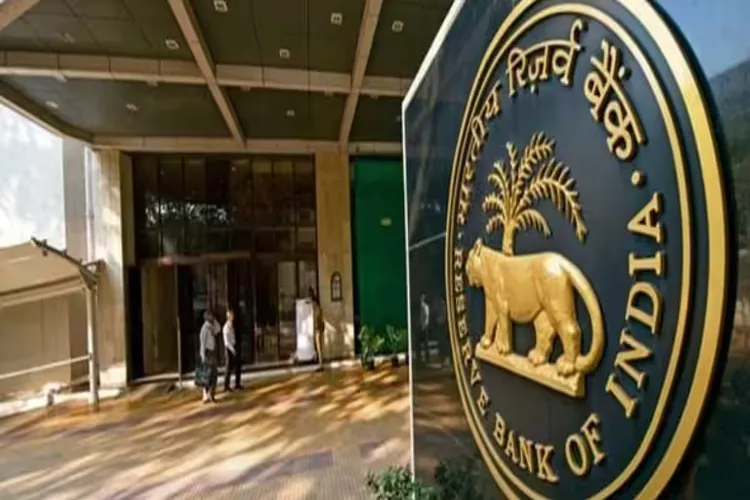
The Reserve Bank of India announced that Assam accepted a partial amount of 9.3 billion rupees in the re-issue of its 7.56% Assam SGS 2036 state security, originally issued on July 22, 2026. The move reflects disciplined state debt management to optimize borrowing costs within sub-sovereign bond markets.
MUMBAI, India — The Reserve Bank of India (RBI) announced that the state government of Assam has accepted a partial amount of 9.3 billion Indian rupees ($111 million) in the re-issue of its 7.56% Assam SGS 2036 state government security. Originally issued on July 22, 2026, the 10-year State Development Loan (SDL) paper was auctioned as part of the central bank’s ongoing market borrowing program for state governments. The decision to accept a partial allotment highlights the state's strategic calibration of borrowing costs and market liquidity demand within regional government bond auctions.
Breakdown of the 7.56% Assam SGS 2036 Re-Issue
According to official auction notifications issued by the Reserve Bank of India, the 7.56% Assam SGS 2036 represents a benchmark 10-year paper maturing in 2036. In sovereign debt markets, state governments routinely re-issue existing securities to build market liquidity, establish transparent pricing benchmarks, and streamline debt maturity profiles.
| Auction Parameter | Transaction Details |
| Security Name | 7.56% Assam State Government Security (SGS) 2036 |
| Accepted Amount | ₹9.3 Billion (₹930 Crore) |
| Original Issue Date | July 22, 2026 |
| Issuer Authority | Government of Assam (via RBI Debt Manager) |
| Auction Platform | RBI E-Kuber Core Banking Solution |
During the auction execution on the RBI E-Kuber electronic platform, competitive and non-competitive bids were received from institutional market participants, including commercial banks, insurance companies, provident funds, and primary dealers. Rather than absorbing the entire bid quantum, Assam exercised its option to retain 9.3 billion rupees, aligning its long-term liability costs with state treasury targets.
State Debt Management and Yield Curve Dynamics
State Government Securities (SGS), commonly referred to as State Development Loans (SDLs), carry sovereign-like status as they are backed by the Consolidated Fund of the respective issuing state under Article 293 of the Constitution of India. The RBI acts as the official banker and debt manager for state governments under statutory frameworks.
Fixed-income market analysts note that cut-off yields for papers like the 7.56% Assam SGS 2036 trade at a modest spread—typically 50 to 60 basis points—above benchmark Central Government Securities (G-Secs) of comparable maturity. By electing to accept a partial allotment of 9.3 billion rupees, Assam's finance department avoided accepting bids at elevated cut-off yields, thereby curbing unnecessary interest expenditure across its 10-year debt horizon.
Impact on Investors and Capital Markets
The re-issue of the 7.56% Assam SGS 2036 provides institutional debt investors with a liquid, high-yield fixed-income instrument backed by sub-sovereign guarantees. Insurance firms and pension funds, which require long-duration assets to match long-term liabilities, remain primary consumers of 10-year state paper.
For capital markets, partial acceptances signal that state treasuries are actively monitoring market yield demands rather than accepting high borrowing rates indiscriminately. This disciplined borrowing strategy helps maintain yield stability across the broader sub-sovereign debt market while preserving fiscal space for capital infrastructure investments across Northeastern India.
Official Sources Section
Details regarding the auction results, allotment volumes, and cut-off yields for the 7.56% Assam SGS 2036 were published by the debt management department of the Reserve Bank of India. Additional public debt disclosures and state financial summaries are maintained by the Ministry of Finance and the Department of Finance, Government of Assam.
Quote Section
"According to officials familiar with the debt management release, the decision to retain a partial amount of 9.3 billion rupees in the 7.56% Assam SGS 2036 re-issue reflects prudent fiscal management, ensuring the state meets its immediate capital funding requirements without overpaying in prevailing market yield environments."
Why It Matters
For Institutional Bond Investors: Provides access to liquid, sovereign-backed 10-year debt instruments offering stable yield spreads over Central Government paper.
For Taxpayers and Citizens: Prudent partial debt acceptance reduces long-term interest servicing burdens on the state budget, freeing revenue for social and infrastructure projects.
For Fixed-Income Markets: Demonstrates fiscal discipline among sub-sovereign issuers, preventing market distortion and promoting efficient yield discovery across state bond auctions.
Key Facts at a Glance
Accepted Quantum: Assam accepted a partial amount of 9.3 billion rupees in the re-issued 7.56% Assam SGS 2036.
Original Issuance: The 10-year state bond was initially issued on July 22, 2026.
Auction Manager: Conducted by the Reserve Bank of India on the E-Kuber banking portal.
Market Purpose: Re-issuance enhances secondary market trading liquidity for 2036-maturity state bonds.
Frequently Asked Questions (FAQ)
What is the 7.56% Assam SGS 2036?
The 7.56% Assam SGS 2036 is a 10-year State Government Security (also known as a State Development Loan) issued by the Government of Assam to raise capital for public development projects.
Why did Assam accept only a partial amount of 9.3 billion rupees?
State governments accept partial auction amounts when bid yields exceed target limits, allowing the treasury to fulfill immediate liquidity needs while avoiding high interest costs on excess debt.
Who manages the auction of State Government Securities in India?
The Reserve Bank of India manages all State Government Securities auctions as the official banker and debt manager for state governments.
How do State Government Securities compare to Central G-Secs?
State Government Securities are backed by the respective state's Consolidated Fund and generally offer slightly higher yields (50–60 basis points spread) compared to Central Government Securities of identical maturity.
Source: Official regulatory announcements published by the Reserve Bank of India, public debt notifications from the Ministry of Finance, and market trading updates from BSE India and the National Stock Exchange of India.