RBI Governor Sanjay Malhotra has identified the West Asia crisis and monsoon uncertainty as the primary risks to India’s economic stability. While growth projections for FY27 have been tempered to 6.6%, the central bank maintains a neutral policy stance to navigate these supply-side shocks and inflationary pressures.
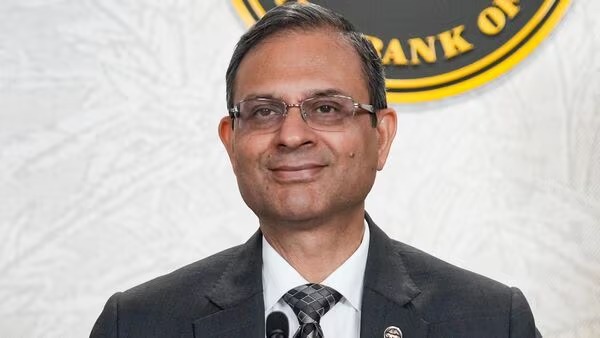
Amidst heightening geopolitical tensions and weather uncertainty, Reserve Bank of India Governor Sanjay Malhotra has identified the ongoing West Asia crisis and a projected weak monsoon as the most significant threats to the Indian economy.
NEW DELHI – Reserve Bank of India (RBI) Governor Sanjay Malhotra has cautioned that the Indian economy faces mounting challenges from external geopolitical instability and internal agricultural vulnerabilities. Speaking on Friday, July 17, 2026, the Governor highlighted that while India’s macroeconomic fundamentals remain robust, these two primary risks could weigh heavily on growth and inflation trajectories in the coming months.
The warning follows a period where retail inflation has breached the central bank’s 4% target for the first time since the introduction of the new consumer price index series in January 2026, climbing to 4.38% in June.
Geopolitical Instability in West Asia
The ongoing conflict in West Asia has emerged as a primary concern for policymakers, particularly due to its impact on global crude oil prices and supply chain integrity. With India importing nearly 90% of its oil requirements, the escalation of hostilities—including recent tensions in the Strait of Hormuz—poses a direct threat to the nation's energy security and trade balance.
"The trajectory of the conflict in West Asia, along with the intensity and distribution of the monsoon, will play a crucial role in shaping future economic outcomes," Governor Malhotra stated. The RBI has noted that the region accounts for roughly one-sixth of India's exports and half of its crude oil imports, making the domestic economy highly sensitive to regional disruptions in the Middle East.
The Monsoon Challenge
The second major pillar of concern is the progress of the southwest monsoon. Agriculture remains the backbone of the Indian rural economy, supporting about one-sixth of the total GDP and a vast portion of the population. Concerns regarding a weak monsoon, influenced by El Niño conditions, have prompted the central bank to monitor agricultural output closely.
While government initiatives such as crop diversification, improved water harvesting, and climate-resilient farming practices are expected to mitigate some of the negative effects, Governor Malhotra acknowledged that a significant shortfall in rainfall could inevitably weigh on rural demand and private consumption.
Official Sources
Reserve Bank of India (RBI): Provided the latest policy outlook, growth projections, and inflation data in official statements and press conferences.
Governor Sanjay Malhotra: Outlined the "wait-and-watch" monetary policy approach in interviews with DD News and other media platforms.
Ministry of Finance: Coordinated with the RBI on fiscal policy measures to support foreign investment inflows.
Quote Section
"We will also have to keep an eye on the monsoon because a large part of our population depends on agriculture, and about one-sixth of our economy is dependent on agriculture," Governor Malhotra stated during an interview.
According to officials, the RBI’s current monetary policy remains "neutral," preserving the flexibility to respond to evolving inflation-growth dynamics without making premature commitments to rate hikes.
Why It Matters
The convergence of supply-side inflation and external geopolitical shocks creates a complex environment for Indian policymakers. For the average citizen, this translates to potential volatility in fuel and food prices. For investors and businesses, the RBI’s "wait-and-watch" stance suggests that while the central bank is prepared to act, it is prioritizing stability over aggressive policy shifts, aiming to prevent the "entrenchment" of supply-side shocks into the general price level.
Key Facts at a Glance
Growth Forecast: The RBI has revised its GDP growth projection for FY27 to 6.6%, down from the earlier 6.9% estimate.
Inflation Targets: Retail inflation reached 4.38% in June, moving above the RBI’s 4% midpoint target.
Primary Risks: Geopolitical tensions in West Asia threatening oil supply and a potentially deficient monsoon impacting rural consumption.
Policy Stance: The central bank maintains a neutral policy stance, focusing on data-dependent decision-making.
Frequently Asked Questions
Why is the RBI worried about the West Asia crisis?
The region is a critical source of India’s energy imports (50% of crude oil) and a major trade partner. Supply disruptions can lead to higher fuel costs, which directly drive up headline inflation.
How does a weak monsoon impact the economy?
A deficient monsoon affects agricultural production, which in turn reduces rural income and demand, potentially slowing down private consumption across the nation.
Will the RBI increase interest rates to combat this inflation?
Currently, the RBI is in a "wait-and-watch" mode. Officials suggest that recent price pressures are largely supply-side adjustments and may not warrant immediate monetary tightening at this stage.
Source: Reserve Bank of India, LiveMint, Business Standard, The Times of India