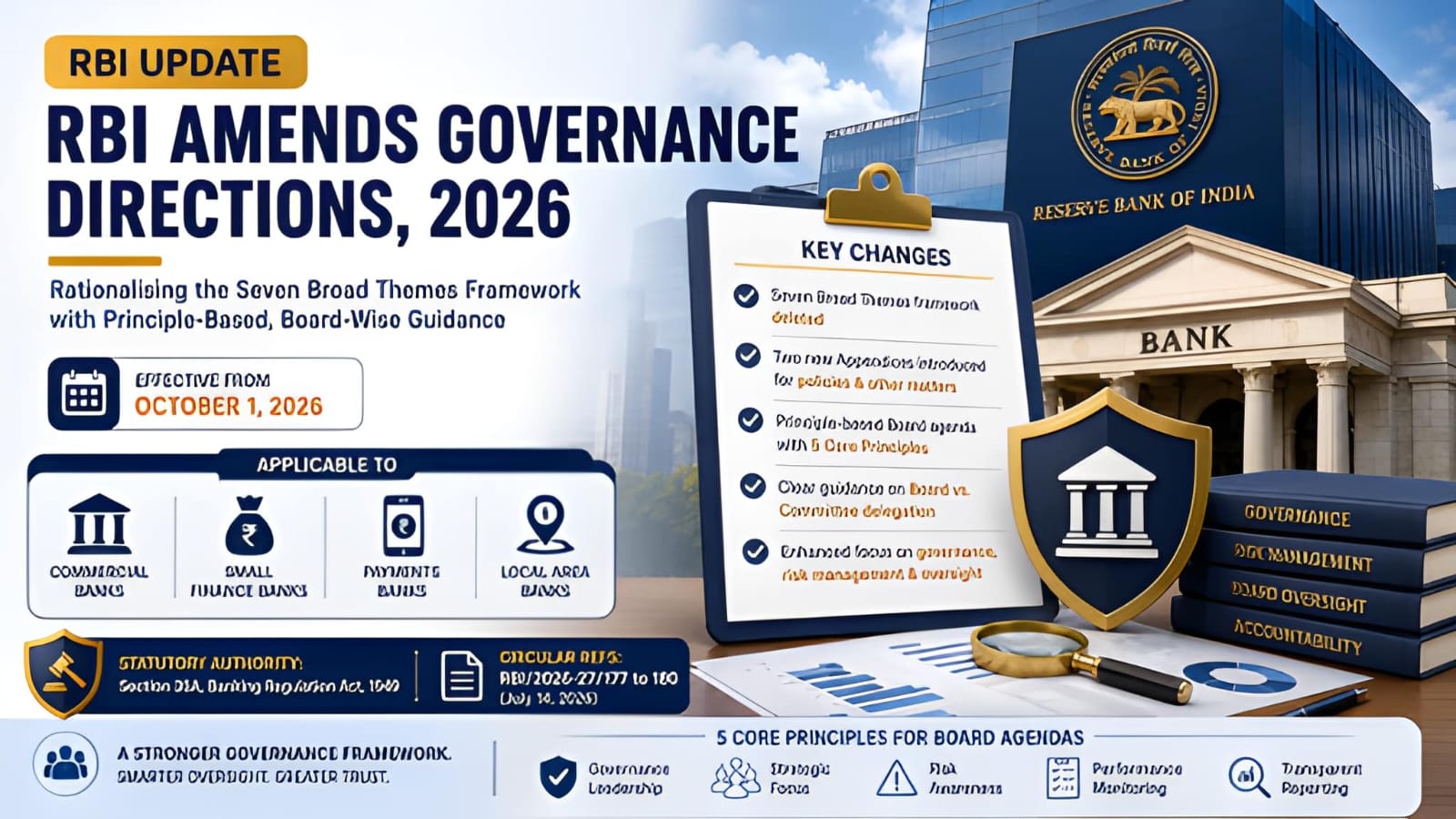
The Reserve Bank of India has issued the Reserve Bank of India (Small Finance Banks - Asset Liability Management) Amendment Directions, 2026. The updated framework imposes enhanced liquidity buffers, strict stress testing mandates, and quarterly maturity gap reporting to reinforce balance sheet resilience across India's small finance banking sector.
MUMBAI — The Reserve Bank of India (RBI) has issued the Reserve Bank of India (Small Finance Banks - Asset Liability Management) Amendment Directions, 2026, updating regulatory standards governing liquidity risk management and structural balance sheet stability for Small Finance Banks (SFBs) across the country. Formulated under statutory powers granted by the Banking Regulation Act, 1949, the central bank’s directive establishes stringent guidelines designed to mitigate structural liquidity mismatches and insulate niche lenders from interest rate volatility.
This regulatory development arrives at a crucial juncture as small finance banks expand their deposit bases and micro-lending portfolios. By enforcing robust Asset Liability Management (ALM) architectures, the RBI seeks to safeguard financial stability, protect retail depositors, and align SFB risk management protocols with broader commercial banking benchmarks.
Enhanced Liquidity Buffers and Structural Gap Limits
Under the Reserve Bank of India (Small Finance Banks - Asset Liability Management) Amendment Directions, 2026, regulated SFBs must maintain enhanced structural liquidity statements and monitor cumulative cash flow mismatches across defined time buckets. The updated framework requires bank treasuries to analyze net outflows in the critical "1 day to 14 days" and "15 days to 30 days" liquidity buckets to prevent short-term funding squeezes.
According to the regulatory guidelines, small finance banks must establish internal tolerance limits for structural liquidity gaps and adhere to prescribed net cumulative negative gap caps. The directions ensure that lenders hold adequate high-quality liquid assets (HQLA) to withstand unexpected cash outflows during localized market stress.
Rigorous Interest Rate Risk and Stress Testing Mandates
A central pillar of the Reserve Bank of India (Small Finance Banks - Asset Liability Management) Amendment Directions, 2026 is the mandatory implementation of advanced Interest Rate Risk in the Banking Book (IRRBB) measurement models. SFB treasury desks are required to evaluate Earnings at Risk (EaR) and Economic Value of Equity (EVE) sensitivities against simulated interest rate shocks.
Key operational guidelines include:
Mandatory Stress Testing: Banks must perform regular quarterly stress tests under adverse macroeconomic scenarios, evaluating the impact of sudden yield curve shifts on net interest margin (NIM) and capital adequacy.
Contingency Funding Plans (CFP): SFB boards must formulate actionable contingency funding frameworks detailing alternative liquidity sources during periods of severe financial distress.
Granular Asset Classification: Loans and liabilities must be segmented into precise repricing time bands to accurately reflect interest rate sensitivities.
Board Governance and Supervisory Reporting Accountability
The Reserve Bank of India (Small Finance Banks - Asset Liability Management) Amendment Directions, 2026 place direct accountability on the board of directors and executive leadership. Each small finance bank's Board-level Asset Liability Committee (ALCO) is required to review ALM positions at regular intervals, ensuring total adherence to risk appetite statements.
Under the revised reporting regime, SFBs must submit detailed monthly structural liquidity returns and quarterly interest rate risk returns directly to the RBI. Independent internal and external audit mechanisms must periodically review ALM measurement techniques, data inputs, and risk limit compliance. The central bank explicitly emphasized that non-compliance or persistent reporting delays could trigger supervisory action or capital add-on requirements under statutory provisions.
Impact on Depositors, Borrowers, and Banking Operations
The enforcement of the Reserve Bank of India (Small Finance Banks - Asset Liability Management) Amendment Directions, 2026 carries significant real-world implications across the financial ecosystem:
For Retail Depositors: Strengthened liquidity cushions reduce the risk of systemic distress, ensuring high protection for retail savings deposits and fixed deposit redemptions.
For Small Finance Banks: Institutions must upgrade treasury technologies and balance sheet analytical engines, which may temporarily elevate compliance costs but yields long-term operational resilience.
For Micro and Small Enterprise Borrowers: Prudent liquidity management prevents sudden credit freezes, ensuring a steady and predictable flow of credit to priority sectors and unbanked borrower segments.
For Banking Investors: Standardized ALM disclosures improve balance sheet transparency, enabling institutional investors to accurately assess interest rate exposure and capital resilience.
Official Sources Section
According to official releases issued by the central bank's Department of Regulation, the revised directions incorporate lessons learned from changing macroeconomic dynamics, expanding credit markets, and digital deposit movements. Regulatory notifications confirm that all operating small finance banks in India must align their internal risk policies and ALCO governance charters with the Reserve Bank of India (Small Finance Banks - Asset Liability Management) Amendment Directions, 2026.
Official Quote Section
"According to officials, the updated directions ensure that small finance banks build resilient balance sheet structures capable of absorbing liquidity shocks and interest rate fluctuations, thereby safeguarding financial stability and protecting public deposits across economic cycles."
Why It Matters
Small finance banks play a vital role in furthering financial inclusion across India by extending micro-credit to low-income households, micro-enterprises, and unorganized sector workers. However, due to their reliance on short-term deposits and relatively illiquid long-term loan books, SFBs are particularly sensitive to liquidity squeezes and interest rate swings. The Reserve Bank of India (Small Finance Banks - Asset Liability Management) Amendment Directions, 2026 ensure these institutions maintain rigorous balance sheet discipline, mitigating systemic contagion risks and sustaining continuous credit flows to underserved communities.
Key Facts at a Glance
Regulatory Title: Reserve Bank of India (Small Finance Banks - Asset Liability Management) Amendment Directions, 2026.
Issuing Authority: Reserve Bank of India (Department of Regulation), under Section 35A of the Banking Regulation Act, 1949.
Primary Scope: Mandates strict liquidity gap limits, stress testing, and interest rate risk oversight for all Small Finance Banks.
Governance Standard: Places ultimate balance sheet oversight accountability on bank boards and dedicated Asset Liability Committees (ALCO).
Reporting Frequency: Mandates monthly structural liquidity disclosures and quarterly interest rate risk filings to the regulator.
Frequently Asked Questions (FAQ)
What are the Reserve Bank of India (Small Finance Banks - Asset Liability Management) Amendment Directions, 2026?
They are updated regulatory guidelines issued by the Reserve Bank of India that mandate enhanced balance sheet risk management, liquidity gap caps, and interest rate sensitivity controls for small finance banks.
Why is Asset Liability Management important for Small Finance Banks?
Asset Liability Management ensures that SFBs maintain enough liquid assets to cover short-term depositor withdrawals while managing the impact of interest rate changes on their loan portfolios and profitability.
How do these directions affect small finance bank account holders?
The directions enhance the overall financial health and safety of small finance banks, providing depositors with greater assurance that their money is protected against unexpected market liquidity shocks.
What entity is responsible for overseeing compliance within each bank?
The Board of Directors and the bank's Asset Liability Committee (ALCO) hold primary accountability for setting risk appetites, approving ALM policies, and ensuring regulatory compliance.
Source: Reserve Bank of India Official Website, Ministry of Finance, Government of India, RBI Regulatory Press Releases & Notifications.