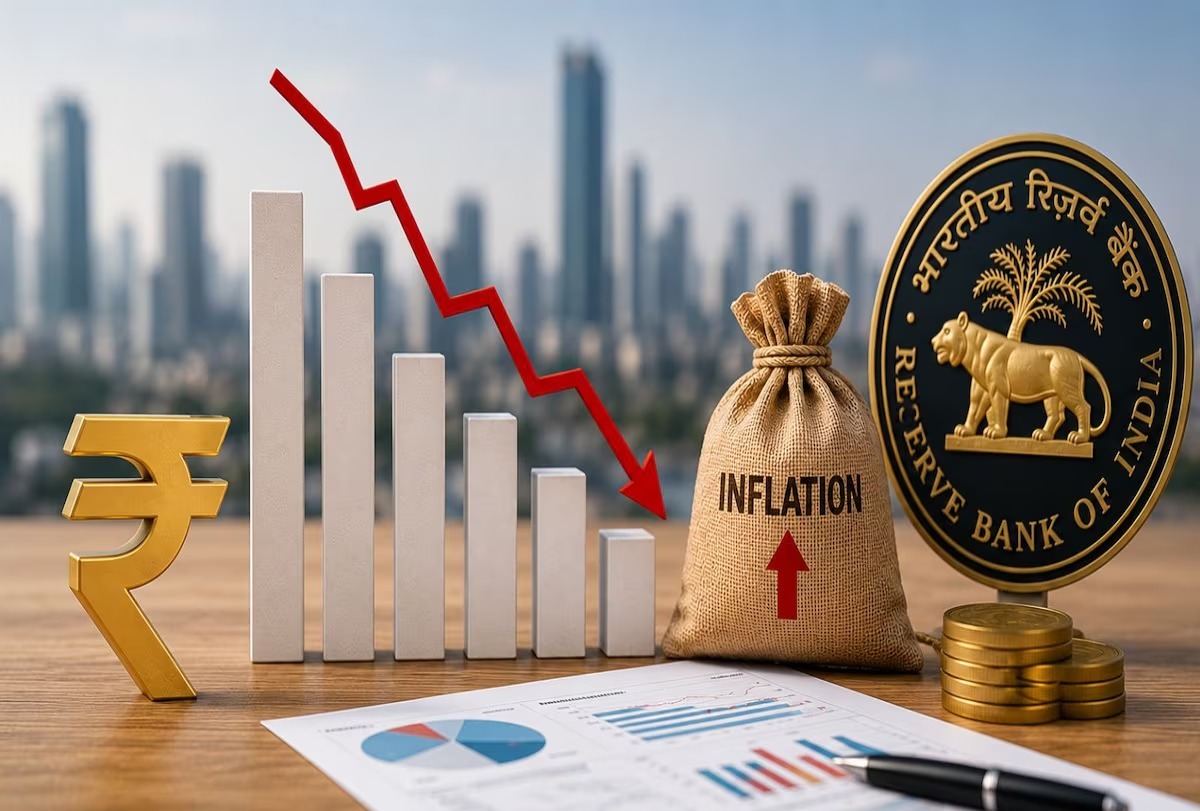
Global economists project that the Reserve Bank of India may need to raise interest rates by 50 basis points in 2027 if persistent inflationary pressures remain entrenched. This follows the RBI's decision to increase its FY27 inflation forecast to 5.1% due to elevated oil costs and West Asia supply shocks.
MUMBAI — June 9, 2026 — The Reserve Bank of India (RBI) could be forced to launch an aggressive interest rate hike cycle in calendar year 2027 if persistent supply-side shocks, elevated crude oil prices, and currency volatility continue to pressure consumer price indices. According to detailed macroeconomic briefings released by global investment banks including Barclays and HSBC, financial analysts are shifting their forward-looking projections, warning that the domestic economy is facing an prolonged battle against imported inflation.
The revised consensus follows the central bank’s recent June 2026 Monetary Policy Committee (MPC) review. While the central bank maintained its benchmark repo rate at 5.25% for the third consecutive meeting, its strategic revisions to baseline macroeconomic indicators—notably cutting full-year gross domestic product (GDP) growth projections and raising inflation forecasts—have forced financial institutions to price in a more hawkish monetary framework over the coming quarters.
Supply-Side Pressures Threaten Core Price Stability
According to investor research documents published by Barclays, the central bank is expected to hold the line throughout the remainder of 2026, using its extensive foreign exchange reserves to limit currency depreciation. However, the international brokerage firm highlights a base-case projection of a 50-basis-point interest rate hike in 2027.
The primary driver behind this structural shift is the prolonged geopolitical crisis in West Asia, which has systematically disrupted critical maritime logistics lines and pushed global energy benchmarks substantially above initial estimates. The central bank recently conceded that average crude oil prices are tracking significantly higher than the $85 per barrel assumption utilized in its previous forecasting models.
Furthermore, local macroeconomic experts emphasize that fuel inflation is rapidly filtering into broader economic segments through secondary transport and logistics expenses. This pass-through effect is driving up the baseline "menu costs" of essential industrial inputs, including chemicals, base metals, commercial LPG, and rubber components.
Compounding these industrial risks, agricultural economists at the Bank of Baroda have flagged severe upside risks to food prices due to an ongoing El Niño weather pattern. A sub-normal southwest monsoon could shock agrarian yields, driving domestic food inflation to the upper boundary of the central bank's statutory target range.
Impact on Corporate Borrowers and Retail Consumers
A transition toward higher policy rates in 2027 would introduce direct financial adjustments across various segments of the Indian economy. For corporate enterprises and commercial businesses, an escalation in the benchmark repo rate elevates the cost of capital, potentially cooling private sector capital expenditure (capex) spending on large-scale infrastructure projects.
For domestic retail consumers, a hawkish shift by the banking regulator will directly influence personal finances:
Borrowing and EMIs: Floating-rate home loans, auto financing, and retail personal loans will adjust upward, increasing monthly Equated Monthly Installment (EMI) outlays.
Fixed Income Accumulation: Conversely, retail savers and senior citizens will benefit from improved yields on commercial bank fixed deposits and recurring savings assets.
Equity Market Volatility: Capital market analysts indicate that interest rate hike expectations will cap index gains across equity bourses, making neutral financial options strategies on the NIFTY 50 more attractive than outright bullish positions.
Official Sources Section
The underlying macroeconomic data, revised quarterly projections, and policy frameworks were officially introduced via the post-MPC statement issued by the Reserve Bank of India on June 5, 2026. The statutory parameters governing consumer price inflation are benchmarked under medium-term price targets maintained by the Ministry of Statistics and Programme Implementation (MoSPI).
Institutional Policy Communications
While individual committee members of the MPC remain under a strict post-policy quiet period, official regulatory speeches highlight the central bank's defensive posture.
"According to officials, the current global macro environment has deteriorated due to supply chain impasses," stated a senior monetary researcher during an overview of the central bank's disclosures. "Organizers stated that the direct impact of cumulative domestic fuel price increases will add at least 36 basis points to headline inflation in the near term. The committee remains highly vigilant and stands prepared to enact necessary policy corrections if these localized price spikes show signs of turning into broader, generalized wage inflation."
Why It Matters
The projection of a potential 2027 rate hike carries critical practical implications for long-term fiscal planning. After a prolonged period of stable interest rates, a sudden return to monetary tightening indicates that structural global inflation can no longer be managed solely through temporary supply fixes or administrative subsidies. For corporate treasuries, real estate developers, and state finance ministries, this necessitates a fundamental recalibration of debt-issuance strategies, requiring them to lock in current borrowing costs before higher interest rates alter the cost of capital across the domestic banking system.
Key Facts at a Glance
Policy Rate Status: The current RBI repo rate is held at 5.25% with a strictly neutral monetary policy stance.
Revised Inflation Target: The central bank has lifted its FY27 consumer price index (CPI) inflation forecast to 5.1% from 4.6%.
Growth Outlook Calibration: Consolidated real GDP growth expectations for the current fiscal year have been dialed back to 6.6% from 6.9%.
Economist Consensus: Barclays projects a 50-basis-point interest rate hike in 2027, while certain regional institutions like HSBC warn of potential tightening as early as late 2026.
Core Risk Catalysts: Protracted supply chain disruptions in West Asia, high crude oil averages, and El Niño agricultural threats.
Frequently Asked Questions (FAQ)
Why did the RBI adjust its inflation forecast upward?
The central bank increased its inflation forecast to 5.1% primarily due to surging international energy prices, rising raw material input costs for industrial firms, and potential food production risks linked to sub-normal monsoon weather patterns.
How does a change in the repo rate affect consumer home loans?
When the central bank adjusts its repo rate, commercial banks modify their internal lending benchmarks. A rate hike forces an automatic increase in interest rates for floating-rate loans, expanding the duration or monthly EMI amount for the borrower.
What is the RBI’s official mandate regarding domestic inflation?
The Reserve Bank of India is legally mandated by the central government to maintain consumer price index (CPI) inflation at a medium-term target of 4.0%, operating within a flexible regulatory tolerance band of 2.0% to 6.0%.
Source: Reserve Bank of India