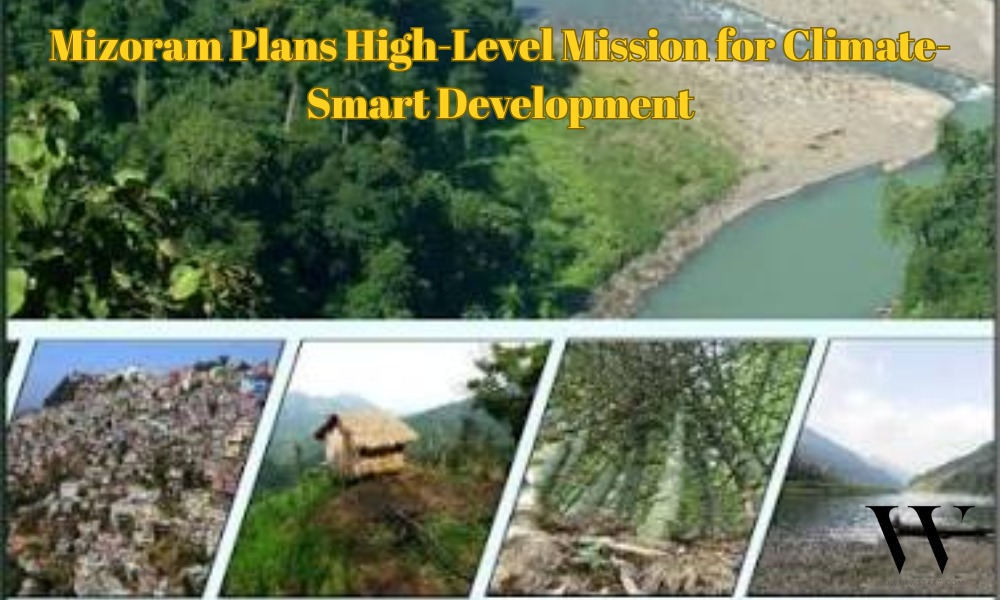
Mizoram is pursuing high-level global partnerships with organizations like the UNDRR and UNEP to establish the state as the North-East benchmark for climate-resilient development. Led by Minister Prof. Lalnilawma, the administration aims to tackle geological vulnerabilities, promote sustainable urban planning, and enhance disaster risk reduction across all districts.
Mizoram is pursuing high-level international partnerships and institutional collaborations to establish itself as the North-East's benchmark for climate-resilient development and disaster risk reduction.
NEW DELHI — In an effort to counter mounting ecological and geological vulnerabilities, the Government of Mizoram has initiated a series of high-level engagements with international development organizations and national ministries in New Delhi. Led by Mizoram’s Minister for Disaster Management and Rehabilitation, Prof. Lalnilawma, alongside Department Secretary Shri Sushil Singh, IAS, the state administration is seeking robust global cooperation to accelerate its transition toward sustainable, climate-smart growth. The diplomatic push, conducted through late July 2026, aims to integrate technical expertise, risk-informed urban planning, and green infrastructure across all sectors of the state's economy.
Strategic UN Engagements and Disaster Risk Reduction
During discussions in New Delhi with Kumar Kishore, the United Nations Secretary-General’s Special Representative for Disaster Risk Reduction (UNDRR), state officials outlined Mizoram's acute vulnerability to landslides, rockfalls, earthquakes, and environmental degradation. Located within Seismic Zone V, the mountainous state experiences severe monsoon-triggered hazards that threaten local livelihoods and infrastructure.
According to official releases from the Directorate of Information and Public Relations (DIPR), the state government sought enhanced technical support and knowledge exchange from the UNDRR to strengthen institutional capacity. In response, the UNDRR representative commended Mizoram's proactive framework and agreed to facilitate connections with international experts to showcase the state's best practices on global platforms. Furthermore, officials discussed plans to host the upcoming North-East Regional Disaster Management Conclave later this year to coordinate regional strategies.
Aligning with Global Foundations and National Authorities
Mizoram's strategic outreach extends beyond the United Nations, encompassing multi-sectoral collaborations with organizations such as the RMI India Foundation, ICLEI, the United Nations Environment Programme (UNEP), and the United Nations Development Programme (UNDP). These talks focused on integrating clean energy, energy-efficient building designs, sustainable cooling solutions, and climate-resilient public infrastructure.
Concurrently, state delegates held a comprehensive review meeting at the Ministry of Home Affairs (MHA). The discussions emphasized fast-tracking sanctioned initiatives under the National Landslide Risk Mitigation Programme. The MHA advised close coordination with the Geological Survey of India (GSI) to conduct mandatory geotechnical investigations, utilize digital elevation models, and enforce stricter building regulations.
Urban Decentralization and Balanced Regional Growth
To alleviate population and developmental pressures on the capital city of Aizawl, the Mizoram government is advancing plans to develop Thenzawl in the Serchhip district as a designated "Peace City".
Organizers stated that planned urban expansion and risk-informed zoning are vital to reducing future exposure to geological hazards. This urbanization strategy complements rural initiatives like FOCUS 2.0—backed by the International Fund for Agricultural Development (IFAD)—which assists farmers in transitioning away from traditional shifting cultivation toward market-linked, climate-resilient agriculture across all 11 districts.
Key Facts at a Glance
Focus Area: Climate resilience, disaster risk reduction, and sustainable urban planning.
Key Delegation: Led by Prof. Lalnilawma, Minister for Disaster Management & Rehabilitation, Government of Mizoram.
International Partners: UNDRR, UNDP, UNEP, RMI India Foundation, and ICLEI.
National Collaboration: Ministry of Home Affairs (MHA), National Disaster Management Authority (NDMA), and Geological Survey of India (GSI).
Major Urban Initiative: Development of Thenzawl as a "Peace City" to decentralize growth from Aizawl.
Frequently Asked Questions
Why is Mizoram seeking global partnerships?
To acquire technical expertise, financial backing, and institutional support necessary to manage high seismic and climate-induced disaster risks.
What specific hazards does Mizoram face?
Officials note that the state is highly prone to earthquakes (Seismic Zone V), frequent landslides, rockfalls, and severe forest fires.
What is the purpose of the Thenzawl "Peace City" project?
It aims to ease vertical and developmental pressure on the overcrowded capital of Aizawl through risk-informed, planned urban expansion.
Which national bodies are assisting the state?
The Ministry of Home Affairs, NDMA, and the Geological Survey of India are providing technical guidance and project oversight.
Source: