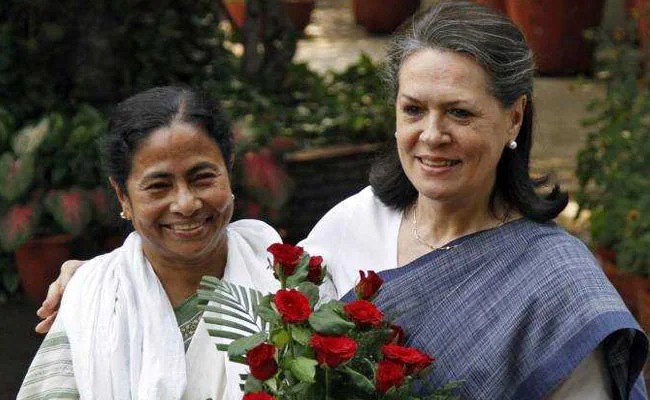
Sonia Gandhi has urged Mamata Banerjee to fortify opposition unity against the BJP during high-level talks in New Delhi. The strategic meeting provides vital national backing for the TMC chief as her party navigates severe post-election internal rebellions and an active state CID forgery probe into legislative resolution records.
NEW DELHI — Congress Parliamentary Party chairperson Sonia Gandhi has urged Trinamool Congress (TMC) supremo Mamata Banerjee to close ranks and solidify opposition unity against the Bharatiya Janata Party (BJP). The high-stakes intervention occurred during a series of closed-door strategy sessions in the national capital following the latest dynamic assembly conventions. The call for an aggregated front arrives at a critical juncture for Banerjee, whose regional political framework faces severe internal rebellion, high-profile legislative defection threats, and localized state investigation actions in West Bengal.
High-Stakes Diplomacy at 10 Janpath
According to formal statements and institutional updates shared by parliamentary coordinators, the dialogue between Gandhi and Banerjee began during the broader INDIA bloc convention at the Constitution Club before moving to a private, extended session at Gandhi’s 10, Janpath residence. Sources within the opposition alliance confirmed that the discussions focused primarily on long-term coordination blueprints ahead of the 2029 General Elections.
The visible show of mutual support comes as a direct counter-narrative to the historically fraught relationship between the Congress state unit in West Bengal and the TMC. By prioritizing national floor coordination and resisting central legislative pushes, the senior leadership of both parties is attempting to insulate the broader anti-BJP coalition from regional electoral friction.
TMC Troubles Mount Amid Defection Risks and State CID Actions
The timing of the national opposition outreach is deeply intertwined with a cascading political crisis inside West Bengal. Following significant setbacks in the 2026 West Bengal Assembly elections, Banerjee is fighting to retain structural control over the Trinamool Congress. Rebel factions within the party, reportedly organized around breakaway blocks, have openly defied party mandates regarding leadership roles within the state assembly.
Compounding the legislative friction, the West Bengal Criminal Investigation Department (CID) deployed a specialized five-member Special Investigation Team (SIT) to investigate a high-profile forgery case involving the alleged fabrication of legislator signatures on internal party resolution documents. On the exact day of the New Delhi meetings, security forces and state investigators carried out searches at the TMC headquarters in Kolkata, prompting sharp allegations of political vendetta from party general secretaries.
Implications for Regional Governance and Federal Alliances
The ongoing leadership shifts and political alignments carry immediate practical consequences for regional governance and national legislative dynamics:
For Voters and Citizens: Ongoing legislative polarization in West Bengal complicates the delivery of standard state welfare provisions, as administrative attention shifts heavily toward floor management and stability protocols.
For Political Parties: The internal splintering of regional heavyweights alter the numeric equations required to clear major constitutional thresholds, such as upcoming deliberations on national delimitation bills.
For Legislative Assemblies: If breakaway factions successfully bypass traditional anti-defection thresholds, the formal recognition of the Leader of the Opposition (LoP) could transition to rebel camps, reshaping state oversight pipelines.
Quote Section
"According to officials familiar with the discussions at Janpath, the principal objective of the dialogue was to ensure that localized legislative disputes do not disintegrate national floor coordination inside Parliament. Organizers stated that maintaining a unified defensive posture against unilateral central bills remains the foundational priority of the alliance."
Why It Matters
The strategic alignment between these prominent national and regional leaders yields clear structural results across the political spectrum:
For Coalition Stability: Demonstrations of high-level bonhomie indicate that the central core of the INDIA bloc remains functional, even as its constituent parties experience profound localized fragmentation.
For State Administration: The intersection of law enforcement probes with executive party friction slows down regional policy implementation across West Bengal industrial zones.
For Parliamentary Debates: A unified opposition front alters the passage velocity of high-impact regulatory bills, forcing broader bipartisan reviews on federal balance issues.
Key Facts at a Glance
Strategic Appeal: Sonia Gandhi has called on Mamata Banerjee to stabilize opposition alliances and close ranks against the BJP.
Internal Friction: The TMC faces severe internal dissent following the 2026 assembly elections, with rebel factions challenging leadership selections.
Legal Scrutiny: The West Bengal CID has initiated an active SIT investigation into alleged signature forgery within TMC legislative resolution blocks.
National Focus: The high-level talks aim to secure unified floor coordination looking toward upcoming federal legislative sessions.
FAQ Section
What prompted the urgent meeting between Sonia Gandhi and Mamata Banerjee?
The meeting was arranged to reinforce national opposition solidarity within the INDIA bloc, specifically as Mamata Banerjee navigates deep internal party rifts and state-level legal investigations following the 2026 regional polls.
What legal challenges is the TMC currently facing in West Bengal?
The West Bengal CID has formed a Special Investigation Team (SIT) to probe allegations that signatures of certain MLAs were manufactured or fabricated in official party resolution logbooks.
How does this affect the strength of the anti-BJP opposition alliance?
While national leaders are showing strong visual unity, ongoing internal fractures within regional parties like the TMC and changing dynamics with other southern factions create fluid alignment challenges heading toward the 2029 general cycle.
Source: Indian National Congress (INC), All India Trinamool Congress (AITC), West Bengal Legislative Assembly Archives.