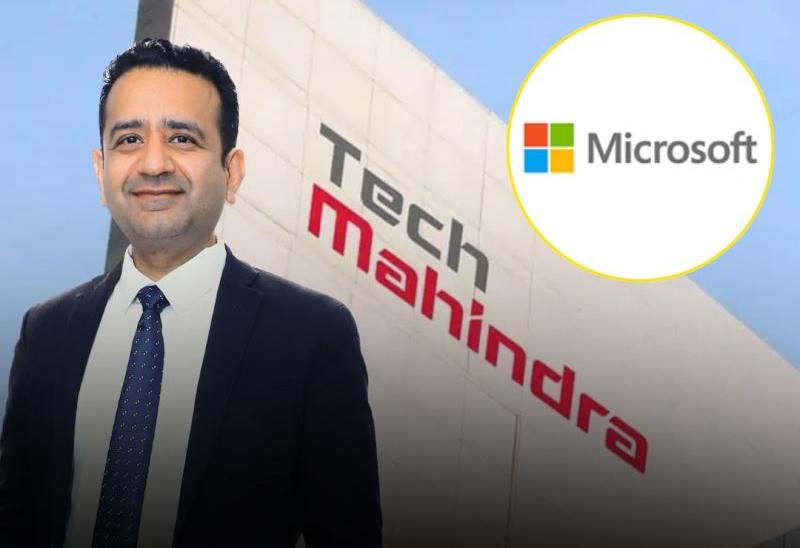
Tech Mahindra has partnered with Microsoft to launch an AI-driven 5G Network Digital Twin solution for global telecommunications operators. Utilizing Microsoft Azure and Fabric, the platform builds a real-time virtual model of telecom networks, enabling companies to utilize predictive AI models, optimize investments, and accelerate 5G enterprise monetization.
NEW DELHI — Indian technology consulting and digital services major Tech Mahindra announced a global partnership with Microsoft on Tuesday to launch an advanced, AI-driven 5G Network Digital Twin solution. Designed specifically for medium and large-scale communications service providers (CSPs), the collaborative platform aims to modernize complex multi-vendor network operations, enhance service reliability, and accelerate the commercial monetization of next-generation 5G enterprise infrastructure.
Cloud-Scale Simulation for Next-Generation Networks
The joint solution addresses an industry-wide challenge: the operational density of modern 5G environments. As telecommunications networks shift toward software-defined cores, cloud-native architectures, and network slicing, traditional manual monitoring systems have struggled to keep pace.
The new platform integrates Tech Mahindra’s deep domain knowledge in telecommunications engineering with a suite of specialized cloud systems from Microsoft. By combining Microsoft Azure, Microsoft Fabric, and Azure Digital Twins, the solution consolidates massive volumes of raw network telemetry into a singular, AI-ready data estate.
Furthermore, the architecture embeds Microsoft Foundry, Fabric IQ, and agentic AI frameworks. This enables the virtual replica to move beyond passive asset visualization into a live decision-making environment capable of autonomous reasoning, predictive simulation, and closed-loop network orchestration.
Operational Advantages and Economic Impact
For telecom companies, corporate enterprises, and end consumers, the operational transition from reactive troubleshooting to predictive maintenance offers measurable financial and technical benefits:
Smarter Capital Expenditure: According to official data platforms, the system enables operators to model network changes virtually, optimizing infrastructure layout and infrastructure lifecycle investments while cutting operational overhead.
Enterprise Revenue Growth: The platform allows operators to execute service-level-agreement (SLA) driven enterprise services, including dedicated network slicing and edge computing orchestration, with heightened precision.
Consumer Service Continuity: By using predictive models to anticipate signal degradation, capacity strain, or component failure before they impact physical towers, operators can safeguard consumer connectivity and minimize unexpected service blackouts.
Official Sources Section
According to official corporate statements and market releases published simultaneously by the companies on June 30, 2026, the collaboration creates an integrated technology ecosystem. The solution will be systematically deployed across joint go-to-market initiatives targeting global communication networks requiring cloud-scale automation.
Quote Section
Key executives from both corporations outlined the strategic importance of the architectural integration.
"Through our integration with Microsoft, we are combining digital twin technology, unified data intelligence, and agentic AI to help operators move toward autonomous network operations, improve service assurance, and create new opportunities for revenue growth through AI-driven network innovation," stated Amol Phadke, Chief Transformation Officer at Tech Mahindra.
"By combining Microsoft Azure, Microsoft Foundry, and Microsoft Fabric with Tech Mahindra's deep telco expertise, operators can move from passive monitoring to active, intelligent decisioning, with agentic AI that reasons, simulates, and acts across live network environments in real time," added Alessandra Antonelli, Senior Global Director of Strategy at Microsoft.
Why It Matters
As global telecommunications providers seek to recoup their immense capital investments in physical 5G rollouts, optimizing operational margins is crucial. The Tech Mahindra-Microsoft alliance delivers a practical framework that transforms raw machine telemetry into actionable intelligence. This allows carriers to run real-world simulations safely inside a software environment, drastically lowering the risks associated with live network modifications and enterprise software deployments.
Key Facts at a Glance
The Collaboration: Tech Mahindra and Microsoft have integrated cloud platforms and telecom service designs to showcase an advanced 5G Network Digital Twin.
Technical Components: The product architecture leverages Microsoft Azure, Azure Digital Twins, Microsoft Fabric, and agentic AI models.
Primary Target: Developed specifically for medium- and large-scale telecom companies dealing with multi-vendor, fragmented hardware systems.
Core Functions: Shifts operations from traditional simulation models to real-time predictive automation, closed-loop orchestrations, and proactive risk prediction.
Frequently Asked Questions
What is a 5G Network Digital Twin?
It is a dynamic, near-live virtual replica of a physical telecommunications network that continuously ingests telemetry data to simulate operational outcomes, test modifications, and predict hardware failures without disrupting live systems.
How does agentic AI function within this solution?
Agentic AI frameworks provide intelligent reasoning capability, enabling the platform to independently analyze data anomalies, predict infrastructure failures, and orchestrate automated corrections within the network environment.
What are the main benefits for telecom operators?
Operators can optimize capital spending, improve asset utilization, enforce SLAs for enterprise network slicing, and lower operational costs by replacing reactive engineering workflows with automated, predictive decision-making models.
Sources: TimesTech, Windows Forum, The Economic Times