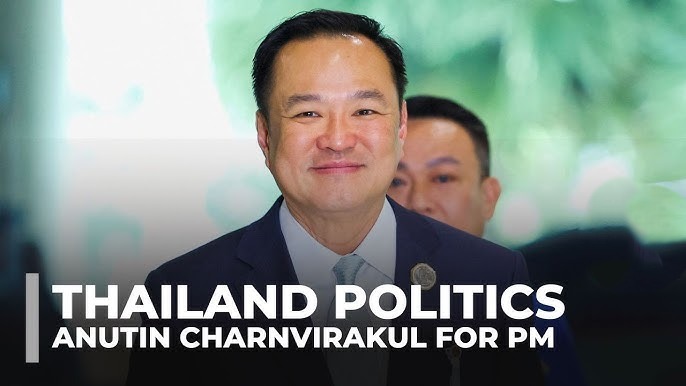
Thailand’s parliament has elected Anutin Charnvirakul as the new prime minister in a historic vote that marks the nation’s third leadership change since 2023. The appointment comes during a period of significant political upheaval, coinciding with the dramatic departure of influential...
Thailand’s parliament has elected Anutin Charnvirakul as the new prime minister in a historic vote that marks the nation’s third leadership change since 2023. The appointment comes during a period of significant political upheaval, coinciding with the dramatic departure of influential former premier Thaksin Shinawatra and ongoing realignments within the country’s fractious political landscape. Anutin’s victory signals a shift in power dynamics and opens the door for constitutional reforms and early elections, although challenges remain in navigating economic and political uncertainties.
Key Highlights Of Anutin’s Election
Anutin Charnvirakul secured the premiership by winning at least 273 votes in the lower house, surpassing the 247-vote threshold required, decisively defeating his main rival Chaikasem Nitisiri from the Pheu Thai party.
His election follows the recent ousting of Paetongtarn Shinawatra, Thaksin’s daughter, by Thailand’s Constitutional Court over ministerial ethics violations.
Thaksin Shinawatra left Thailand abruptly prior to the vote, diverting his flight from Singapore to Dubai amid ongoing legal challenges and his controversial political legacy.
Anutin leads the Bhumjaithai party, which strategically withdrew from the previous ruling coalition, effectively weakening Pheu Thai’s hold on power.
The opposition People’s Party backed Anutin in exchange for promises to dissolve parliament within four months and hold early elections.
Political Background And Coalition Dynamics
Anutin, aged 58, is a seasoned politician, previously serving as deputy prime minister, health minister, and interior minister during periods of military and civilian rule. Known for his pragmatic approach, he rose to prominence after legalizing medical cannabis in 2022, a move that earned both acclaim and criticism.
The political scene preceding Anutin’s election was marked by coalition fragility and courtroom interventions. Paetongtarn’s removal triggered a power vacuum that intensified negotiations among parties. The Pheu Thai party, historically dominant and linked to Thaksin’s legacy, suffered a blow as their candidate was decisively defeated.
The People’s Party, a progressive opposition force, emerged as kingmaker by supporting Anutin but insisted on reforms and early polls, underscoring the fluid and transactional nature of Thai politics. Anutin’s government will likely operate as a minority coalition, facing challenges in implementing policies amid parliamentary divisions.
Economic And Social Context
Thailand remains vulnerable amid regional border tensions, particularly with Cambodia, and domestic unrest fueled by economic pressures and social divides. Anutin inherits a complex agenda balancing stability with reform needs. His prior role in managing the COVID-19 response drew scrutiny for controversial statements but also demonstrated crisis leadership.
The government’s approach to economic revitalization, infrastructure, and social issues will be closely monitored by businesses and international observers as Thailand seeks to navigate global uncertainties and internal demands for change.
Implications Of Thaksin Shinawatra’s Departure
Thaksin’s exit to Dubai adds a dramatic twist to the political narrative. Once a dominant figure in Thai politics, he remains polarizing, with a history of exile, corruption charges, and influence over current political factions. His sudden departure coincided with parliamentary voting and signals a potential recalibration of political power away from the Shinawatra family.
Looking Ahead: Promise And Challenges For Anutin’s Premiership
Anutin’s ascension may offer a brief respite from political turmoil, yet the fragmented nature of the parliament and policy demands present formidable hurdles. The commitment to dissolve parliament and hold elections could reset political equations but also prolong uncertainty.
As the third prime minister in two years, Anutin’s leadership will be tested by the need to reconcile competing interests, revitalize the economy, and restore public confidence. His success in managing coalition complexities and delivering on reform promises will shape Thailand’s trajectory in the near future.
Sources: Deutsche Welle, The Conversation, Economic Times, Bloomberg, Channel News Asia, Reuters, Al Jazeera, BBC, Time Magazine