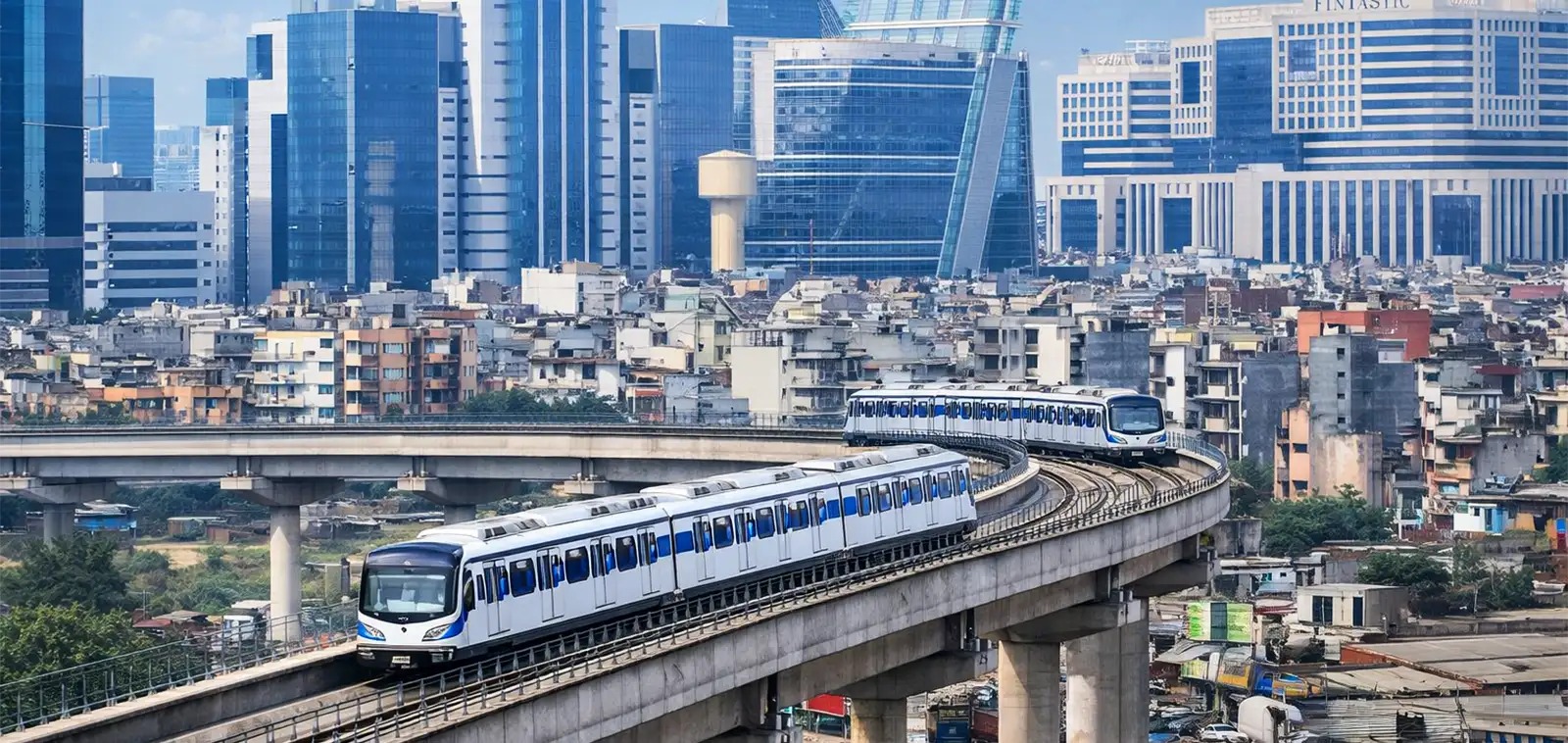
Gurugram Metro Rail Limited (GMRL) is integrating a direct interchange between the new 28.5 km Millennium City Centre–Cyber City metro loop and the existing Delhi Metro Yellow Line. Designed as a seamless multi-modal transit hub at Millennium City Centre, the facility will feature elevated concourse connections, skywalks, and travelators to enable rapid transfer for daily commuters across Old and New Gurugram.
GURUGRAM — Gurugram Metro Rail Limited (GMRL) confirmed plans to establish a direct interchange connecting its upcoming 28.5 km Millennium City Centre to Cyber City metro loop with the existing Delhi Metro Rail Corporation (DMRC) Yellow Line. The transit facility at Millennium City Centre (formerly HUDA City Centre) will allow thousands of daily commuters to switch between the two major rapid transit networks without exiting station control zones.
The project, backed by a joint venture between the Government of India and the Government of Haryana, represents a structural upgrade to Gurugram's public transit ecosystem. By linking the existing Yellow Line terminus with the new 27-station elevated corridor, the interchange addresses persistent last-mile connectivity bottlenecks between Old Gurugram, Udyog Vihar, Dwarka Expressway, and commercial districts along Cyber City.
Technical Integration and Station Layout Plan
The direct interchange architecture is engineered to handle heavy commuter volume during peak morning and evening rush hours. Commuters transferring between the DMRC Yellow Line—which connects Gurugram to central and northern Delhi—and the GMRL loop line will benefit from dedicated pedestrian skywalks, travelators, and automated fare collection (AFC) integration.
Key structural features of the interchange plan include:
Concourse-Level Pedestrian Bridges: Enclosed, climate-controlled skywalks linking the elevated GMRL station directly to the DMRC Yellow Line concourse.
Integrated Fare Gates: Unified ticketing systems designed to minimize queue delays for passengers transferring across operators.
Accessibility Infrastructure: Multi-tiered escalators, high-capacity elevators, and tactile paving for step-free passenger movement.
Multi-Modal Integration Zone: Dedicated drop-off bays for auto-rickshaws, feeder buses, and non-motorized transport to prevent surface-level traffic congestion.
Network Expansion Overview: Old vs. New Gurugram
The 28.5 km GMRL corridor consists of a 26.65 km main loop line alongside a 1.85 km spur extending toward the Dwarka Expressway near Basai Village. Historically, metro coverage in Gurugram remained concentrated in eastern corporate sectors served by the 7 km DMRC Yellow Line section and the 11.7 km Rapid Metro.
The new line introduces rapid transit access to densely populated, historically "metro-dark" residential and commercial zones:
| Section / Region | Major Stations Along the Loop | Key Connectivity Targets |
| Phase 1 (15.2 km) | Sector 45, Cyber Park (Sec 46), Sector 47, Subhash Chowk, Hero Honda Chowk, Sector 101 | Southern Peripheral Road, institutional zones, and industrial hubs |
| Phase 2 (13.3 km) | Sector 9, Sector 7, Sector 4, Palam Vihar, Sector 23A, Udyog Vihar | Old Gurugram residential sectors, commercial markets, and employment corridors |
| Spur Line | Basai Village to Dwarka Expressway | High-density residential developments along the Dwarka Expressway belt |
Economic and Commuter Impact
The creation of a direct interchange at Millennium City Centre is projected to reduce vehicular traffic on major arterial roads, including National Highway 48 (NH-48), Subhash Chowk, and the Sohna Road corridor.
For daily commuters, office workers, and regional travelers:
Travel Time Reduction: Passengers traveling from Old Gurugram or Subhash Chowk to Central Delhi can connect via the Yellow Line without relying on road feeder transport.
Real Estate Development: Capital values and commercial leasing demand have seen increased momentum along Transit-Oriented Development (TOD) zones in Sectors 4, 7, 47, and Subhash Chowk.
Reduced Carbon Footprint: Shifting private vehicle users to electrified light rail infrastructure directly supports regional air quality objectives.
Official Statements and Project Guidance
According to official project summaries issued by Gurugram Metro Rail Limited (GMRL):
"The proposed corridor intends, wherever possible, to furnish interchange with other transport systems in the city to give a seamless travel experience to commuters. Interchange stations are proposed with the Yellow Line of Delhi Metro, railway station, bus depot, Rapid Metro, and proposed RRTS corridor."
Quote Section
According to officials, constructing a direct physical link between the new elevated loop and the Millennium City Centre Yellow Line station guarantees frictionless commuter movement, eliminating the need for passengers to exit onto busy surface roads to switch metro lines.
Why It Matters
A direct physical interchange at Millennium City Centre removes the primary operational bottleneck in Gurugram's mass transit network. Unifying the DMRC Yellow Line with GMRL's 28.5 km loop transforms fragmented rail lines into a single, cohesive public transportation grid.
Key Facts at a Glance
Project Scope: Direct interchange between GMRL 28.5 km loop line and DMRC Yellow Line.
Location: Millennium City Centre (formerly HUDA City Centre), Gurugram.
Executing Agency: Gurugram Metro Rail Limited (GMRL).
Total Project Cost: Approximately ₹5,452 crore.
Key Features: Covered skywalks, integrated fare gates, travelators, and multi-modal drop-off zones.
Frequently Asked Questions (FAQs)
What is the new metro line being built in Gurugram?
The new line is a 28.5 km elevated metro loop project connecting Millennium City Centre to Cyber City via Old Gurugram, Subhash Chowk, Hero Honda Chowk, Palam Vihar, and Udyog Vihar, along with a spur to Dwarka Expressway.
How will commuters transfer between the new line and the Delhi Metro Yellow Line?
Commuters will transfer directly at Millennium City Centre using integrated elevated skywalks, travelators, and connected concourse levels without needing to exit station security zones.
Which organization is implementing the new Gurugram Metro expansion?
The project is executed by Gurugram Metro Rail Limited (GMRL), a 50:50 joint venture company between the Government of India and the Government of Haryana.
Which areas in Old Gurugram will get metro access under this project?
The loop corridor brings direct elevated metro connectivity to major residential and commercial hubs in Old Gurugram, including Sectors 4, 7, 9, Palam Vihar, Ashok Vihar, and Basai.
Source: Official project updates and technical specifications published by Gurugram Metro Rail Limited (GMRL), official route maps from the Delhi Metro Rail Corporation (DMRC), and urban transit notices from the Department of Urban Local Bodies, Haryana.