The District Court (Commercial Court) has dismissed a trademark injunction against K.S. Oils Limited regarding its flagship "KALASH" brand. Following a Supreme Court mandate to fast-track the dispute against Shivang Edibles Oils Limited, the decision solidifies K.S. Oils’ statutory trademark rights and protects its ongoing insolvency-based business revival.
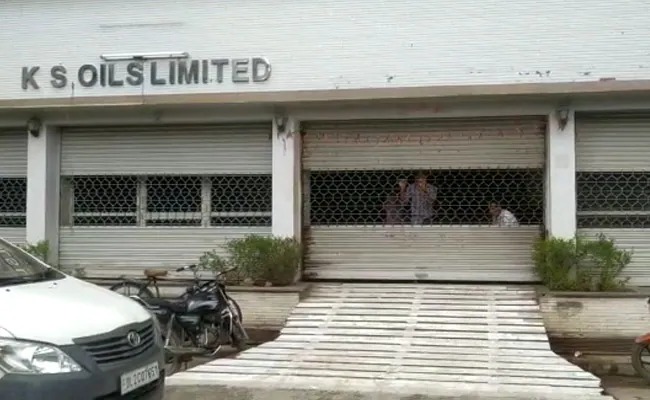
NEW DELHI — In a decisive legal victory for the newly restructured edible oil manufacturer, the District Court (Commercial Court) in New Delhi dismissed a temporary injunction petition filed against K.S. Oils Limited on June 10, 2026. The case, which centered on the proprietary ownership of the company's long-standing "KALASH" trademark, concludes a high-stakes corporate feud with competitor Shivang Edibles Oils Limited.
The ruling directly enables K.S. Oils to continue processing, packaging, and distributing its staple edible products under its primary brand identity without fear of asset seizure or product recalls.
The Origins of the Kalash Brand Dispute
The multi-tiered legal battle dates back to February 4, 2026, when a trial court initially granted an ex-parte ad-interim injunction restraining K.S. Oils Limited from utilizing the "KALASH" word mark and its associated labels. The plaintiff, Shivang Edibles Oils Limited, had alleged a case of "passing off," asserting that they had continuously used the mark since 2017 under the authorization of a former director.
K.S. Oils aggressively challenged the restriction. The firm traced its legitimate statutory ownership of the brand back to original assignment deeds executed in 1986 and 1996, bolstered by formal trademark and copyright registrations secured in 2009.
Crucially, K.S. Oils had been operating under a Corporate Insolvency Resolution Process (CIRP) between 2017 and 2025. The brand and its accompanying industrial assets were sold as a going concern through a National Company Law Tribunal (NCLT) approved e-auction in 2025. Following the resolution process, the new management successfully restarted commercial production in October 2024, months before the rival lawsuit was initiated.
Higher Courts Mandate Fast-Track Resolution
The road to the District Court’s dismissal was paved by interventions from India’s senior judiciary. On March 30, 2026, a division bench of the Delhi High Court set aside the trial court's initial ex-parte order. The High Court observed that the lower court had failed to evaluate critical material facts, including K.S. Oils' subsisting 2008 trademark applications and 2009 copyright assets, which established statutory priority.
The matter escalated briefly to the Supreme Court of India. On April 27, 2026, a Supreme Court bench comprising Justice K.V. Viswanathan and Justice Vipul M. Pancholi disposed of a Special Leave Petition (SLP) filed by Shivang Edibles. The apex court explicitly directed the Rohini District Commercial Court to fast-track the final injunction arguments and render a definitive verdict on its own merits within a strict one-month timeframe from the completion of pleadings.
Following the expedited hearings, the District Court evaluated the statutory ledger and found insufficient grounds to sustain the trademark restrictions, culminating in the formal dismissal of the injunction against K.S. Oils.
Market Implications for Investors and Consumers
The structural resolution of this trademark case has immediate real-world implications:
1. Corporate and Investor Stability
For investors tracking the edible oil sector, the ruling validates the sanctity of asset purchases made via NCLT e-auctions. Had the injunction stood, it would have created a dangerous precedent where intellectual property bought out of bankruptcy court could be compromised by legacy claims, endangering investor capital.
2. Supply Chain and Retail Impact
With all legal blocks removed and product seizure orders permanently recalled, K.S. Oils can ramp up capacity across its processing plants. Consumers will see a steadier supply of the familiar brand on supermarket shelves, fostering regional competitive pricing within the consumer goods market.
Official Sources Section
The adjudication details and background histories are compiled directly from institutional legal and financial platforms. Key primary inputs include the record of proceedings from the Supreme Court of India (SLP Civil No. 13962/2026), the appellate bench judgment of the Delhi High Court (FAO COMM 69/2026), and regulatory market updates issued via the National Stock Exchange of India Limited.
Quote Section
"According to officials familiar with the case documentation, the plaintiff failed to establish a prima facie case of passing off that could supersede the registered statutory trademarks and historical assets preserved throughout the corporate insolvency process."
Representatives from the development desk stated that "the dismissal of the injunction allows the company to operate unencumbered, securing the financial revival plan mapped out during the 2025 corporate acquisition."
Why It Matters
This case highlights how intellectual property is handled during corporate insolvencies in India. The ruling emphasizes that trademarks listed as corporate assets during a court-supervised bankruptcy process remain legally protected for the incoming buyer. By dismissing the injunction, the District Court protects the integrity of the Insolvency and Bankruptcy Code (IBC) process and ensures that companies restarting operations after a bankruptcy sale can use their core brands without legal disruption.
Key Facts at a Glance
Judicial Action: The District Commercial Court has dismissed the trademark injunction against K.S. Oils Limited.
Core Asset: The proprietary usage rights of the flagship "KALASH" edible oil word mark and brand labels.
Legal History: Follows a Delhi High Court reversal in March and an expedited hearing mandate from the Supreme Court of India in April 2026.
Insolvency Context: K.S. Oils was successfully acquired and brought out of liquidation as a going concern via a structured e-auction in 2025.
Business Impact: Full authorization restored to manufacture, package, and sell goods under the disputed brand name globally.
FAQ Section
Q: Why was there an injunction against K.S. Oils Limited in the first place?
A: A competitor, Shivang Edibles Oils Limited, obtained an initial ex-parte order by claiming that they had exclusively used the "KALASH" brand name since 2017 while K.S. Oils was non-operational during insolvency proceedings.
Q: What did the District Court base its dismissal on?
A: The court evaluated statutory evidence showing K.S. Oils held registered trademark and copyright titles dating back to 2009, which were legally transferred to the new management during the NCLT-backed bankruptcy auction.
Q: Can K.S. Oils continue to sell its products in retail markets now?
A: Yes. All temporary blocks, inventory holding orders, and product seizure directives have been dismissed, allowing the company to distribute its edible oils freely.
Q: What does this mean for other companies purchased through bankruptcy auctions?
A: The ruling sets a helpful precedent, reinforcing that brand names and intellectual property purchased cleanly during an official insolvency resolution process are legally binding and protected from retrogressive claims.
Source: National Stock Exchange of India Limited, Supreme Court of India Case Status System, Delhi High Court Digital Judgment Repository