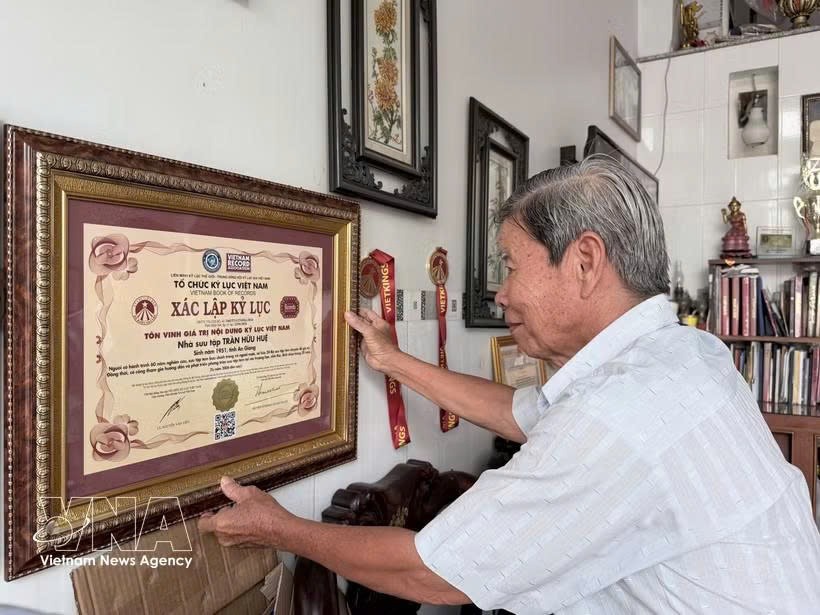
A prominent philatelist has assembled a rare archive of historical postage stamps and postal stationery commemorating the late president and milestones of national sovereignty. The collection offers a tangible, paper-based historical record that preserves critical statecraft moments, presidential decrees, and national diplomatic achievements for future generations.
NEW DELHI — In an effort to preserve national heritage and political history, an avid collector has gathered an extensive archive of historic postage stamps, first-day covers, and official postal stationery detailing the life of the late president and key milestones in national sovereignty. Disclosed during a cultural heritage exhibit on Monday, August 3, 2026, the unique collection highlights how postal artifacts serve as official primary records of statecraft, territorial integrity, and diplomatic history.
The historical preservation effort brings renewed attention to philately as a tool for public history. Beyond their postal utility, government-issued stamps function as official instruments of state sovereignty, capturing major presidential decrees, national jubilees, and international treaties across decades of civic development.
Archival Scope and Sovereign Postal Records
The preserved collection spans multiple decades of postal issuance, systematically organizing commemorative stamps into thematic historical categories:
Presidential Commemoratives: Stamps and special first-day covers marking the inauguration, international state visits, and policy milestones of the late president.
Sovereignty and Territorial Integrity: Issues released to mark national boundary agreements, independence anniversaries, and constitutional milestones.
Diplomatic Relations: Joint postal releases issued alongside partner nations to record bilateral treaties and global summits.
Philatelic historians note that postal administration releases are subjected to strict state oversight, rendering them primary historical evidence equal in authenticity to official gazettes and government archives.
The Role of Philately in Documenting Statecraft
Postal iconography has long served as a visible expression of state identity. When postal authorities issue stamps depicting a late president or celebrating sovereign borders, they establish a permanent, standardized record that circulates domestically and internationally.
In an increasingly digital era where paper records face risk of displacement, physical stamp archives provide immutable evidence of past governance. Archival experts emphasize that original cancellations and official envelopes verify exact dates and official government messaging from specific historical moments.
Impact on Citizens, Researchers, and Historians
Impact on Students and Academic Researchers
The preserved collection provides educators and history scholars with tangible visual primary sources. Students studying constitutional history and international relations gain direct access to political iconography preserved in physical form.
Impact on Cultural Institutions and Museums
Exhibiting specialized stamp collections encourages civic awareness and strengthens public heritage preservation. Local museums and national archives frequently rely on private philatelists to fill gaps in public historical records.
Official Sources Section
Historical documentation, postal release records, and official commemorative archives are cataloged under official updates issued by the Ministry of Communications and public heritage records preserved by the National Archives of India.
Quote Section
"According to officials and heritage archivists, specialized philatelic collections play a critical role in preserving the visual and political history of the nation, offering future generations a verifiable record of presidential leadership and sovereign achievements."
Why It Matters
Preserving physical historical artifacts like commemorative postage stamps safeguards national memory against digital fragmentation or loss. For citizens and researchers alike, these micro-records reflect how a nation defines its sovereignty, honors its presidential leaders, and communicates its values to the world over time.
Key Facts at a Glance
Archival Focus: Rare postage stamps documenting the late president and national sovereignty milestones.
Historical Value: Functions as official primary source material verified by state postal cancellations.
Exhibition Scope: Includes first-day covers, presidential commemorative sets, and diplomatic issues.
Public Function: Supports educational research, civic history, and national heritage conservation.
Frequently Asked Questions (FAQ)
How do postage stamps record national sovereignty?
Stamps are issued exclusively by sovereign postal authorities. Their imagery, official symbols, and territorial designations serve as legal assertions of statehood and government authority.
Why are first-day covers important in historical preservation?
First-day covers feature a stamp canceled on its very first day of issue with an official postmark, providing an unalterable date stamp and official context for a specific historical event.
Where can the public view historical national postal collections?
Public postal archives and historical stamp collections are periodically exhibited at national philatelic museums and through events supported by national archive departments.
Source: Official historical documentation maintained by the Ministry of Communications, public records archived at the National Archives of India, and exhibition disclosures provided by national philatelic organizations.