A drone strike hit a U.S.-owned floating gas storage unit at Egypt’s Mediterranean port of Damietta, igniting a fire on two vessels. The attack marks the first direct strike on Egyptian territory since the broader US-Iran war intensified, signaling an alarming expansion of regional hostilities into non-combatant energy infrastructure.
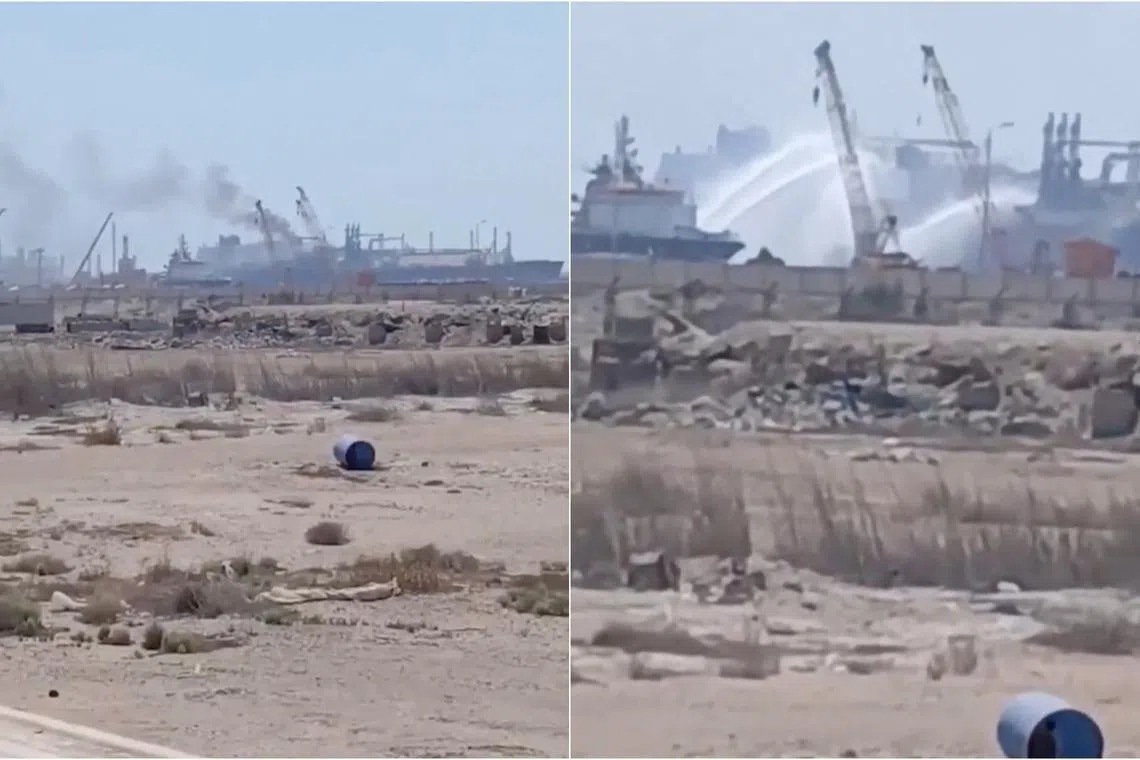
CAIRO, Egypt — Egyptian authorities confirmed on July 30, 2026, that a high-profile explosion and fire aboard two natural gas vessels at the Mediterranean port of Damietta was caused by a targeted drone strike. The incident, which occurred on July 29, involved the Energos Winter a U.S.-owned floating storage and regasification unit (FSRU) and the LNG carrier GasLog Salem.
The attack represents an unprecedented escalation in the ongoing US-Iran war, marking the first instance of major energy infrastructure inside Egyptian borders coming under direct fire since military hostilities flared earlier this year. Emergency crews successfully extinguished the blaze without reporting casualties, but the strike has heightened fears that the Middle East conflict is spilling out of the Gulf theatre and into critical Mediterranean maritime routes.
Technical Details and Investigation at Damietta Port
According to statements issued by the Egyptian Cabinet and the Ministry of Petroleum and Mineral Resources, technical teams boarded the affected vessels to examine structural damage and recover projectile debris. Analysis of recovered fragments confirmed that the fire was triggered by an unmanned aerial vehicle (UAV) that struck the starboard side of the Energos Winter during cargo operations.
To prevent a catastrophic explosion at the terminal, port operators separated the Energos Winter and GasLog Salem before towing them into open waters. Prime Minister Mostafa Madbouly confirmed that while one vessel sustained exterior damage, the floating storage unit remained structurally intact and continued pumping natural gas into Egypt’s national grid.
Key operational metrics of the targeted infrastructure include:
Targeted Vessel: Energos Winter, owned by U.S.-based Energos Infrastructure.
Facility Capacity: 138,250 cubic meters of liquefied natural gas (LNG) regasification capacity.
Secondary Ship Impacted: LNG carrier GasLog Salem, damaged by spreading flames.
Casualties: Zero injuries or fatalities reported among maritime crew or port personnel.
Geopolitical Escalation and Diplomatic Disavowals
The drone strike coincided with a volatile surge in the US-Iran war, occurring shortly after Iran launched missile salvos at U.S. positions in Jordan and coalition forces conducted retaliatory strikes on Tehran-backed positions in Iraq.
No group has officially claimed responsibility for the strike at Damietta. In response to growing speculation, Iranian Foreign Minister Abbas Araghchi issued a statement describing Egypt as an "important friend and partner" and suggested the strike might be a false-flag operation intended to undermine regional peace. Similarly, Yemen's Houthi movement denied involvement, calling accusations baseless.
However, Western maritime security firms and regional intelligence analysts note that the precision strike on U.S.-owned assets mirrors tactics used in other arenas of the US-Iran war.
Impact on Global Shipping, Energy Markets, and Regional Neutrality
The expansion of hostilities into northern Egypt carries serious consequences for international trade and economic stability:
For Global Energy Markets: Brent crude and natural gas futures spiked following news of the strike, reflecting trader anxieties over vulnerabilities in Mediterranean LNG supply corridors.
For Shipping and Maritime Logistics: Re-routing vessel traffic away from the Suez Canal and Egyptian ports risks driving up global freight rates and transit insurance premiums.
For Egyptian Security: Egyptian President Abdel Fattah al-Sisi warned that the attack pushes the region into a "dangerous new phase," threatening the country's delicate position as a neutral diplomatic mediator.
Official Sources Section
Data, official statements, and vessel metrics cited in this news report were compiled and verified from:
Quote Section
"According to officials from the Egyptian Cabinet and Prime Minister Mostafa Madbouly, preliminary technical evaluations confirmed that a drone strike triggered the fire on board the two gas vessels at Damietta Port, and state security agencies are actively examining recovered fragments to determine its origin."
Why It Matters
Until now, the US-Iran war had been largely contained within the Persian Gulf, Red Sea, and targeted inland sites across Iraq, Syria, and Jordan. By striking a key Mediterranean energy hub in Egypt, the conflict demonstrates that neutral third nations and essential international energy infrastructure are increasingly at risk of being drawn into the widening regional dispute.
Key Facts at a Glance
Event Location: Damietta Port, Mediterranean coast of Egypt.
Primary Vessel Struck: U.S.-owned FSRU Energos Winter.
Attacker Identity: Under official investigation; no immediate claim of responsibility.
Economic Impact: Global energy prices rose sharply amid fears over Mediterranean shipping security.
Frequently Asked Questions (FAQs)
What happened at Egypt's Damietta port?
A drone struck the U.S.-owned natural gas vessel Energos Winter at Damietta Port, sparking a fire that spread to a nearby LNG carrier before emergency teams contained the blaze.
Has any group claimed responsibility for the Damietta port drone strike?
No group has officially claimed responsibility. Egyptian security agencies are currently analyzing drone fragments recovered from the site to establish the origin of the attack.
How does this strike relate to the broader US-Iran war?
The strike marks an expansion of the US-Iran war into Egypt, targeting American-owned energy assets outside the traditional conflict zones of the Persian Gulf and Red Sea.
Source: Egyptian Cabinet Official Portal, Ambrey Maritime Security, Ministry of Petroleum and Mineral Resources Egypt.