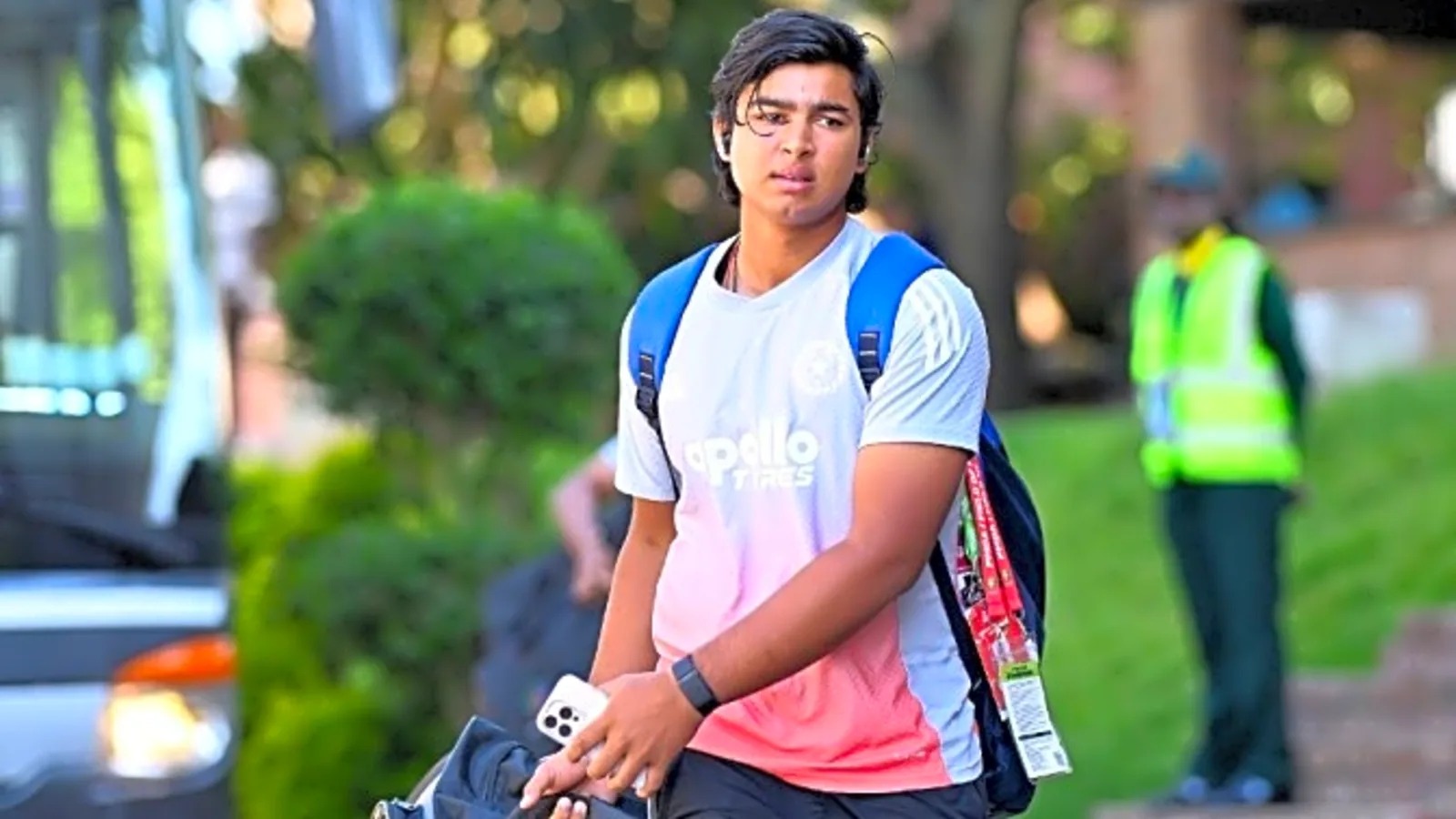
Indian batting prodigy Vaibhav Sooryavanshi will use separate changing facilities during India's T20I tour of England. Due to strict ICC and ECB safeguarding rules for under-16 players, the 15-year-old cannot share adult locker rooms, though he retains full dugout and team meeting access during matches.
LONDON — India’s newly called-up teenage batting prodigy, Vaibhav Sooryavanshi, is set for an unusual logistical experience during the upcoming white-ball tour of the United Kingdom. According to official administrative briefings on Thursday, June 25, 2026, the 15-year-old cricketer will be mandated to use a separate changing room from his senior Indian teammates at all English venues.
The structural isolation is not a form of VIP star treatment, nor does it reflect any disciplinary action. Instead, the arrangement represents strict compliance with statutory minor welfare guidelines enforced by global and local sports watchdogs. As the upcoming five-match T20I bilateral series is classified under official international parameters, all host venues must activate rigorous child safety measures to shield under-16 athletes competing within senior environments.
ICC and ECB Safeguarding Rules Require Separate Facilities
The decision to isolate Sooryavanshi's changing environment stems from overlapping regulatory frameworks. Because the England leg of the tour is a sanctioned International Cricket Council (ICC) event, the governing body’s universal safeguarding procedures take immediate legal precedence. This framework is reinforced locally by the England and Wales Cricket Board's (ECB) "Safe Hands" policy.
Under both statutory welfare guidelines, individuals under the age of 16 are strictly prohibited from utilizing adult changing room environments alongside senior athletes. To resolve this, county safeguarding officers are conducting venue-by-venue risk assessments. The Board of Control for Cricket in India (BCCI) and local team liaison officers are working together to construct dedicated, private spaces for the teenager before and after each fixture.
Full Access Sustained for Active Matches and Team Meetings
Welfare officials emphasize that the physical restrictions apply only to the precise moments when players are getting dressed or using shower facilities before and after games. The guidelines do not impact the 15-year-old's core integration into the national squad's sporting activities.
According to tournament organizers, Sooryavanshi will retain full access to the primary India dressing room during live play. He is permitted to participate in pre-match team meetings, sit on the player benches, join strategy huddles, and fully interact with coaching staff. To provide additional emotional support, the ECB has made an exception to its standard hotel protocols, allowing the player's parents to travel and stay in the same team hotel throughout the UK tour.
Contrast with Indian Domestic and IPL Facilities
The strict enforcement of minor welfare laws represents a new operational experience for the young left-handed opener. A breakout star from Bihar, Sooryavanshi has spent the last two seasons playing for the Rajasthan Royals in the Indian Premier League (IPL), where he amassed 776 runs and hit a record 72 sixes in the 2026 season.
During his time in the IPL and Indian domestic tournaments like the Ranji Trophy, no such separation policies were enforced. The teenager routinely shared identical locker rooms and dugout spaces with senior international players without restriction. Separate facilities for minors are common in English sports—Arsenal academy prospect Max Dowman followed identical changing room isolation rules last season until turning 16.
Official Sources Section
The logistical guidelines, regulatory policies, and hotel accommodation exceptions detailed for this tour have been verified through updates published by the following bodies:
England and Wales Cricket Board (ECB): Official statements released via the Cricket Regulator tracking system detailing the application of the Safe Hands policy.
BCCI & ICC Event Circulars: Tournament operation manuals detailing minor athlete protocols for senior international tours.
Quote Section
"This is an ICC event, with their safeguarding procedures active as they have jurisdiction," the ECB stated to The Guardian regarding the venue setup. "Each County Safeguarding Officer is working closely with the Team Liaison Officer to ensure venue protocols and arrangements, specifically changing room environments, are understood and adhered to. This is conducted via safeguarding risk assessments."
Why It Matters
The implementation of these safeguarding rules highlights the increasing focus on child protection as exceptionally young prodigies break into senior professional sports. For global cricket boards, enforcing these policies protects minor athletes from the complex social pressures of adult dressing rooms, ensuring their mental and physical well-being remains guarded. While it introduces operational friction for touring teams, it sets a clear baseline for safe youth development, forcing sporting bodies worldwide to upgrade their structural frameworks as younger athletes continue to fast-track into elite global competitions.
Key Facts at a Glance
Mandatory Separation: 15-year-old Vaibhav Sooryavanshi will use a separate changing room from senior teammates during the England T20I series.
Welfare Rationale: ICC and ECB safeguarding regulations explicitly prohibit under-16 athletes from sharing adult changing environments.
Match Eligibility Clean: The rule applies only before and after matches; the teenager has full access to the team dugout and tactical talks during play.
Parental Chaperone: His parents have been permitted to stay in the same official team hotel to provide continuous support.
Record Breaking Horizon: If he debuts in the opening T20I against Ireland in Belfast, he will eclipse Sachin Tendulkar to become India's youngest-ever senior international cricketer.
FAQ Section
Q1: Why is Vaibhav Sooryavanshi being given a separate changing room?
The arrangement is a mandatory minor welfare requirement under ICC and ECB rules, which state that any player under the age of 16 cannot share an adult changing room or shower facility.
Q2: Is Sooryavanshi allowed inside the Indian dressing room during the actual match?
Yes. He is fully integrated into all team activities, meetings, and strategy talks, and can remain in the team dressing room or dugout while the match is live.
Q3: Did these same separate changing room rules apply to him during the IPL?
No. Indian domestic cricket and the IPL do not enforce separate locker room laws for minors, meaning he shared standard facilities with his Rajasthan Royals teammates.
Q4: Who is managing the compliance of these venue safeguards in the UK?
The arrangements are managed by the ECB’s Cricket Regulator alongside local County Safeguarding Officers and the Indian team’s official Liaison Officer.
Source: Official statements from the England and Wales Cricket Board (ECB), ICC Safeguarding Compliance manuals, and media briefings released by The Guardian.